Linkedalu Metal Group Co., Ltd LINKEDALU Metal Group
Extruded Heat Sinks for Inverters, IGBTs and EV Batteries

Designing an Extruded Heat Sink Around the Physics

Aluminum extrusion handles power electronics cooling, from 10 kW string inverters up to EV battery packs, but only when the profile is designed around both the heat path and the limits of the extrusion press. The right approach depends on what you are cooling: a passive IGBT heat sink, a solar inverter housing, or a liquid-cooled battery cold plate.

Start with the thermal specification. Send us heat load in watts, ambient temperature, maximum junction temperature and the cooling mode, whether natural convection, forced air or liquid. If you have a CFD model, send it. If you do not, tell us the power and we will work backward to a profile.

Alloy Selection for Power Electronics

6063-T5 is the standard for extruded heat sinks, with a thermal conductivity of roughly 200 W/m·K and a yield strength of about 145 MPa. 6061-T6 is used where the profile is structural or sees high internal pressure, and 6005A-T6 where the assembly is welded. Profile widths run from 10 mm to 300 mm on standard presses and up to 420 mm on a large press.

Fin Geometry and Base Thickness

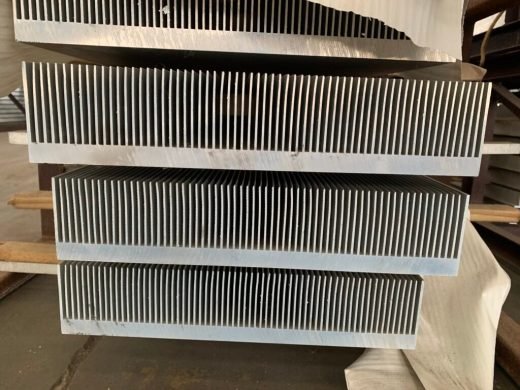
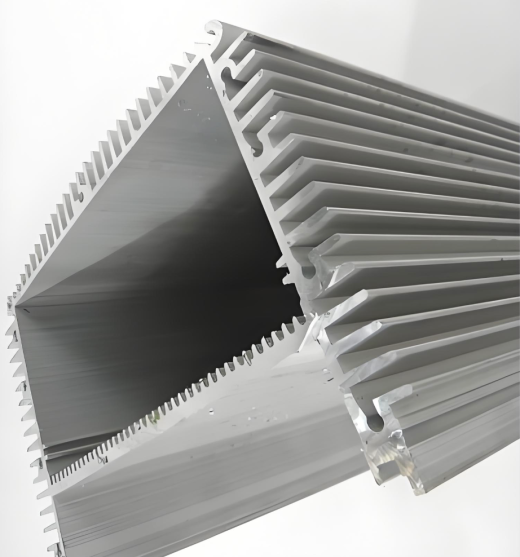
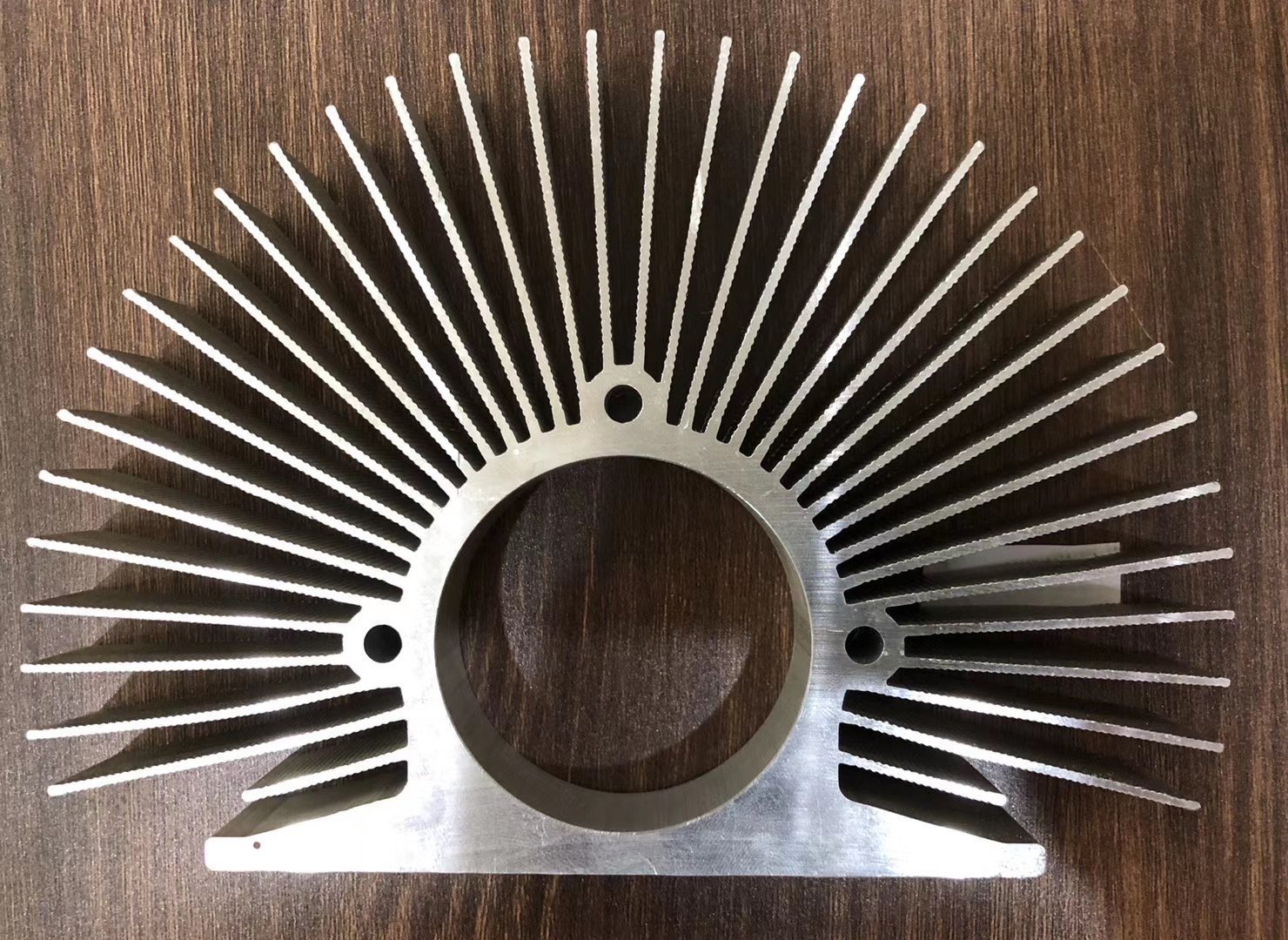
Fin pitch is normally 2.5 mm or wider, with 1.5 mm as the practical minimum, and fin height goes up to 50 mm as standard or 80 mm with dedicated die design. Base thickness runs from 2 mm to 20 mm; for IGBT mounting, a base of 8 mm to 15 mm is typical because it spreads heat laterally before the fins remove it. Tolerance is held to EN 755-9, with DIN 1748 as the legacy German reference.

IGBT Module Mounting: What the Base Must Do

The base is a thermal interface, and its geometry matters as much as its alloy.

  • Surface flatness: 0.05 mm or better. Every 0.01 mm of extra gap adds roughly 0.5 to 1.0 K of thermal resistance.
  • Surface roughness: Ra 1.6 µm or finer, so thermal paste spreads evenly without pooling.
  • Flatness method: CNC face milling after extrusion. As-extruded flatness of about 0.2 mm per 100 mm is not good enough for a semiconductor interface.

Where an inverter concentrates heat at specific locations instead of spreading it evenly, we can extrude a semi-circular groove into the base for a heat pipe, in the common diameters of 6 mm, 8 mm and 10 mm.

Industrial VFDs and UPS Systems

For industrial drives and UPS units, power dissipation per module is typically 50 to 150 W, with total heat sink dissipation of 200 to 800 W depending on drive rating. These applications tend toward larger profiles, thicker bases and machined mounting surfaces with precisely located hole patterns.

Liquid Cold Plates for EV Battery Cooling

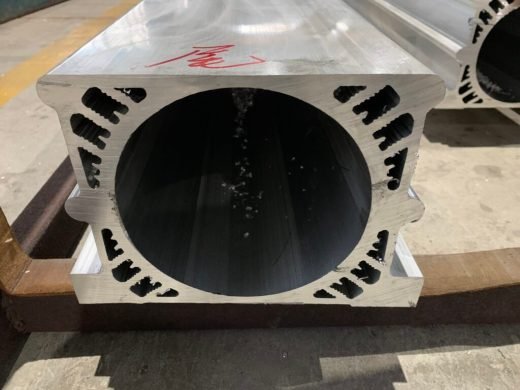
Liquid cooling moves the heat load to a cold plate with internal channels. Extruded channel diameters run from 3 mm to 8 mm. The channels are sealed at the ends, and friction stir welding is the default for EV cold plates: a rotating tool plunges into the aluminum and stirs the metal into a solid-state bond with no filler material and no porosity, which survives thermal cycling. Cold plates operate at 0.5 to 1.5 MPa working pressure with a burst rating of at least 3.0 MPa.

Leak Testing and Surface Finish

Every cold plate is pressure tested at 250 kPa for 60 seconds with leakage below 30 Pa. Surface finishes include mill, black anodized with an emissivity of 0.85 to 0.90, hard anodized and sandblasted. Anodizing thickness is 10 to 25 µm per Qualanod practice.

Ordering and Lead Times

Standard length is 6 m extruded, cut to length from 100 mm. Minimum order is 300 kg on a new die. Lead time to first sample on a new die is 10 to 15 working days, and 7 to 10 working days for repeat orders. Send the drawing early so a manufacturability review happens before tooling is cut. Production runs under an ISO 9001:2015 quality system.

Typical applications

  • check String and central solar inverters
  • check Industrial VFDs and UPS systems
  • check IGBT and SiC power modules
  • check EV battery pack cold plates
  • check DC-DC converters and onboard chargers
  • check Traction inverters

Industrial Aluminum · Aluminum Heatsinks

Extruded Heat Sinks for Inverters, IGBTs and EV Batteries

An engineering guide to extruded heat sinks and friction stir welded cold plates for string inverters, IGBT modules and EV battery packs, covering alloy selection, fin geometry, base flatness and leak testing.

Technical parameters

Alloy & Temper 6063-T5 (heat sinks), 6061-T6 (structural / high pressure), 6005A-T6 (welded frames)
Thermal Conductivity ~200 W/m·K (6063-T5)
Yield Strength 145 MPa (6063-T5)
Profile Width 10 mm – 300 mm standard; up to 420 mm on a large press
Fin Height & Pitch Up to 50 mm standard, 80 mm with die design; pitch ≥2.5 mm, 1.5 mm minimum
Base Thickness 2 mm – 20 mm; 8–15 mm for IGBT mounting
Mounting Surface Flatness ≤0.05 mm CNC milled; roughness Ra 1.6 µm or finer
Cold Plate Channels 3–8 mm internal diameter; 0.5–1.5 MPa working, burst ≥3.0 MPa
Leak Test 250 kPa for 60 s, leakage below 30 Pa
Tolerance, Length & MOQ EN 755-9 (DIN 1748); 6 m extruded, cut from 100 mm; MOQ 300 kg on a new die
Alloy 6005A 6061 6063
Application EV battery pack cold plates IGBT and SiC power modules Industrial VFDs and UPS systems String and central solar inverters
Surface finish Anodized
Industry Industrial Equipment Thermal Management
Standard EN 755
Temper T5 T6
  • verified_userMill test report supplied with every shipment
  • scheduleTypical lead time 15–25 days after die approval
  • publicExport packing, FOB Xiamen / CIF / DDP

Technical FAQ

Can extruded aluminum heat sinks handle inverter cooling? add
Yes, from roughly 10 kW string inverters up to EV battery packs, provided the profile is designed around the heat load and the limits of the extrusion press. Industrial VFD and UPS modules typically dissipate 50 to 150 W each, with total heat sink dissipation of 200 to 800 W depending on drive rating. Send heat load, ambient temperature, maximum junction temperature and cooling mode.
What flatness does an IGBT mounting surface need? add
0.05 mm or better, with a surface roughness of Ra 1.6 µm or finer. Those values keep the thermal paste layer thin and uniform. As-extruded flatness of about 0.2 mm per 100 mm is not good enough for a semiconductor interface, so the base is CNC face-milled after extrusion. Every 0.01 mm of extra gap adds roughly 0.5 to 1.0 K of thermal resistance.
How are liquid cold plate channels sealed? add
Friction stir welding is the default for EV cold plates. A rotating tool plunges into the aluminum at the channel ends and stirs the metal into a solid-state bond with no filler material and no porosity, so it withstands thermal cycling. Extruded internal channels run 3 to 8 mm in diameter, and cold plates operate at 0.5 to 1.5 MPa with a burst rating of at least 3.0 MPa.
What lead time applies to a new heat sink die? add
For a new die, allow 10 to 15 working days to first sample, and 7 to 10 working days for repeat orders. Minimum order is 300 kg on a new die. Send your drawing early if the project schedule is tight, so that a manufacturability review of fin geometry and base thickness happens before tooling is cut.

Customer reviews

No reviews yet — be the first to review Extruded Heat Sinks for Inverters, IGBTs and EV Batteries.

Write a review

Write a review

Reviews are read by our team before they appear here, usually within one working day. We publish what customers write; we only remove spam and abuse.

Held for moderation before it is published.

Request a quotation for this profile

Include your drawing reference, alloy, finish, quantity and destination port. If you have a DXF or PDF, mention it in the message and we will request it by email.

Drawings & CAD files: email DWG, DXF, STEP or PDF to sales@linkedalu.com — they are quoted together with this request.

Or email sales@linkedalu.com

Why engineers buy this profile from us

  • Die design in-house. Our tooling engineers balance metal flow before the first billet is pressed, which keeps wall thickness and straightness repeatable order after order.
  • One partner for finishing. Extrusion, anodizing, coating, machining and assembly happen on one site, so tolerances are not lost between suppliers.
  • Documentation that clears customs and auditors. Composition, mechanical properties, dimensional and coating reports ship with the goods.
  • Stable supply. 100,000 tonnes of annual capacity and 26 presses mean your schedule is not hostage to a single line.
About our factoryarrow_forward