
Aluminum Profile Surface Finishes: Anodizing, Powder Coating, PVDF
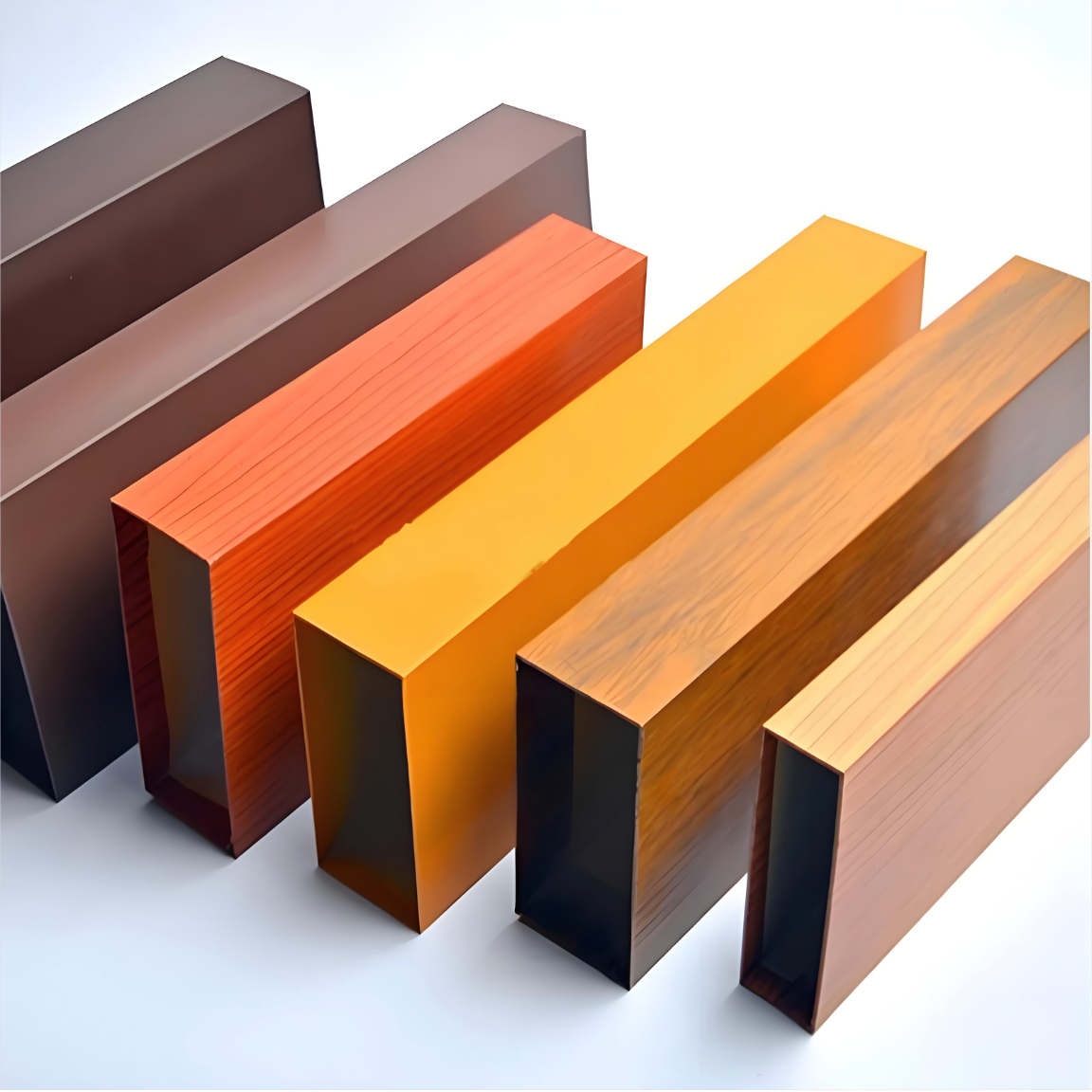
Anodizing, powder coating, PVDF, electrophoresis, wood grain and mechanical finishes are specified by different standards, applied at different thicknesses, and last for very different times at the coast. Here is how to choose between them.
Two extrusion lines can turn out profiles with identical alloy, identical tolerances and identical mechanical properties, and the finished parts can still fail differently on the same building. The difference is almost always the surface finish — and the fact that the finish was chosen from a colour chart instead of from a standard.
This page sets out the finish families we run, the standard that defines each one, the coating thickness that standard implies, and where each one is the wrong answer.
Mill finish: the baseline, not a finish
A mill finish profile is the extrusion as it leaves the press and cools — no anodizing, no coating. It carries the visible extrusion lines and handling marks of the process, and its oxide layer is the thin natural one (a few nanometres, growing slowly in air).
Mill finish is correct for profiles that will be fabricated and then coated or painted by the customer, for parts welded into assemblies and finished afterwards, and for fully concealed structural members. It is the wrong answer anywhere the profile is visible and exposed: without a coating there is nothing to stop the surface from staining, and the natural oxide offers no meaningful protection in a chloride environment.
Commercial tolerances for mill finish extruded profiles are defined by EN 755-9 (profiles) and EN 12020-2 (precision profiles in EN AW-6060/6063).
Anodizing: hard, integral, repairable only by re-anodizing
Anodizing is an electrochemical conversion of the aluminium surface itself into aluminium oxide. Because the oxide grows out of the metal rather than sitting on top of it, it cannot flake, chip or peel away from a substrate the way a coating can. It is electrically non-conductive, it does not hide the extrusion lines or the metal's grain, and it is the only finish on this page that keeps a distinctly metallic appearance.
Architectural anodizing is specified by coating thickness, using the familiar AA designations: AA15 nominally 15 µm and AA20 nominally 20 µm, for interior and exterior exposure respectively. Those designations and the performance requirements around them come from the AAMA 611 specification for anodized architectural aluminium. Process control and the anodizing layer itself are described in EN ISO 12373, and the sealing quality of the anodized layer — thickness, sealing ratio, colour and abrasion resistance — is what the acid-dissolution test in ISO 3210 is used to verify.
The trade-offs are real. Anodizing is a single-colour process: the colour comes from the alloy, from the anodizing conditions, or from electrolytic colouring, so there is no matching an arbitrary RAL number. On 6xxx extrusions it also shows the metallurgical difference between lots, and darker colours show it more. Deep-drawn or heavily formed parts can crack their anodized layer at tight radii.
Powder coating: the most colour-flexible option
Powder coating is a dry polymer powder sprayed electrostatically and cured into a continuous film, typically 60–80 µm for architectural work. It can match essentially any RAL, it covers the extrusion surface uniformly including edges, and it tolerates handling and installation damage better than a thinner coating.
For architectural aluminium the defining standard is EN 12206-1 (organic coatings on aluminium for architectural applications), which covers film thickness, adhesion, and the accelerated weathering a coated profile has to survive. The industry quality schemes Qualicoat (coatings) and Qualanod (anodizing) sit on top of those standards and are what specifiers usually ask for by name when they want the coating supply chain audited rather than just the finished part tested.
The failure modes are the ones you would expect of a polymer film: chalking and colour change at the surface, and — if the pretreatment was incomplete — filiform corrosion creeping from a scratch or a cut edge. Pretreatment chemistry, not the powder, is where most premature coating failures actually originate.
PVDF: specified for the exposure, priced for the project
PVDF (polyvinylidene fluoride) coatings are fluoropolymer systems applied as a two-coat or three-coat build, typically 25–40 µm, over a primer. Their colour and gloss retention under UV is the reason they exist: AAMA 2605, the most demanding of the AAMA coating specifications, is built around 10-year South Florida exposure testing, against 5 years for AAMA 2604 and one year for AAMA 2603.
That is the honest basis for the choice: AAMA 2605 is the specification to write when the facade has to still match the original colour a decade from now in a high-UV or coastal environment, and it is normally the most expensive of the liquid-applied options. Specifying PVDF for an interior partition is paying for weathering that will never be tested.
Electrophoresis (E-coat) and the smooth anodized look
Electrophoretic coating deposits an organic film from a water-based bath under an applied voltage. It is frequently applied over an anodized layer, which is the combination usually meant by "electrophoresis finish": the anodizing gives hardness and colour, and the E-coat closes the surface, removes the sticky feel traditional sealing can leave, and raises corrosion resistance. The result is a very smooth, even, high-gloss surface that holds up better than plain anodizing in polluted or lightly coastal air, at the cost of another process step and another bath to control.
Wood grain and bronze: finishes that imitate other materials
Wood grain is a sublimation transfer onto a powder-coated profile: the cured coating is heated with a printed film so the pattern diffuses into it. It exists to satisfy planning authorities and customers who want the look of timber without its maintenance, and it belongs on window and door systems and on facade detail where the pattern carries across a visible joint.
Bronze anodized covers the brown-to-black range produced by electrolytic colouring (tin or nickel salt baths deposit metal into the pores of the anodized layer before sealing) or by dyeing. It is the traditional colour of architectural aluminium, it hides handling marks better than clear anodizing, and — like all anodizing — it is fabrication-tolerant because the layer is part of the metal.
Mechanical finishes: polishing and sand blasting
Polishing is mechanical and/or chemical brightening, used for trim, reflectors and profiles that have to read as polished metal. It is normally followed by a protective anodized or E-coat layer, because a bare polished surface scratches and oxidizes quickly. Sand blasting is the opposite intent: a controlled abrasive treatment that produces a uniform matte texture, usually as the pretreatment for anodizing when a diffused, non-reflective surface is wanted and the extrusion lines have to disappear.
Thermal break is not a finish
Worth separating explicitly, because it often appears in the same material list: a thermal break is a construction, not a coating. The profile is extruded in two parts and rejoined by a polyamide strip (typically PA66 with 25% glass fibre) that interrupts the path for heat and sound. Those assemblies are tested as systems, for mechanical strength and for thermal performance, rather than as finishes — see the window and door profiles and curtain wall profiles where we run them.
Choosing: match the finish to the exposure, then to the budget
- Interior, not visible, or to be coated later — mill finish.
- Interior, visible, metallic look — AA15 clear anodizing; powder coating if the colour has to match a specification.
- Exterior inland, normal urban air — AA20 anodizing, or powder coating to EN 12206-1. Both are defensible; pick on appearance and on how repair will be handled on site.
- Exterior, coastal or high-UV, colour must survive — PVDF to AAMA 2605. This is the case the specification exists for.
- Anodized look with better surface smoothness and corrosion resistance — anodizing plus electrophoresis.
- Timber appearance, low maintenance — wood-grain sublimation over powder coating.
The two questions that decide most projects
First: will the part be fabricated after finishing? Cutting, drilling, welding and bending all break a surface film. Anodizing survives fabrication as a converted surface; a coating leaves bare metal at every cut and needs touching up. Second: what will the surface look like in ten years, and who is accountable if it does not? That question turns AAMA 2603 / 2604 / 2605 from a line item into the specification, and it is worth writing into the purchase order rather than leaving to the powder supplier.
Send us the drawing and the exposure the profile will see, and we will quote the finish against the standard rather than against a colour name — including which of these options we would not use on your building.
Customer reviews
No reviews yet — be the first to review Aluminum Profile Surface Finishes: Anodizing, Powder Coating, PVDF.
Write a review
Reviews are read by our team before they appear here, usually within one working day. We publish what customers write; we only remove spam and abuse.
Keep reading
 Knowledge
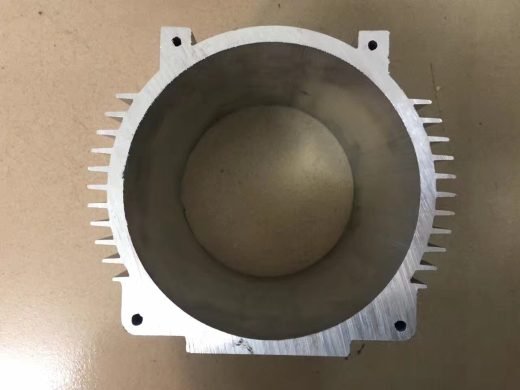
Extruded vs. Die-Cast Motor Housings: An Engineer's Guide to Choosing
Extrusion gives dense, weldable metal and tall fins; die casting gives complex bosses and near-net shape. A practical comparison of thermal…
Read article arrow_forward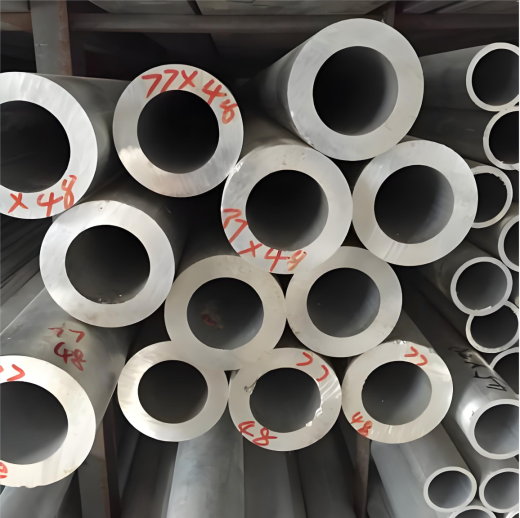 Knowledge
7075, 7050, and 7005: When 6061 Isn't Strong Enough
The 7xxx family is the strongest extrudable aluminum, reaching roughly 572 MPa in 7075-T6. What 7050 and 7005 add, why 7xxx extrusion runs…
Read article arrow_forward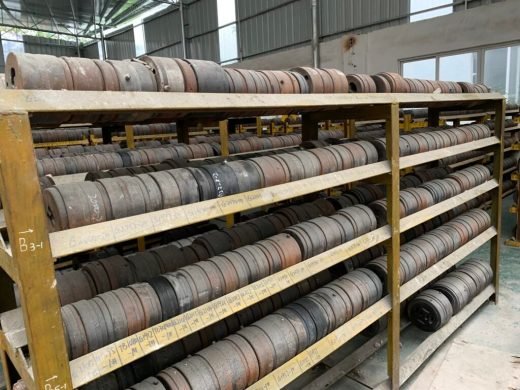 Knowledge
How Extrusion Dies Shape Aluminum Profile Quality: Steel, Tolerances, and Surface Defects Explained
Wall thickness drift, die lines and streaking are signatures left by the extrusion die, not the alloy. How H13 die steel, nitriding…
Read article arrow_forward