What Custom Extrusion Buys You Over Catalog Tube
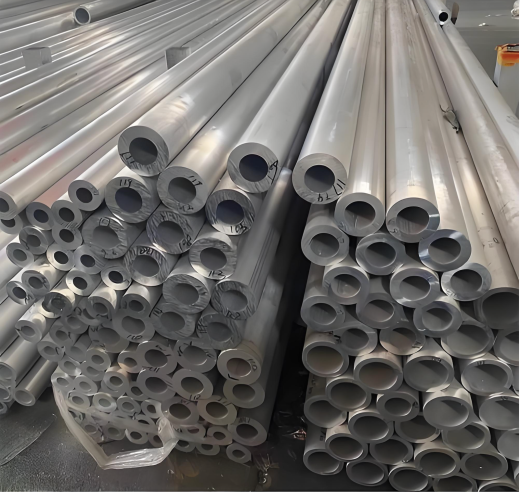
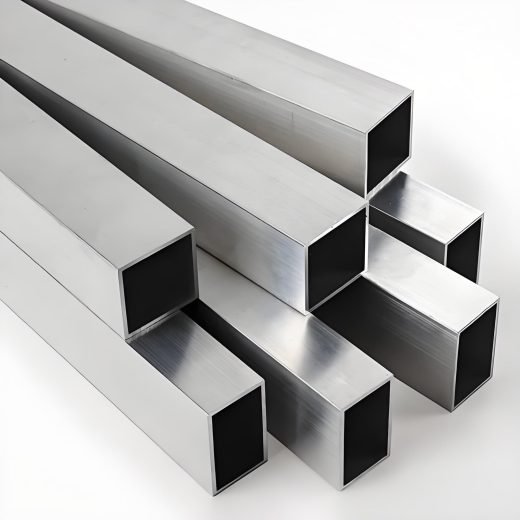
Catalog tube forces a compromise. When a standard wall thickness falls just short of a load-bearing point, the usual answer is to jump to the next stock size, which adds dead weight, raises material cost and grows the footprint of the assembly. A dedicated die removes that compromise. Linkedalu Metal Group Co., Ltd produces custom-extruded aluminum rectangular tubes, also called flat pipes or rectangular hollow sections, so the cross-section can be optimized to the job rather than to a stock list.
Extruded hollow sections are formed as one continuous piece of metal rather than rolled and welded from strip. There is no longitudinal weld to act as a weak zone, which improves fatigue behavior under vibration and keeps the visible face uniform through anodizing or powder coating.
Tailored Wall Thickness and Internal Ribs
Two design freedoms are worth more than any other on a rectangular tube:
- Asymmetric wall thickness. Material can be concentrated on the faces that carry the load while non-structural faces stay thin. A shallow channel section can be thickened under a bolted joint and left light everywhere else.
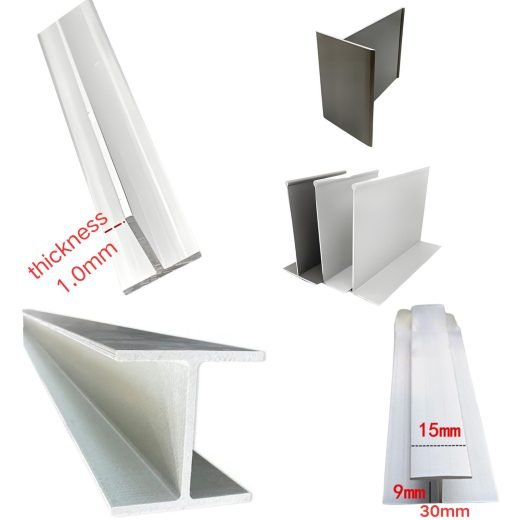
- Integral ribs and webs. Internal dividers, bulkheads and screw ports are formed in the same extrusion pass. A single internal rib can raise a rectangular tube's moment of inertia and torsional resistance by more than 30 percent without changing the outside dimensions.
Multi-hollow sections with internal ribs and structural bulkheads are a routine production item rather than a special, and they are the most efficient way to stiffen a machine frame without inflating it.
Choosing the Alloy: 6063-T5, 6063-T6, 6061-T6 and 6005-T5
6063-T5 is the most economical and the most extrudable of the group. It forms complex geometry and thin walls with a smooth surface that takes anodizing and powder coating beautifully, which suits architectural trim, enclosures and light-duty framing. 6063-T6 applies solution heat treatment and artificial aging to the same alloy and lifts its yield strength by roughly 30 percent while keeping the crisp surface, making it suitable for medium-load outdoor frames and glazed support work.
6061-T6 is the structural workhorse. Its tensile and yield thresholds rival low-carbon mild steel, it welds and machines well, and it is the industry standard for heavy machinery frames, automation sub-bases and transport chassis. 6005-T5 sits between the two: stronger than 6063 and more extrudable than 6061, with very little deformation during cooling, which is why it dominates heavy-duty structural beams, solar mounting and rail transit components.
Surface Engineering for Indoor and Outdoor Service
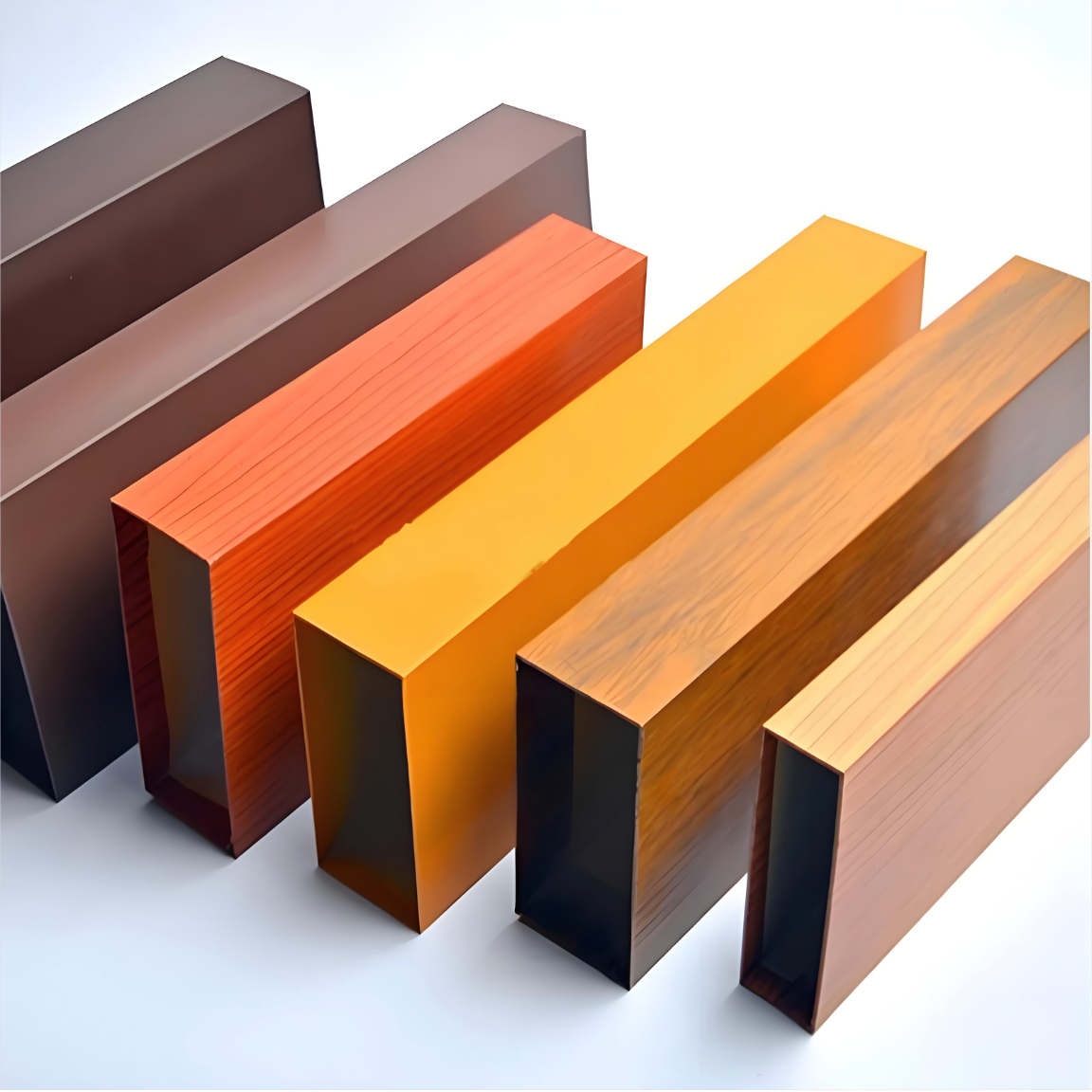
Architectural anodizing at 10 to 25 micrometers converts the surface into a hard aluminum oxide layer in silver, champagne, bronze or black, improving wear resistance and holding a metallic appearance. Industrial powder coating at 60 to 100 micrometers provides a thick barrier against impact, chemicals and ultraviolet radiation for a service life measured in more than a decade in commercial settings. Electrophoresis is the answer for hollow sections in high-humidity or marine conditions, because the paint layer reaches the inner walls as well as the outside faces. Anodizing solution flows through the full internal cavity, so inner surfaces are coated too, though very long or narrow tubes can see a slightly thinner coating near the center.
Corner Radii and Internal Cavities
Internal corners are designed with a fillet radius equal to or greater than the wall thickness. Those rounded corners avoid stress concentration and extend die life. Where a drawing calls for a strictly sharp internal corner, the geometry is reviewed at the design stage before tooling is cut. Fixed-length cuts are available from 100 mm to 6,000 mm, and standard production bars run 6,000 mm with 7,000 mm possible on request.
From Extrusion to Bolt-Ready Parts
Extrusion and secondary machining happen under one roof, which shortens the route from billet to assembly line and removes the handling damage caused by shipping raw profiles between vendors. Precision miter sawing holds lengths within plus or minus 0.1 mm, multi-axis CNC drilling produces accurate hole patterns, threads are cut from M3 to M16, and stretch bending forms curved sections where the design requires them. The result is a hollow section that arrives pre-cut, deburred and ready to bolt into the machine rather than a raw bar that still needs sawing, scrap disposal and labor on site.
Size Range, Tolerances and Documentation
Standard tooling covers cross-sections from a compact 10 x 10 mm to a large 200 x 100 mm, with larger sizes evaluated on request. Wall thickness runs from 0.8 mm for lightweight trim to 10 mm for heavy structural duty. Hardness is typically 14 plus or minus 2 HW. Unless a project specifies otherwise, dimensions and tolerances follow GB/T 5237, EN 755-9 or ASTM B221 as agreed at order review.
Every shipment carries a mill test certificate with heat number, chemical composition and mechanical results, and third-party inspection by SGS or Intertek can be arranged before dispatch. Tubes are wrapped individually, bundled with steel strapping, protected with waterproof film and packed into pallets or wooden crates for ocean freight. Minimum order quantity is 500 kg for a new die; straightforward sections that already exist in our die library can be discussed at smaller trial volumes.
Applications
Custom rectangular tube is specified for machine frames and equipment bases, conveyor and gantry structures, solar mounting rails, trailer and vehicle frames, exhibition and display systems, curtain wall support members and any framework where the tall axis has to carry bending while the assembly stays light.
Send a drawing or a sketch with the target wall thicknesses marked clearly. Our engineers review it and confirm feasibility, theoretical weight and the recommended alloy before the die is cut.

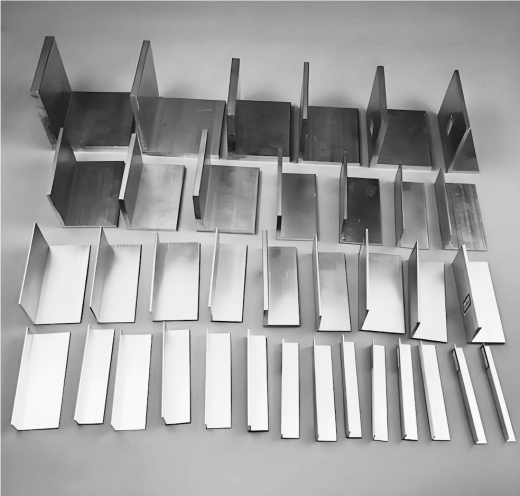 Standard Aluminum Shapes