Linkedalu Metal Group Co., Ltd LINKEDALU Metal Group
Solar Mounting Rails and Tracker Extrusions

Custom Solar Mounting Extrusions and Standard Tube

There is an ongoing conversation on solar projects about whether to use zinc-aluminum-magnesium steel or return to aluminum for certain sites. We are not here to argue that steel is wrong. We are here to make sure that when aluminum is the right call, the profiles arrive exactly as the mounting design asked, cut, punched, labeled and ready to bolt together.

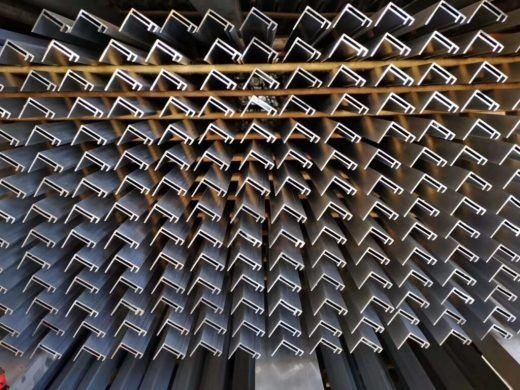
Some mounting systems are built entirely from standard square and rectangular aluminum tube. If that is yours, we can supply the tube. Others need a custom rail with a serrated top slot for T-bolts, a side channel for cable management, or an integrated drainage groove for BIPV. That is a custom die, and we cut those too.

Steel or Aluminum? The Honest Comparison

Aluminum is roughly one-third the density of steel, which on a commercial rooftop can be the difference between reinforcing the structure and not. It does not rust: the thin oxide layer that forms on bare aluminum within seconds of exposure is self-healing, so corrosion resistance does not depend on a coating staying intact. It is softer, so it cuts and drills faster and suits factory pre-fabrication over field fabrication. At end of life it remains aluminum, recyclable indefinitely, with scrap value typically 70 to 80% of the LME aluminum price.

Steel still wins on large ground-mount arrays with spans over 4 m, on very high wind or snow loads where every megapascal of yield strength counts, and in regions with abundant cheap labor for on-site cutting and welding. If your project looks like that, steel is probably the economic choice and we will say so.

Standard Aluminum Tubes

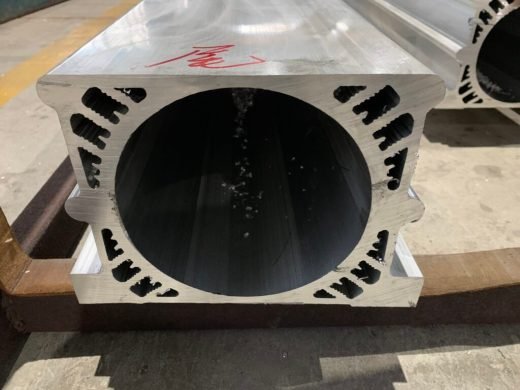
For the structural bones of a mounting system, posts, cross beams and bracing, a standard aluminum tube or rectangular hollow section often does the job, and we keep dies for common sizes so there is no tooling charge. Square tube is available in 40×40, 50×50 and 60×60 mm, and rectangular tube in 60×40, 80×40 and 100×50 mm, with wall thickness from 1.5 mm to 5.0 mm. Alloy options are 6063-T5, 6005-T5, 6005A-T6 or 6061-T6, in mill, anodized or powder coated finish. If you need 45×45 mm or a wall thickness outside the catalog, we can usually adjust without a full new die.

Custom-Extruded Profiles

  • PV rails with integrated serrated channels and side mounting grooves.
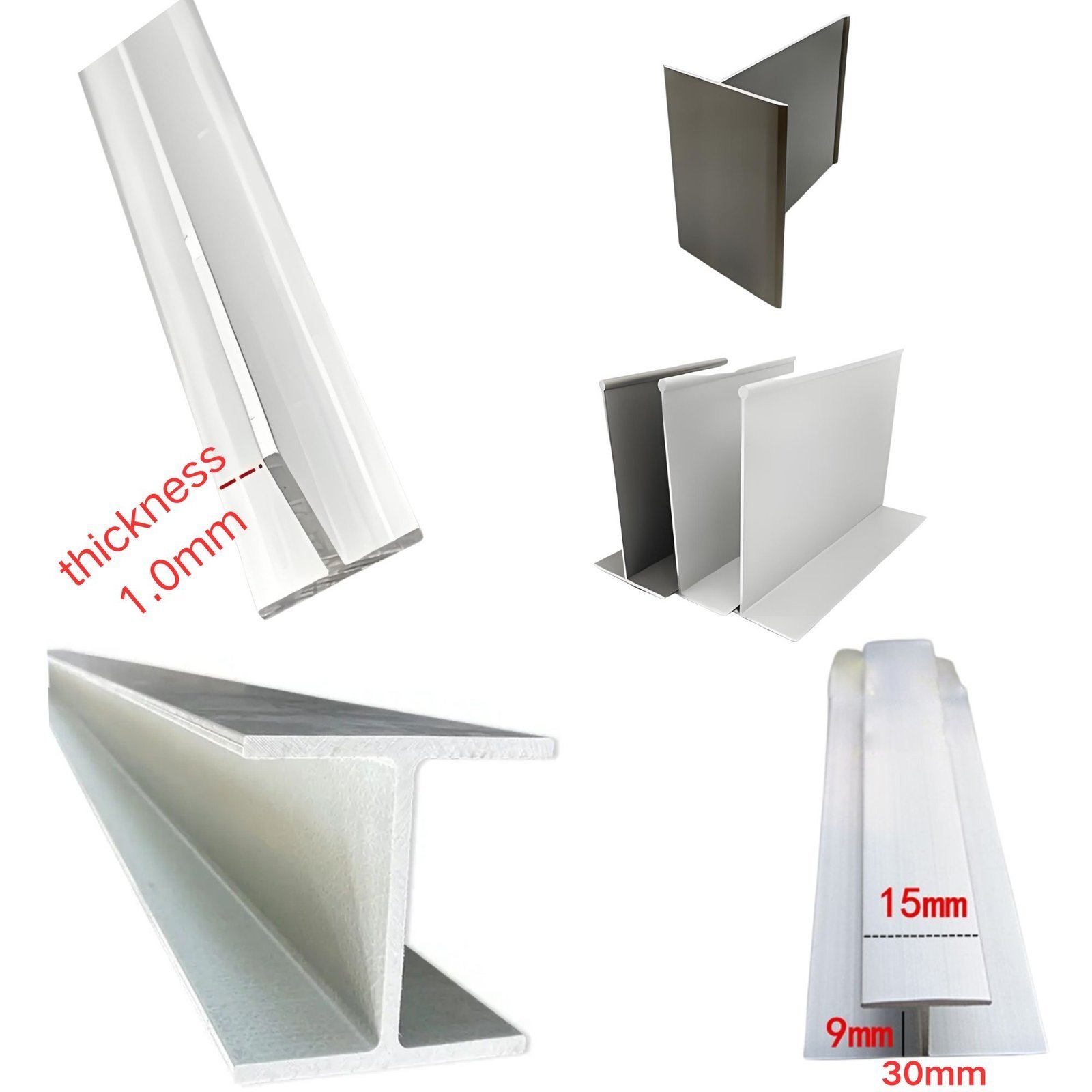
  • C-channel and H-channel posts with one-piece extruded base flanges and stiffening ribs.
  • Clamp base profiles with teeth that match the rail serrations exactly.
  • BIPV gutters and water channels with built-in slope and drip edges.

Every custom profile gets a moment-of-inertia and section modulus check against the span and load data you provide. If the section looks underbuilt we say so before the die is made, and suggest a thicker web, an internal rib or an alloy step-up. Typical sections run from 35×30 mm to 40×40 mm in 6063-T6 for residential rooftop rails, 50×50 mm to 68×40 mm in 6005A-T6 for commercial and industrial racking with spans up to 1,500 mm, and custom large-scale sections in 6061-T6 or 6005A-T6 for utility tracker rails, where press capability reaches 5,000 MT.

Surface Finishing for 25 Years Outdoors

A solar farm is a 25-year asset, so the surface is specified for the exposure. Inland and mild climates get anodized AA15 at 15 µm with nickel salt sealing. Coastal sites over 1 km inland and high-humidity locations get AA20 at 20 µm with high-quality sealing. Coastal frontline, salt marsh and floating PV call for PVDF fluorocarbon at 35 µm or more across three coats. General outdoor work with a specific color gets super-durable powder coat at 60 to 80 µm, with 15 to 20 years expected. Before any coating, profiles go through a chrome or chrome-free conversion coating that stops filiform corrosion creeping under a coating from a scratch.

Pre-Fabrication and Fasteners

We offer three delivery levels: raw 6 m lengths for customers with their own fabrication shop; cut and punched, where every rail, post and beam is cut to finish length at 0.1 mm with all connection, drainage and grounding holes made per your assembly drawing; and the full kit, which adds a label on every piece matching its position on the installation drawing, packed by assembly zone or row. On coastal projects, galvanic corrosion between aluminum and dissimilar fasteners is the usual cause of pitting around bolt holes, so specify 316 stainless or Dacromet-coated fasteners with nylon washers or bushings for isolation. We can groove the bolt slot in the die to accept a nylon isolation strip. Minimum order is 500 kg per profile on a new die, while standard tube from existing dies can run at a few hundred kilos.

Typical applications

  • check Commercial and industrial rooftop racking
  • check Residential rooftop rails
  • check Utility-scale tracker rails
  • check Floating solar and aquavoltaics
  • check BIPV carports and canopies
  • check Ground-mount posts and purlins

Industrial Aluminum · Solar Energy Profiles

Solar Mounting Rails and Tracker Extrusions

Aluminum solar mounting profiles: standard square and rectangular tube plus custom PV rails, C- and H-channel posts, clamp bases and BIPV gutters, supplied cut, punched and labeled as installation kits.

Technical parameters

Alloy & Temper 6005A-T6 (standard structural); 6063-T5, 6005-T5, 6061-T6 and 6060-T6 also available
Hardness ≥15 HW
Standard Tube Sizes Square 40×40, 50×50, 60×60 mm; rectangular 60×40, 80×40, 100×50 mm
Wall Thickness 1.5 mm – 5.0 mm
Custom Rail Sections 35×30 mm to 68×40 mm typical; larger tracker and BIPV sections to order
Surface Finish Mill; anodized AA15 (15 µm) or AA20 (20 µm); PVDF 3-coat ≥35 µm; super-durable powder 60–80 µm
Cut Tolerance ±0.1 mm on cut-and-punched installation kits
Press Capability Up to 5,000 MT press force for large structural sections
Length & Packing 6.0 m standard; pre-cut, punched and labeled by row or assembly zone
MOQ & Standards 500 kg per profile on a new die; ISO 9001:2015 quality system
Alloy 6005 6005A 6061 6063
Application Commercial and industrial rooftop Floating solar and aquavoltaics Residential rooftop rails Utility-scale tracker rails
Surface finish Anodized Powder Coated Pvdf Coated
Industry Industrial Equipment Solar Energy
Temper T5 T6
  • verified_userMill test report supplied with every shipment
  • scheduleTypical lead time 15–25 days after die approval
  • publicExport packing, FOB Xiamen / CIF / DDP

Technical FAQ

Why choose aluminum over zinc-aluminum-magnesium steel? add
Usually for one of three reasons: rooftop weight limits, corrosion exposure at coastal or floating sites, or installation labor cost. Aluminum is about one-third the density of steel, does not rust, and remains recyclable with scrap value typically 70 to 80% of the LME aluminum price. If none of those apply, such as a large flat ground-mount array with cheap labor, steel is often the economic choice and we will say so.
Do you supply standard tube as well as custom extrusions? add
Both. Standard square and rectangular aluminum tubes in common solar sizes come from existing dies, so there is no tooling charge and quantities can be small. Where the design needs a serrated rail, a side slot for a grounding clip, or a hollow chamber that doubles as a cable tray, that is a custom die. You will not be pushed toward one or the other.
How do you confirm the rails are strong enough? add
We check moment of inertia and section modulus against the span, panel weight and your local wind and snow loads before the die is finalized. If the section as drawn will not meet deflection limits, we suggest changes such as a thicker web, an internal rib, or a step up to 6061-T6. That conversation happens before the die is cut rather than after the first batch is installed.
What causes aluminum corrosion near bolt holes on coastal jobs? add
Galvanic corrosion between aluminum and a dissimilar fastener. Plain steel or zinc-plated bolts in salt-spray conditions make the aluminum act as a sacrificial anode, and it pits around the hole. The fix is isolation: nylon washers or bushings between bolt and aluminum, combined with 316 stainless or Dacromet-coated fasteners. We can groove the bolt slot in the die to accept a nylon isolation strip.

Customer reviews

No reviews yet — be the first to review Solar Mounting Rails and Tracker Extrusions.

Write a review

Write a review

Reviews are read by our team before they appear here, usually within one working day. We publish what customers write; we only remove spam and abuse.

Held for moderation before it is published.

Request a quotation for this profile

Include your drawing reference, alloy, finish, quantity and destination port. If you have a DXF or PDF, mention it in the message and we will request it by email.

Drawings & CAD files: email DWG, DXF, STEP or PDF to sales@linkedalu.com — they are quoted together with this request.

Or email sales@linkedalu.com

Why engineers buy this profile from us

  • Die design in-house. Our tooling engineers balance metal flow before the first billet is pressed, which keeps wall thickness and straightness repeatable order after order.
  • One partner for finishing. Extrusion, anodizing, coating, machining and assembly happen on one site, so tolerances are not lost between suppliers.
  • Documentation that clears customs and auditors. Composition, mechanical properties, dimensional and coating reports ship with the goods.
  • Stable supply. 100,000 tonnes of annual capacity and 26 presses mean your schedule is not hostage to a single line.
About our factoryarrow_forward