Linkedalu Metal Group Co., Ltd LINKEDALU Metal Group
LED Channel and Rail Profiles

A Housing, Not Just an Aluminum Bar

When you buy an LED housing profile you are buying a structural component that has to hold a metal-core PCB perfectly flat, grip a polycarbonate cover tight without buckling, run cool for tens of thousands of hours, and still look pristine under a retail showroom spotlight. We extrude it, CNC machine it and anodize it, so you can focus on building the light.

The process runs in one line: precision extrusion, in-house CNC machining, dye-controlled anodizing, and a ready-to-assemble housing at the end.

Profile Types We Extrude

  • T5 and T8 retrofit tubes: heavy-duty cylindrical housings with integrated heat-dissipating channels.
  • Linear pendant and surface channels: architectural-grade profiles with seamless diffuser integration.
  • Wall washers and grazers: angled housings engineered to throw light precisely while concealing the source.
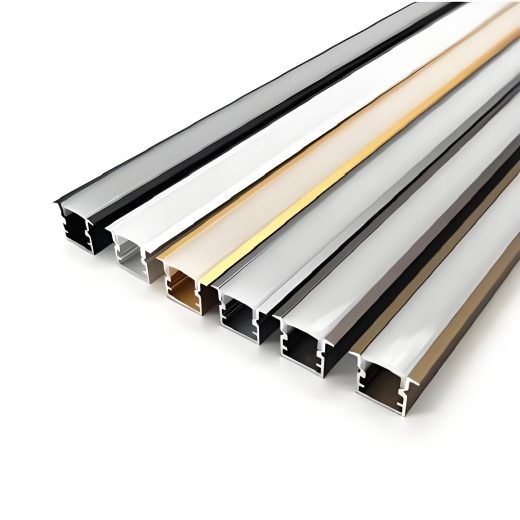
  • U-channels and V-channels: ultra-slim, low-profile tracks for commercial tape light installations.
  • Track light rails: robust rectangular rails with tight internal tolerances for conductive electrical tracks.

These are not generic catalog items. The snap-fit groove that holds your PC diffuser has to be dimensioned exactly to the tolerances your cover supplier molds to. The internal screw bosses must align with your molded end caps. The surface where the MCPCB sits must be flat enough to prevent the micro-gaps that trap heat and burn out diodes.

Fixing LED Burnout: Thermal Mass and Face Flatness

Early LED failure in high-wattage linear fixtures and T8 retrofits is usually a profile problem rather than a diode problem, and the pattern is consistent. The wall where the PCB sits is too thin, often 1.0 mm or less, so the aluminum saturates with heat quickly and junction temperature climbs. The extruded seating face is slightly convex or concave, so the board sits on high points with air trapped between them and heat bottlenecks at the diodes.

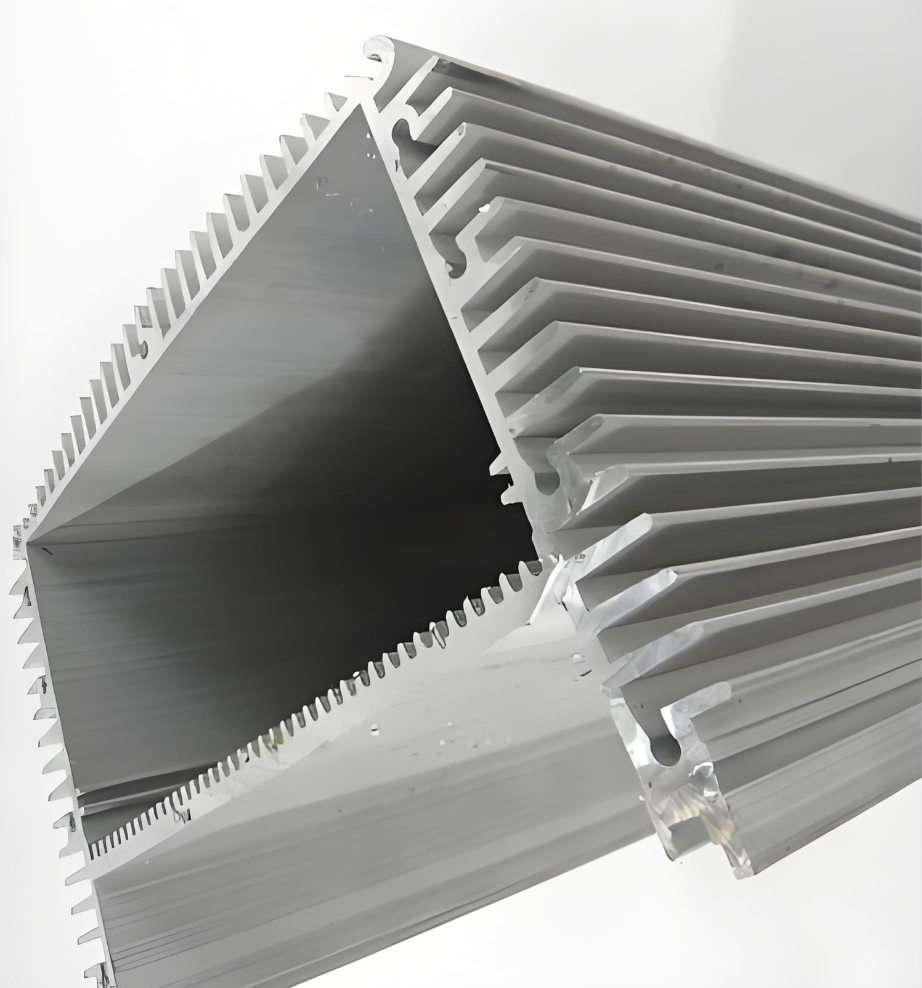
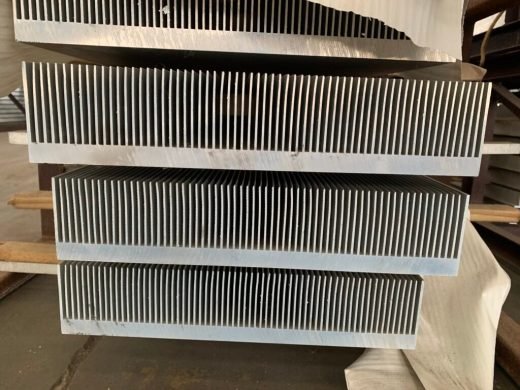
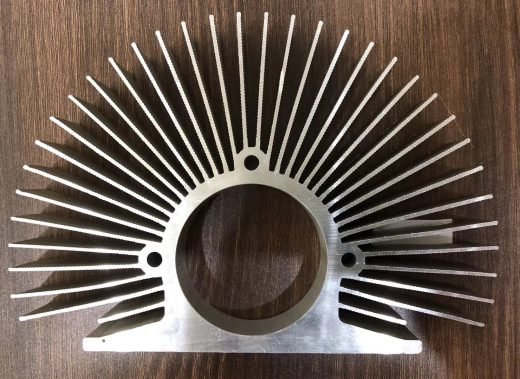
We hold the seating face flat through die design and process control, and we keep the wall under the MCPCB at a wall thickness that gives the profile enough thermal mass to spread the load before convection removes it. Where a fixture runs hot, we can also increase surface area with finned side walls that double as the visual profile.

Profile Reliability Through the Tooling

The diffuser groove is dimensioned to your cover supplier's molded tolerances, and the screw boss centers are set to match your molded end caps. We work from your fixture drawings, or, if you are still in R&D without a finalized CAD file, from your PCB width, cover type and mounting constraints. We will sketch a custom cross-section, cut the die, extrude the run, perform secondary CNC fabrication and anodize the batch in a color-matched run.

From Drawing or Sketch to Finished Housing

Send us your cross-section CAD drawing or a physical sample. If you are still in early R&D without a finalized CAD file, tell us your PCB width, cover type and mounting constraints and we will sketch a custom cross-section for your review. From there the sequence is fixed: cut the die, extrude the run, carry out secondary CNC fabrication, finish the batch in a color-matched anodizing or powder coating run, and deliver components that go straight onto your assembly line.

Because extrusion tooling costs a fraction of die casting tooling, a custom LED profile is practical even for a mid-volume fixture program. Standard length is 2 m, but most customers order pre-cut lengths matched to the fixture, which removes saw kerf loss, unusable offcuts and the floor space a saw cell occupies in a lighting factory.

Black and silver anodized housings are standard, with powder coat available where a decorative color or textured finish is required. Because every profile in an order is machined and finished together, the components in one shipment match each other in color and in dimension.

Fabrication and Delivery

Profiles are extruded in 6063-T5 as standard, which anodizes evenly and carries the thermal load of a passive LED fixture. Where a housing also acts as a structural member or has to take welding, we step up to 6061-T6. Standard length is 2 m, and we supply pre-cut, CNC drilled and tapped housings rather than raw bar, because that is how most customers order. Send the fixture drawing with cut lengths and hole positions and we ship components ready for your assembly line.

Minimum order is 500 kg, and production runs under an ISO 9001:2015 quality system.

Typical applications

  • check T5 and T8 retrofit tubes
  • check Linear pendant and surface-mounted fixtures
  • check Wall washers and grazers
  • check Tape light U-channels and V-channels
  • check Commercial track light rails

Industrial Aluminum · LED Lighting Profiles

LED Channel and Rail Profiles

Custom aluminum profiles for LED tube lights, linear fixtures, strip channels and track rails, extruded in 6063-T5 and supplied pre-cut, drilled and tapped in black or silver anodized finish.

Technical parameters

Alloy & Temper 6063-T5 (standard); 6061-T6 available
Hardness ≥8 HW
Standard Length 2 m extruded; pre-cut to fixture length
Surface Finish Silver or black anodizing; powder coat available
Profile Types T5/T8 tube shells, linear channels, wall washers, U/V channels, track rails
PCB Seat Wall Thickness 1.0 mm or more recommended to avoid thermal saturation
MCPCB Seating Face Extruded flat and process-controlled to prevent micro-gaps under the board
Snap-Fit Groove Dimensioned to your diffuser supplier's molded tolerances
Fabrication Cut, CNC drilled, tapped and deburred; ready-to-assemble housings
MOQ & Standards 500 kg MOQ; ISO 9001:2015 quality system
Alloy 6061 6063
Application Linear pendant and surface-mounted T5 and T8 retrofit tubes Tape light U-channels and V-channels Wall washers and grazers
Surface finish Anodized Powder Coated
Industry Industrial Equipment Lighting
Temper T5 T6
  • verified_userMill test report supplied with every shipment
  • scheduleTypical lead time 15–25 days after die approval
  • publicExport packing, FOB Xiamen / CIF / DDP

Technical FAQ

Our LEDs are burning out early and thermal testing shows the housing is not pulling heat away. What causes that? add
Two profile faults dominate. First, insufficient thermal mass: if the wall the PCB sits on is 1.0 mm or thinner, the aluminum saturates with heat quickly and junction temperature climbs. Second, a convex or concave extrusion face, which leaves micro-gaps under the board and traps heat at the diodes. We hold the seating face flat and keep wall thickness at 1.0 mm or more under the MCPCB.
How do you ensure the diffuser snaps in properly? add
The snap-fit groove is dimensioned to the tolerances your cover supplier molds to. We work from your fixture drawing, or from your PCB width, cover type and mounting constraints if the design is still in R and D. Groove geometry is confirmed against the cover before the die is signed off, then monitored during production so the fit does not drift as the die bearing wears.
Can you supply pre-cut, drilled and tapped housings rather than raw bar? add
Yes, and that is how most customers order. Send the fixture drawing with cut lengths and hole positions. We extrude the profile, cut the bars to length, CNC drill and tap the mounting holes, anodize the batch and ship ready-to-assemble components to your factory. Raw bar and 6 m lengths remain available if you prefer to do your own secondary machining.
What alloy do you use for LED housings? add
6063-T5 is our standard for tube shells, linear channels and track rails. It extrudes cleanly, anodizes evenly and gives the thermal performance a passive LED fixture needs. Where a housing doubles as a structural member or must accept welding, we step up to 6061-T6. Tell us the fixture type and we will confirm the alloy with the quotation.

Customer reviews

No reviews yet — be the first to review LED Channel and Rail Profiles.

Write a review

Write a review

Reviews are read by our team before they appear here, usually within one working day. We publish what customers write; we only remove spam and abuse.

Held for moderation before it is published.

Request a quotation for this profile

Include your drawing reference, alloy, finish, quantity and destination port. If you have a DXF or PDF, mention it in the message and we will request it by email.

Drawings & CAD files: email DWG, DXF, STEP or PDF to sales@linkedalu.com — they are quoted together with this request.

Or email sales@linkedalu.com

Why engineers buy this profile from us

  • Die design in-house. Our tooling engineers balance metal flow before the first billet is pressed, which keeps wall thickness and straightness repeatable order after order.
  • One partner for finishing. Extrusion, anodizing, coating, machining and assembly happen on one site, so tolerances are not lost between suppliers.
  • Documentation that clears customs and auditors. Composition, mechanical properties, dimensional and coating reports ship with the goods.
  • Stable supply. 100,000 tonnes of annual capacity and 26 presses mean your schedule is not hostage to a single line.
About our factoryarrow_forward