Aluminum Glass Railing Systems, Extruded to Your Drawing
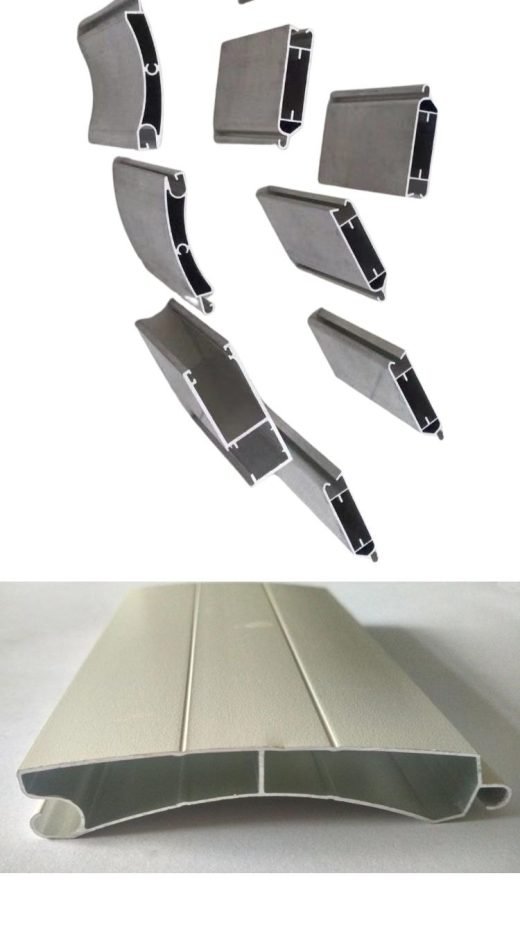
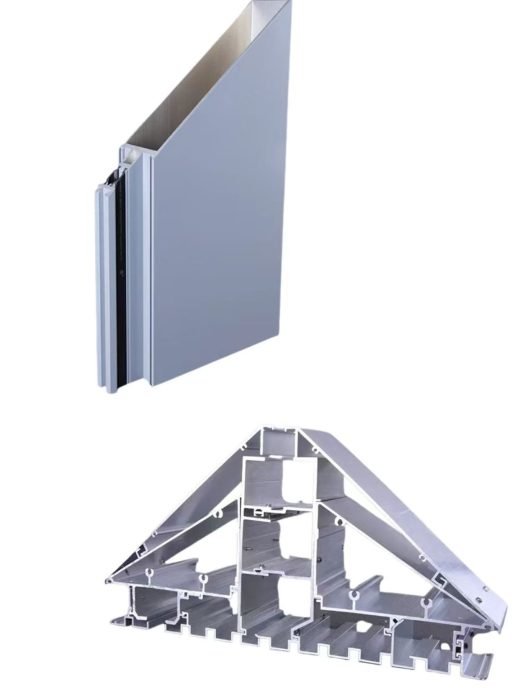
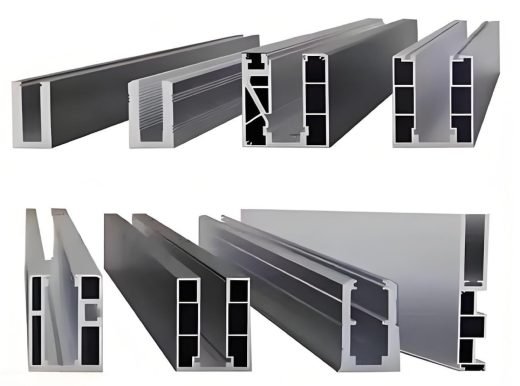
Linkedalu Metal Group Co., Ltd extrudes aluminum glass railing profiles for balcony and stair balustrades: handrails, posts, glass shoe sections, toe plates and base trims. A glass balustrade is a structural assembly, not a decorative edge. The base shoe has to carry the wind and line load the glass imposes, and the handrail has to do that while staying straight, dimensionally stable and visually consistent across the whole elevation. We build the sections from your drawings, so the profile geometry, glass pocket width and fixing details match the system you have designed rather than a generic stock section.
Component Set
The railing system is supplied as a matched component family, extruded in one project lot:
- Handrails — round, rectangular or shaped sections, continuous over the run.
- Posts — supporting members in surface-mounted, base-plate and cantilevered configurations.
- Glass shoe sections — the base profile that holds the laminated glass, with a controlled pocket and gasket register.
- Toe plates and base trims — closure and finish for the shoe at floor level.
- Cover caps and end caps — profile-matched closure for the visible ends of the run.
Three Problems Installers Raise, and How the Profile Answers Them
After a couple of years, some balustrades show white streaks staining the surface below the railing, with the coating looking dull. The cause is almost always a finish chosen without reference to the actual exposure, so we match finish to site: for inland residential with partial shade, a super-durable polyester powder at 60 to 80 um is appropriate; for full sun with no shade, PVDF three-coat; for coastal or poolside, PVDF without exception. The second recurring problem is glass pocket tolerance: if the shoe pocket and gasket register are not held tightly, the glass rattles or the gasket extrudes. The third is inconsistent anodizing or coating color between deliveries on a phased project.
Aluminum Alloy and Finish by Environment
Finish selection is a service-life decision, and we recommend it against the environment the balustrade will actually see:
| Environment | Finish | Specification note |
|---|
| Interior, dry | Anodized AA10 or light powder coat | Standard architectural finish |
| Outdoor full sun, inland | PVDF 3-coat or super-durable powder | PVDF preferred for color stability |
| Coastal under 1 km | PVDF 3-coat | Approx. 35 um and above, 20+ year service life |
How We Ship
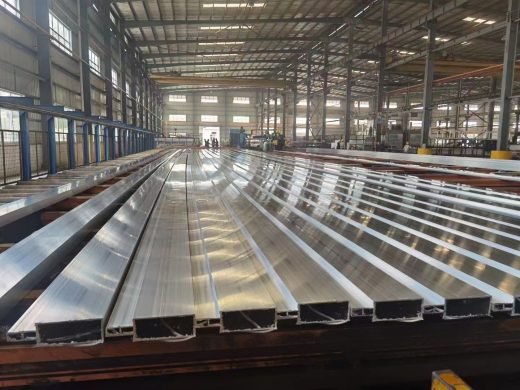
Railing profiles are delivered in whichever state your installation sequence needs. Some fabricators take raw extrusions, straightened and cut to rough length, and complete all fabrication themselves. Others take pre-machined blanks, cut to finish length with drainage holes drilled, leaving final assembly drilling and tapping on site. For the fastest installation we supply the full kit: every bar cut, drilled, tapped, notched and labeled to your drawing, packed by assembly zone so the crew opens one bundle per balcony.
Material and Documentation
6063-T6 is the standard alloy for this product family, giving a good balance of extrudability and strength for handrail and shoe sections; 6061-T6 is used where a component is heavily loaded. Profiles are documented to GB/T 5237, EN 755-9 or ASTM B221 as the project requires, with mill test certificates issued for each lot.
Why Profile Tolerance Matters in a Glass Balustrade
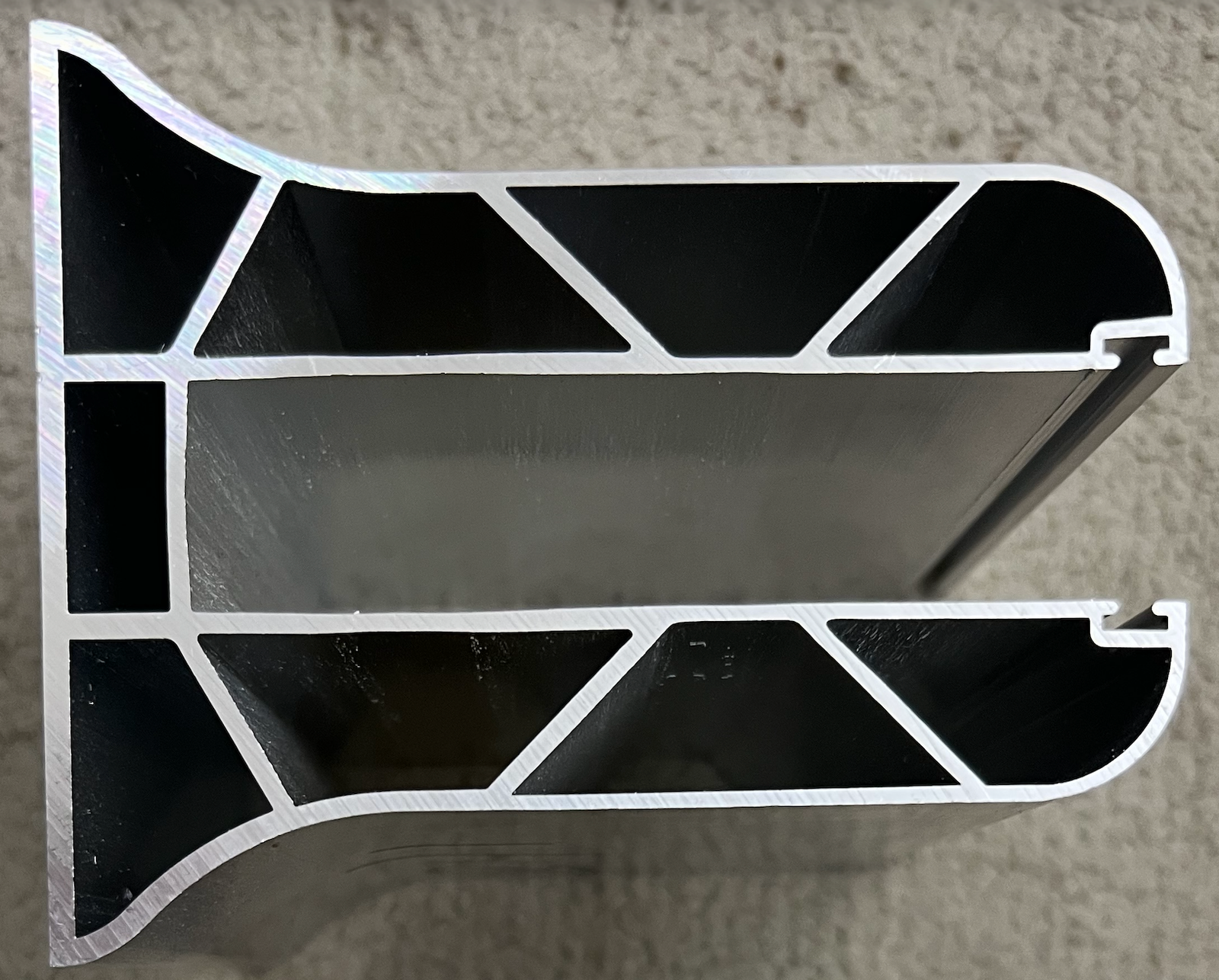
A balustrade is judged by its sightline: one post set a few millimeters low, or a handrail that steps at a joint, is visible from across the street. Section tolerance is what keeps that sightline true, which is why railing profiles are extruded to the high-precision class rather than general commercial tolerance. The same discipline applies to the glass pocket in the base shoe, where the gasket register has to hold the laminated panel at the designed depth without letting the gasket extrude or the glass rattle under wind load.
Fabrication, Packing and Traceability
Profiles are straightened, cut and machined, then labeled and packed by assembly zone so each balcony or stair flight receives its own bundle. Mill test certificates covering alloy, temper and coating are issued with each lot, and material is documented to GB/T 5237, EN 755-9 or ASTM B221 as the project requires.

 Architectural Aluminum