
Aluminum Extrusion HS Codes and Anti-Dumping: What Decides Your Duty
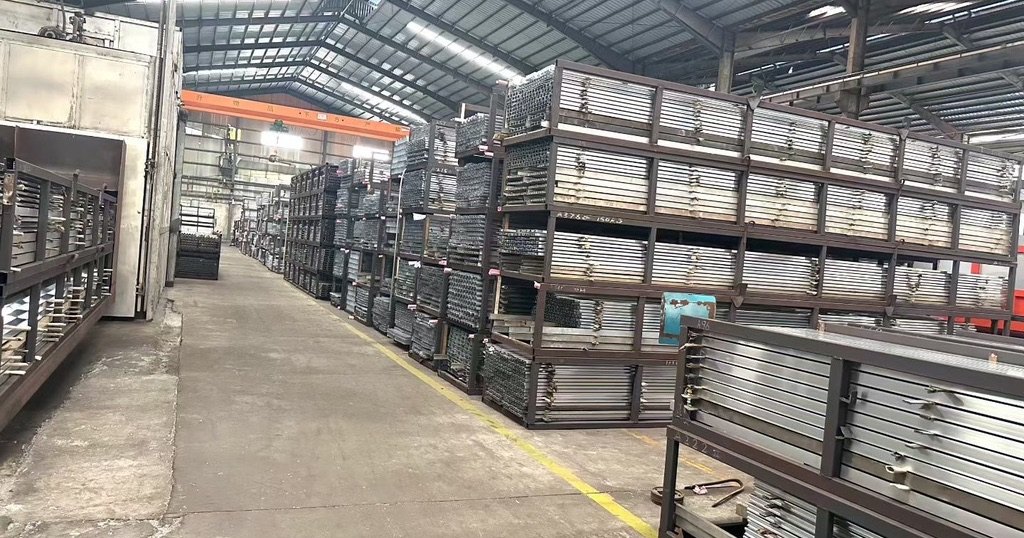
Aluminum extrusions enter under three headings, and the one you declare decides whether anti-dumping duty applies. A working guide to scope, which markets carry orders, and the errors that produce retroactive bills.
An HS code is not customs paperwork — it selects your duty regime
Aluminum extrusions enter under three headings: 7604 for bars, rods and profiles; 7608 for tubes and pipes; 7610 for structures. The heading you declare decides whether an anti-dumping order can reach your shipment at all.
Most importers treat classification as data entry, delegated to a forwarder and reviewed by nobody. That assumption is expensive. Anti-dumping duty is not a marginal line item — the current United States cash deposit rate for Chinese aluminum extrusions without a company-specific rate is 86.01%, applied on top of the ordinary customs duty. One heading apart can separate a workable landed cost from an impossible one, and the difference never appears on the supplier's quotation, because it is not a supplier's number to give.
Three headings cover nearly everything a buyer imports from an extrusion mill:
| Heading | Covers | Typical goods |
|---|---|---|
| 7604 | Bars, rods and profiles | Solid and hollow extrusions, mill finish or anodized, cut to length |
| 7608 | Tubes and pipes | Round, square and rectangular tube; seamless or welded |
| 7610 | Aluminium structures and parts of structures | Fabricated frames, curtain wall units, assembled products |
The distinction that matters most runs between 7604 and 7610, and it turns on manufacturing stage rather than material. An extruded curtain wall mullion is 7604. The same mullion, cut, punched, assembled with pressure plates and shipped as a unitised panel, may be 7610.
7604, 7608, 7610: the line is drawn by form, not by alloy
Alloy does not choose the heading. Form does. A 6063-T5 solid profile and a 6063-T5 hollow profile both sit in 7604; convert either into a round tube and the heading moves to 7608.
Buyers often assume that declaring 6061-T6 or 7075-T651 changes the classification, because those alloys carry recognisable names. It does not. Heading 7604 admits every aluminium alloy; what separates it from 7608 is whether the cross-section is a shaped profile or a tube of uniform wall. That is a geometric test, not a metallurgical one.
Two practical consequences follow.
First, the same die can produce goods under different headings depending on what the drawing specifies. A hollow rectangular section is a profile. Draw it as a round tube and it is not.
Second, further fabrication does not automatically move a profile into 7610. Drilling, punching, tapping, anodizing and machining leave the goods in 7604 — the anti-dumping scope language is explicit that fabrication alone does not remove a product from coverage. What moves goods into a structures heading is assembly into something that functions as a structure or part of one.
This is where most classification errors originate: an importer assumes that because the goods arrive drilled to a project drawing, they are finished parts rather than profiles. They are not.
The counterintuitive part: finishing the product can take it out of scope
A raw extruded profile is inside United States anti-dumping scope. The same profile assembled into a finished window with glass installed is excluded. Duty can fall as the product becomes more finished.
This runs against intuition, because more processing usually means more value and more duty. Here it can mean less. The scope language draws its line at assembly, not at value added:
| Your product | Likely United States ADD/CVD status |
|---|---|
| Raw or cut-to-length extruded bars, rods, hollow or solid profiles, tubes and pipes | Inside scope |
| Extrusions anodized, painted, machined, drilled or punched, but not assembled | Inside scope |
| A finished-goods kit — every part needed to assemble one final product, packaged together, entered unassembled, requiring no further cutting or fabrication | Excluded, subject to the exact kit test |
| Fully and permanently assembled finished merchandise — a window with glass, a door with glass, a solar panel | Excluded |
| 2xxx, 5xxx or 7xxx series above the order's copper, magnesium or zinc thresholds | Excluded if the alloy tests are met |
Two warnings sit on that table.
Adding fasteners does not create the kit exclusion. Screws and bolts in the carton do not turn a bundle of profiles into a finished-goods kit. The parts must constitute everything required for one finished product, and no further fabrication may be needed.
Excluded from anti-dumping scope does not mean duty-free. Finished goods can attract a different heading, a different rate, and — in the United States — Section 232 aluminium duties, which apply to aluminium articles at 50% and to most derivative products at 25% under the proclamation in force through 2027. Section 232 is origin-neutral; it is not a China measure. Buyers who discover the scope exclusion and stop reading there often trade one duty for another. The correct question is never which duty applies, but which duties apply, and to which heading.
Where Chinese extrusions actually face duty — and where they do not
The United States and the European Union both have anti-dumping orders in force on Chinese aluminium extrusions. Mexico has a definitive measure on profiles and bars. Brazil's in-force list shows no measure on extruded profiles, and the Gulf duties cover flat-rolled sheet, not extrusions.
Market decisions frequently get made on incomplete information in both directions — buyers avoid markets that are open, and enter markets that are closed. The table below reflects publicly available measure lists checked in late 2026. Rates, scope rulings and case status change without notice, so confirm your specific classification and origin with a licensed customs broker before committing to an order.
| Market | Status on Chinese aluminium extrusions | Note |
|---|---|---|
| United States | Order in force since 2011 | AD cash deposit 86.01% for exporters without a separate rate; CVD all-others 7.37%; Section 232 layered on top |
| European Union | Order in force, under expiry review | Extrusions within CN 7604 / 7608 / 7610 descriptions; first sunset review initiated 27 March 2026, duties remain in force during it |
| Mexico | Definitive measure on profiles and bars | USD 1.58 per kg on Chinese-origin profiles and bars |
| Gulf Cooperation Council | Measure applies to flat-rolled product, not extrusions | The duties cover painted or coated aluminium plates, sheets, strips and coils 0.2–8 mm — a different product form |
| Brazil | No measure on extruded profiles on the in-force list | Verify before relying on this; figures circulating for "AD on profiles" trace to a different case |
| India | No extrusion-specific order confirmed | Indian measures in this area cover flat-rolled product (HS 7606) and foil — not extrusions |
Two traps in that table are worth naming.
The Gulf case is frequently misread. Headlines about "GCC anti-dumping on Chinese aluminium" describe flat-rolled sheet and coil. An extruder shipping profiles is not covered by that measure. Buyers who read the headline and rule the Gulf out lose an open market.
India is frequently misread in the opposite direction. Measures exist on flat-rolled aluminium, and are routinely repeated as if they covered extrusions. They do not.
Anti-dumping duty is a deposit, not a final number
Anti-dumping duty is collected as a cash deposit at the time of entry. It is recalculated in annual administrative reviews, and the final rate can be lower or higher than the deposit — producing refunds in some cases and retroactive bills in others.
Importers plan around the deposit figure as though it were a price. It is closer to a provisional charge that settles later, sometimes years later, across a period that has already closed. Three consequences follow for how you buy.
Budget the review risk, not just the deposit. A supplier quoting against a deposit rate is quoting an interim number. If the reviewed rate rises, the difference becomes a retroactive liability on entries already made.
Company-specific rates are worth verifying. A named exporter holding a separate rate keeps that rate unless it appears in a review's appendix. An exporter without one falls to the country-wide rate — a gap wide enough to change which supplier wins an order. Ask any supplier claiming a low rate to identify it precisely.
Keep the records a review will demand. When a rate is challenged, the burden falls on documentation of where metal was cast, extruded and finished. Records assembled after the fact rarely satisfy the test.
What a mill test certificate proves — and what it does not
A mill test certificate reports chemical composition and mechanical properties per heat, against a stated standard. It does not establish the HS heading, the country of origin, or whether your product sits inside an anti-dumping scope.
Buyers frequently treat the MTC as a general-purpose compliance document. It is narrower than that. What it legitimately supports:
- Alloy and temper conformance to GB/T 5237, EN 755 or ASTM B221
- Chemical composition limits per heat
- Tensile strength, yield strength and elongation
- Hardness where specified
- Coating or anodic film thickness where the finish is within the report's scope
What it does not do: it will not tell you whether your 80×40 hollow section is 7604 or 7610, and it will not tell you whether the goods fall within an order's scope. Those are classification and scope questions, answered by tariff schedules and scope rulings — not by a materials report.
Where a buyer genuinely needs certainty on origin, the instruments are different: production records, casting documentation and, in some jurisdictions, origin declarations or rulings. An MTC alone does not carry that weight.
Six classification errors that produce retroactive duty bills
Most retroactive anti-dumping assessments trace to a small set of repeatable mistakes: classifying by alloy instead of form, ignoring assembly stage, and treating fabricated profiles as finished goods.
The recurring errors, in the order they tend to appear:
1. Classifying by alloy. Declaring 6061-T6 as though the alloy were the heading. Alloy selection is a 7604 question, not a heading question.
2. Ignoring the assembly-stage test. Entering an assembled unit under the profile heading, or a profile under a structures heading, because the physical goods looked similar on the loading dock.
3. Assuming fabrication removes scope coverage. Anodizing, punching and machining do not remove a profile from anti-dumping scope. They also do not move it to 7610.
4. Treating a bundle as a kit, or a kit as assembled goods. The kit exclusion has a specific test: everything needed for one finished product, packaged together, no further fabrication required. Cartons with fasteners added do not meet it.
5. Reading the headline instead of the scope. "AD on aluminium from China" in a news item may describe foil, sheet, or one product form. Scope is defined by product description, not by the word aluminium.
6. Assuming the duty ends when the order expires. Orders come under expiry reviews, and duties commonly remain in force through the review. Treating a pending expiry as today's duty-free window is a planning error.
How to verify a classification before you commit to an order
Get the classification rationale in writing, check it against the importing country's tariff schedule, and where the goods sit near a scope boundary, obtain a written broker opinion or a formal scope ruling.
A workable sequence, in order:
1. Ask the supplier for a written classification rationale — heading, form test, and the manufacturing stage assumed. A supplier who cannot state why a heading applies is guessing.
2. Check the rationale against the destination tariff schedule. The same goods can classify differently across jurisdictions and the tests are not identical — the United States applies alloy-series thresholds, while the EU applies an aluminium-content test, and welded tube sits outside the EU order while the US order covers extruded tube.
3. Identify whether the product sits near a scope boundary. Kits, welded end-caps, a bracket the assembler must drill — these are the cases where a summary is not enough.
4. Where the boundary matters, get a formal answer. In the United States this is a scope ruling request through the Commerce Department's ACCESS system; elsewhere it is a written opinion from a licensed broker or trade counsel. Self-classifying from a summary article is how importers overpay for years or receive a retroactive bill.
5. Re-check before each new order. Scope rulings are issued continuously. A classification that was correct at the last shipment is not evidence about this one.
Classification, scope and duty rate are three separate questions with three separate answers, and only the first two are questions a mill can help you answer. Duty rate and origin treatment belong to your customs broker. What a mill can legitimately do is state what it produced, to which standard, and at what manufacturing stage. That is what a mill test certificate and a dimension report are for, and it is the input your broker needs.
If you are working through a classification question on an extrusion order, our engineers will state the alloy, temper, standard and fabrication stage of any profile we quote, in writing. We supply FOB Shenzhen or Guangzhou, CIF on request, with mill test reports per heat and coating thickness records per lot. Send the drawing and the destination market, and the quotation will carry the specification data your customs entry depends on.
Frequently asked questions
Is an HS code the same as an anti-dumping case number? add
Does anodizing change the HS code of an aluminum profile? add
Can I avoid anti-dumping duty by importing profiles in pieces and assembling them locally? add
Customer reviews
No reviews yet — be the first to review Aluminum Extrusion HS Codes and Anti-Dumping: What Decides Your Duty.
Write a review
Reviews are read by our team before they appear here, usually within one working day. We publish what customers write; we only remove spam and abuse.
Keep reading
 Knowledge
Aluminum Profile Surface Finishes: Anodizing, Powder Coating, PVDF
Anodizing, powder coating, PVDF, electrophoresis, wood grain and mechanical finishes are specified by different standards, applied at…
Read article arrow_forward Knowledge
Extruded vs. Die-Cast Motor Housings: An Engineer's Guide to Choosing
Extrusion gives dense, weldable metal and tall fins; die casting gives complex bosses and near-net shape. A practical comparison of thermal…
Read article arrow_forward Knowledge
7075, 7050, and 7005: When 6061 Isn't Strong Enough
The 7xxx family is the strongest extrudable aluminum, reaching roughly 572 MPa in 7075-T6. What 7050 and 7005 add, why 7xxx extrusion runs…
Read article arrow_forward