
7075, 7050, and 7005: When 6061 Isn't Strong Enough
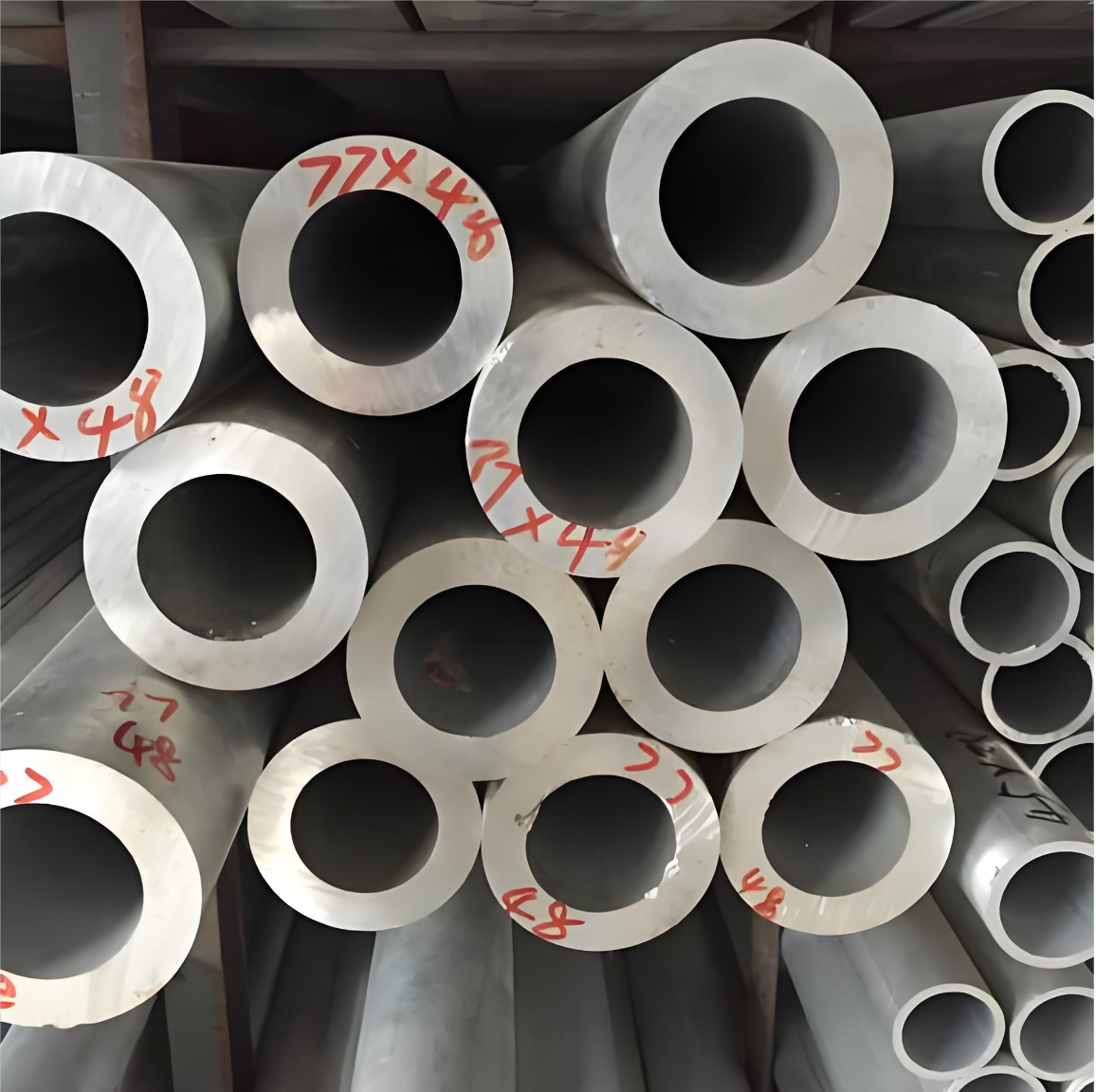
The 7xxx family is the strongest extrudable aluminum, reaching roughly 572 MPa in 7075-T6. What 7050 and 7005 add, why 7xxx extrusion runs at 2-5 m/min, and how to weigh the trade-offs before specifying it.
When 6xxx Runs Out of Strength
Most aluminum profiles leave an extrusion plant in 6063 or 6061. They extrude cleanly, anodize evenly and cost what customers expect to pay. Then a drawing arrives with a different note on it: 7075-T6. That is the point where the project changes character, because the 7xxx family is the highest-strength group of aluminum extrusion alloys in commercial use.
In the T6 temper, 7075 reaches a tensile strength around 572 MPa, nearly double 6061-T6 and close to mild structural steel. That opens demanding applications where aluminum normally cannot compete. It also brings a hard set of manufacturing problems that make 6xxx extrusion look easy. This guide covers the three 7xxx alloys encountered most often: 7075, 7050 and 7005.
The Three Alloys at a Glance
| Alloy and temper | Tensile | Yield | Weldability | Primary advantage | Typical use |
|---|---|---|---|---|---|
| 7075-T6 | approx. 572 MPa | approx. 503 MPa | Not fusion weldable | Highest available strength | Aircraft fittings, high-load structural parts, sports equipment |
| 7050-T74 | approx. 524 MPa | approx. 469 MPa | Not fusion weldable | Stress corrosion resistance and thick-section uniformity | Aerospace frames, thick structural sections |
| 7005-T6 | approx. 350 MPa | approx. 290 MPa | Readily weldable | High strength plus fusion weldability | Welded bicycle frames, motorcycle forks, sports equipment |
| 6061-T6 (reference) | approx. 290 MPa | approx. 240 MPa | Weldable | Baseline structural alloy | General framing, automotive, machinery |
7075: The Strength Benchmark
7075 combines zinc (5.1-6.1 percent), magnesium (2.1-2.9 percent) and copper (1.2-2.0 percent), forming fine MgZn2 precipitates that give the matrix its extraordinary performance. It is the alloy engineers reach for first when strength dominates every other consideration.
The trade-offs are severe. 7075 resists extrusion strongly, wears dies aggressively, and carries high scrap risk on complex sections. Anodizing produces a dull yellowish-gray finish rather than the bright metallic appearance of 6063, so it is a poor choice for visible decorative work. It also has poor resistance to stress corrosion cracking in the T6 temper when loaded continuously in a corrosive environment, which is exactly the problem 7050 was created to solve.
7050: The Aerospace Upgrade
7050 lowers overall copper content and replaces chromium with zirconium (0.08-0.15 percent) as the grain-refining dispersoid. The result is a family of tempers that keeps most of 7075's yield strength while dramatically improving resistance to stress corrosion cracking when supplied in the overaged T74 condition.
- Stress corrosion resistance - in the overaged temper, 7050 far exceeds 7075-T6, which is why it dominates thick aerospace structural sections.
- Low quench sensitivity - 7050 holds more uniform properties across thick walls, where 7075 shows a noticeable drop from surface to core.
- Damage tolerance - improved fracture toughness and fatigue behavior at equivalent strength.
- Cost and availability - narrow mill supply, tighter process windows and higher unit cost than any 6xxx alloy.
7005: The Weldable Member of the Family
7005 is the practical exception in the 7xxx group: it can be fusion welded without the catastrophic loss of properties that makes 7075 and 7050 unsuitable for welded structure. Its zinc and magnesium levels are lower and it uses zirconium for grain control, giving roughly 350 MPa tensile in T6 with about 290 MPa yield.
That combination is why welded bicycle frames, motorcycle components and high-performance sports equipment are frequently built from 7005. You get a strength level that comfortably beats 6061-T6 while retaining the ability to weld the assembly, at a cost premium that is meaningful but manageable.
Why Extruding 7xxx Alloys Is Difficult
Massive flow stress
At extrusion temperatures of about 380-420°C, 7xxx alloys exhibit far higher flow stress than 6xxx. A press that pushes a 6063 billet comfortably may sit at its absolute tonnage limit on the identical profile in 7075.
Order-of-magnitude slower production
Where 6063 runs at 30-50 m/min on a given geometry, 7075 on the same tool often runs at only about 2-5 m/min. Throughput collapses, and so does the cost per kilogram argument in favor of aluminum.
Extreme tooling wear
7075 contains hard intermetallic compounds such as Al2CuMg and MgZn2 that behave as micro-abrasives under heat and pressure. A die that produces 60-80 tons of 6063 profile may fall out of tolerance after only 15-25 tons of 7075.
Narrow thermal window at the exit
Exit temperature control is critical. Run too hot and the profile tears or cracks; run too cold and the press stalls or the surface tears at the die land. Quench must then be fast enough to develop properties without inducing distortion in thin walls.
Finishing and Corrosion Realities
Anodizing 7xxx alloys does not produce the clean, bright film customers expect from 6063. The copper content drives a dull, darker appearance and, at the high end of the range, the oxide quality is harder to control. Anodized architectural film thicknesses of 10-25 µm are normal practice on 6xxx profiles; applying the same specification to 7075 is technically possible but rarely satisfies an appearance requirement. Powder coating at 40-120 µm covers the surface reliably and is the more common route for 7xxx parts that must look good, while conversion coating and primer systems are standard for aerospace parts that will be painted.
Buyer's Engineering Checklist
- Confirm that the strength requirement genuinely excludes 6061-T6. Many 7075 enquiries dissolve once the real load case is calculated.
- Prepare for long lead times: 7xxx billets are narrower in supply than 6063 or 6061.
- Optimize wall thickness for extrudability. Walls that fill effortlessly in 6063 can fail to fill or tear in 7075.
- Ask about die material and maintenance policy, because tool life is measured in tens of tons, not hundreds.
- Decide the finish before you finalize the alloy, not after.
- Confirm the temper explicitly. T6, T651, T73 and T74 are not interchangeable, and heat treat condition drives both strength and corrosion performance.
The Bottom Line
7xxx alloy extrusions occupy a real and necessary place in structural engineering. When a design needs an aluminum profile that competes with structural steel on yield strength while cutting component weight substantially, and when weight saving justifies the cost and the slow extrusion, 7xxx is the definitive answer. Where it is not needed, 6061-T6 or 6005A-T6 will do the job for a fraction of the trouble.
Keep reading
 Knowledge
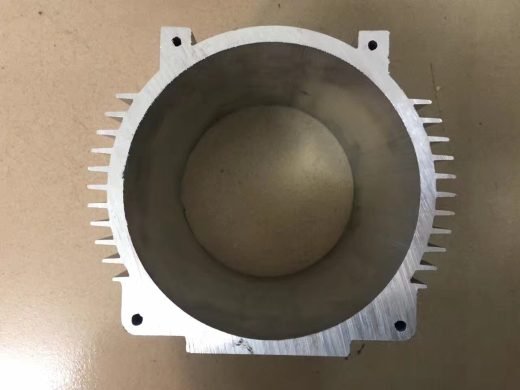
Extruded vs. Die-Cast Motor Housings: An Engineer's Guide to Choosing
Extrusion gives dense, weldable metal and tall fins; die casting gives complex bosses and near-net shape. A practical comparison of thermal…
Read article arrow_forward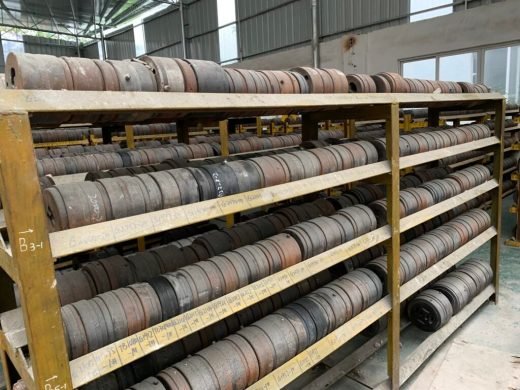 Knowledge
How Extrusion Dies Shape Aluminum Profile Quality: Steel, Tolerances, and Surface Defects Explained
Wall thickness drift, die lines and streaking are signatures left by the extrusion die, not the alloy. How H13 die steel, nitriding…
Read article arrow_forward Knowledge
6005 vs 6005A vs 6061 vs 6063: What's the Real Difference?
6005A-T6 reaches near-6061 strength while extruding faster, costing less per meter and holding more strength after welding. The real…
Read article arrow_forward