
The Structural Break in Global Aluminum
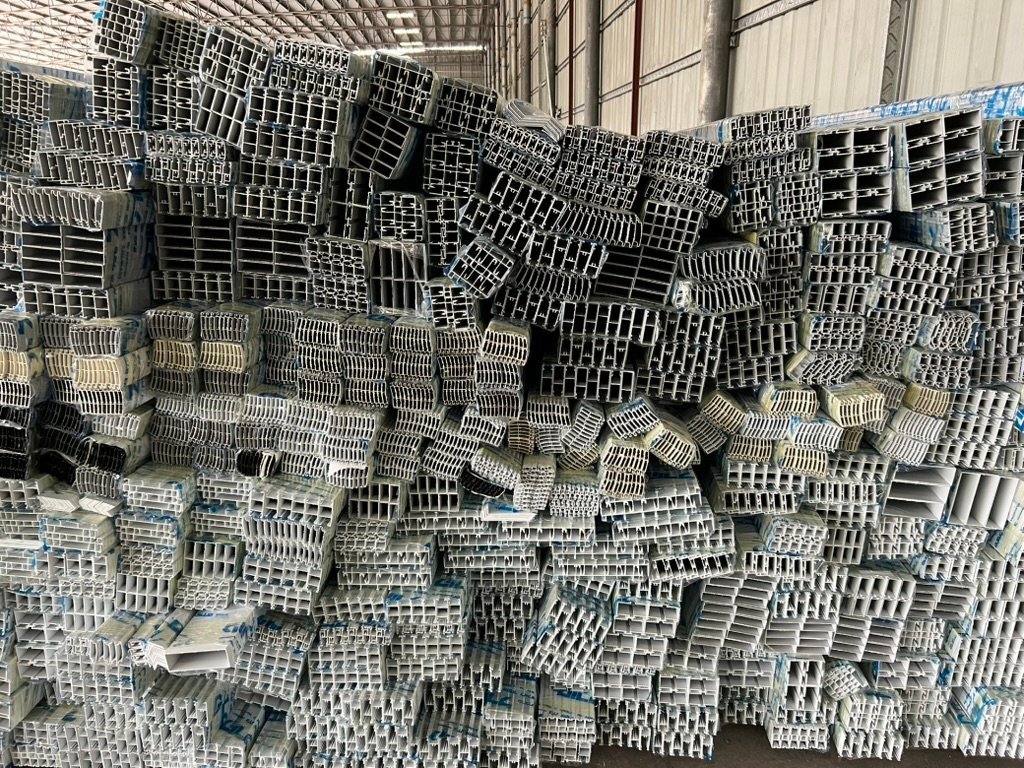
China hit its 45 Mt aluminum ceiling, Guinea signalled an export cap, Rusal is sanctioned and a Gulf smelter curtailed in February 2026. Demand from EVs, solar and copper substitution keeps rising. The structural gap is now open in real time.
The Assumption That Ran the Global Aluminum Market for Twenty Years
For two decades the global aluminum market ran on a quiet assumption: when demand rose, China would add capacity. That assumption is gone. China's primary aluminum output has effectively hit its 45 million-tonne regulatory ceiling, a cap introduced in 2017 to manage domestic carbon intensity, and 2025 production ran at roughly 44.9 million tonnes. There is no room left for incremental supply from the world's largest producer. What remains is a market in which the gap between structural supply growth and structural demand growth is no longer a forecast. It is open in real time.
That matters to anyone who buys, specifies or machines aluminum. It moves the price floor, stretches the lead-time conversation and changes the negotiation posture of every extrusion enquiry. The structural break has four supply-side causes and three demand-side drivers, and they are firing simultaneously.
Four Supply Constraints Firing at Once
- China's capacity ceiling. The 45 million-tonne cap was introduced in 2017 to manage domestic carbon intensity. With 2025 output at roughly 44.9 million tonnes, the world's largest producer has no headroom left to answer a demand pull.
- Guinea's export cap signal. Guinea is the upstream supplier that feeds most of China's alumina refineries, and it is now signalling an export cap of its own - a second, upstream constraint on the same supply chain.
- Sanctions on Rusal. Rusal accounts for roughly 6% of global supply and has been progressively cut off from Western shipping and alumina feedstock by successive EU and US sanctions.
- The February 2026 Gulf curtailment. The Gulf's largest single-site smelter curtailed output in February 2026 after regional energy infrastructure was hit.
Read individually, each of these is a disruption. Read together, they describe a supply system with no shock absorber left in it. There is no large idle smelting fleet waiting to be switched on, and no single jurisdiction that can replace what is being removed.
Demand Is Accelerating on Three Fronts at Once
Demand is not waiting for supply to catch up. It is accelerating on three fronts at once: electric vehicles, solar energy, and the structural substitution of copper by aluminum in power cables, busbars and HVAC heat exchangers.
The scale of the requirement is documented. The IEA estimates that net-zero by 2050 requires a 40% increase in primary aluminum production from today's levels. CRU projects global demand growing from 86.2 million tonnes in 2020 to roughly 119.5 million tonnes by 2030. Set those figures against a supply base that is flat at best, and the direction of travel is not ambiguous.
Copper Substitution in Vehicle Wiring
The substitution story is worth isolating because it is the least intuitive and the most quantifiable. China's NEV low-voltage harness aluminum-content rate reached 68% in 2025, according to China Electric Power Research Institute data. High-voltage connectors and battery-pack busbars are scheduled for production-intent adoption by late 2026, with per-vehicle copper savings of roughly 10 kg.
Across a global vehicle production base of roughly 30 million NEVs per year, single-digit kilogram copper savings per vehicle translate into hundreds of thousands of tonnes of incremental aluminum demand - demand that the constrained upstream supply chain must now find a way to serve.
What the Structural Break Changes for Buyers
| Constraint | What it changes for extrusion buyers |
|---|---|
| China's 45 Mt ceiling | No capacity release to cool a price spike. Quotation validity windows shorten and price floors rise. |
| Guinea export cap signal | Alumina feedstock risk feeds straight into billet availability. |
| Rusal sanctions | Origin diversity and traceability move from a compliance detail to a supply question. |
| Gulf curtailment | Single-site concentration risk is now a live planning assumption rather than a theoretical one. |
| EV, solar and copper substitution | Alloy and profile demand competes with high-value applications for the same billet. |
How Procurement Teams Should Respond
- Treat the price floor as structural, not cyclical. Planning that assumes a return to the old range simply defers the problem.
- Shorten the loop between quote and order. A conventional long validity period is a risk the supplier now carries, and it is priced accordingly.
- Lock alloy and temper early. Confirm 6063-T5, 6061-T6 or 6005A-T6 requirements up front so tooling and billet sourcing start on the correct assumption.
- Design for material efficiency. Re-examine wall thickness and section geometry with the extruder rather than accepting a legacy design that was never optimized for today's metal cost.
- Diversify origin without fragmenting quality. Multiple billet sources are sensible; multiple finishing standards are not.
The Bottom Line
The structural break is not a trading event that will resolve itself next quarter. It is the point at which two decades of elastic supply stopped being elastic. Buyers who plan around that reality - with realistic price bands, shorter quotation cycles and better-engineered profiles - will spend less energy absorbing volatility than buyers who keep waiting for the old market to return.
Customer reviews
No reviews yet — be the first to review The Structural Break in Global Aluminum.
Write a review
Reviews are read by our team before they appear here, usually within one working day. We publish what customers write; we only remove spam and abuse.
Keep reading
 Insights
Tariffs, R&D, and the Myth of the Fragile Chinese Factory
Four headlines from WSJ, the New York Times and Nikkei appear to contradict each other. Read together, they explain why production is…
Read article arrow_forward Insights
Your "Cheap Chinese Aluminum" Stereotype Is 10 Years Out of Date: How Automation Is Rewriting the Rules of Extrusion Quality
Automation is not replacing people in modern extrusion plants, it is replacing inconsistency: closed-loop billet control within 5 degrees…
Read article arrow_forward Insights
The New Geography of Aluminum: Four Events in July 2026 That Just Redrew the Map
In ten days of July 2026 Alcoa agreed to buy South32's aluminum business for $5.6bn, EGA and Colombia planned South America's first…
Read article arrow_forward