Custom Extruded Aluminum I-Beam & T-Profile — Lightweight Structural Sections Steel Replacement, Load Capacity, Deflection, Welding — All Specified to Project
Extruded aluminum I-beams and T-bars for truck bodies, trailers, machine frames, partition walls, ceiling grids and architectural reveals. Custom sizes, mill finish or anodized, GB/T 5237, EN 755-9, ASTM B221 certified.
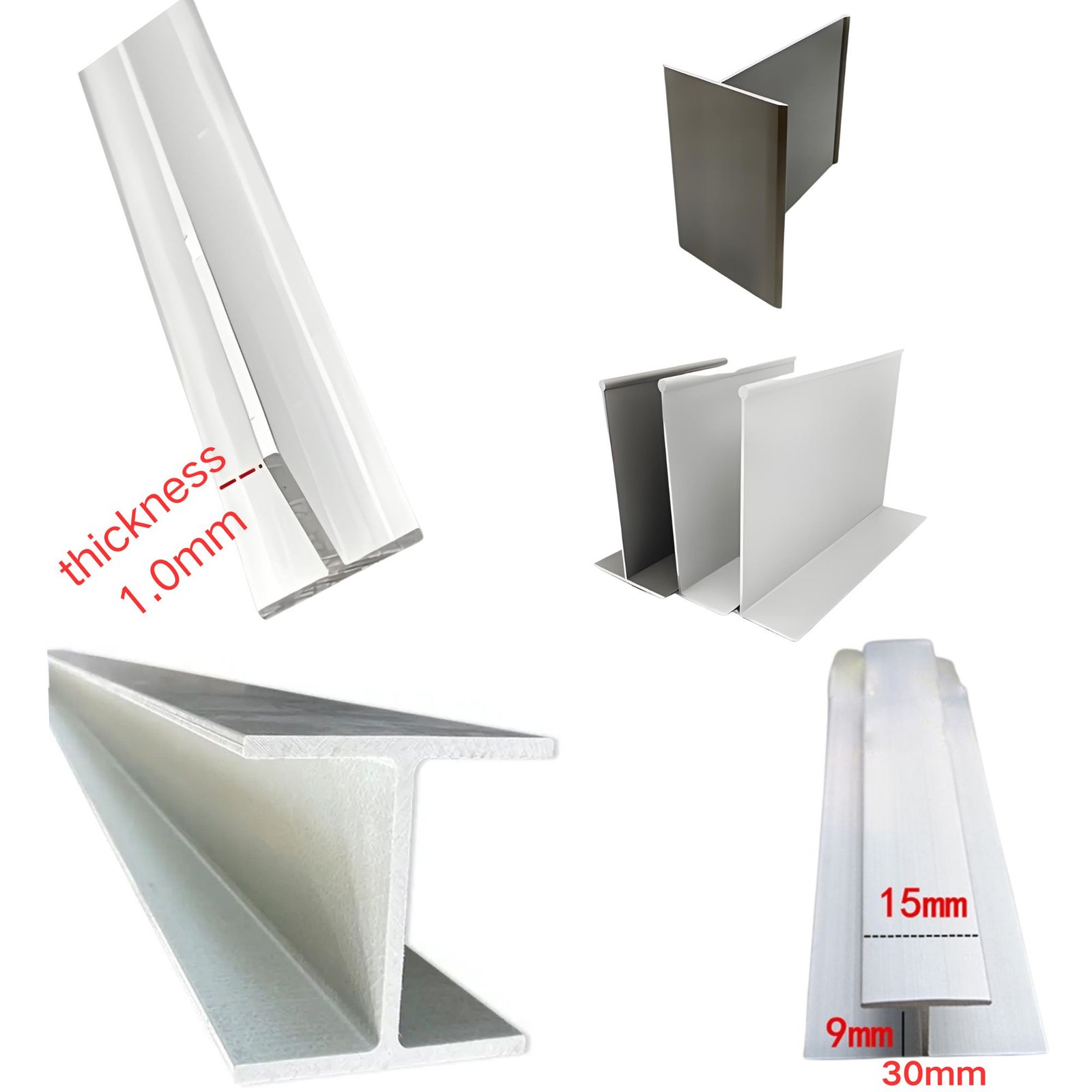
Technical Specifications
Certified precision data per ISO 9001:2015
Details
Certified precision data per ISO 9001:2015
The phrase “aluminum I-beam” gets used loosely. A steel wide-flange beam is hot-rolled, can run 600 mm deep, and takes its shape from a rolling mill. An aluminum I-beam is extruded — pushed through a die in a hydraulic press — which means the section is limited by what the press can swallow and what the die can hold. That’s why aluminum I-beams rarely exceed 250–300 mm depth in commercial extrusions, and why the flange of an aluminum I-beam is typically uniform in thickness (no tapered flange like a steel W-shape). These aren’t defects; they’re the geometry that comes with the process. Design around them and aluminum works. Ignore them and the beam fails in service.
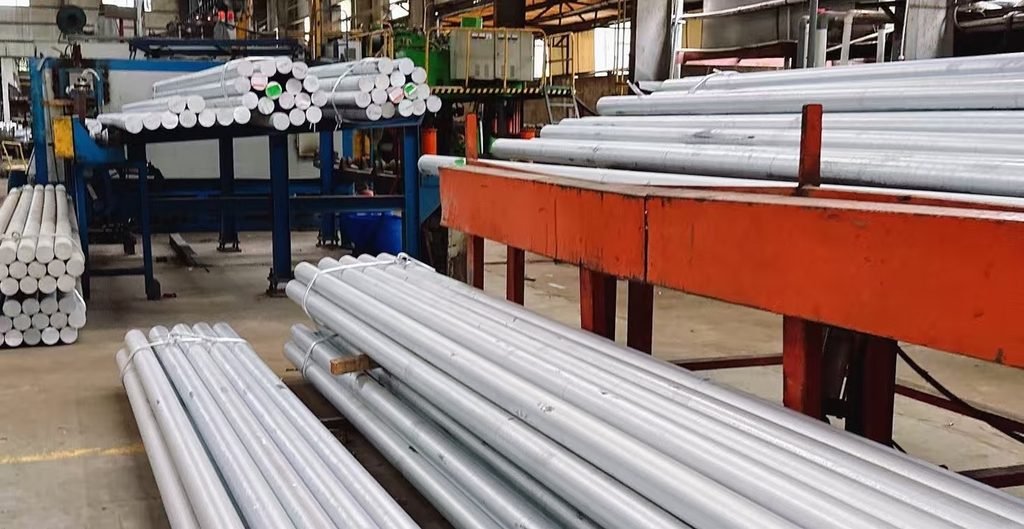
Linkedalu Metal Group Co., Ltd extrudes custom aluminum I-beam and T-profile sections for structural framing, stiffening, machine bases, transport equipment and architectural applications where steel is heavier than the spec allows. We supply 6061-T6 for structural duty and 6063-T5 for visible work, and we walk you through the four engineering decisions that decide whether aluminum replaces steel in your frame before the die is cut. Mill test certificates against GB/T 5237, EN 755-9 or ASTM B221 ship with every order. We currently ship to 50+ countries across six continents — Europe, the Americas, the Middle East, Africa, Asia and Oceania.
A steel I-beam is one thing. An aluminum I-beam is another.
Steel beams win on absolute strength and stiffness. Aluminum beams win on specific strength (strength per unit weight), corrosion resistance, and formability into complex cross-sections. Both are honest comparisons; neither is “better” without context.
| Property | Steel (ASTM A992) | Aluminum 6061-T6 (ASTM B221) |
|---|---|---|
| Density | 7.85 g/cm³ | 2.70 g/cm³ |
| Tensile strength | 400–550 MPa | ≥ 260 MPa |
| Yield strength | 250–345 MPa | ≥ 240 MPa |
| Elastic modulus (E) | 200 GPa | 69 GPa |
| Corrosion resistance | Coatings required | Natural oxide layer |
| Thermal expansion | 11.6 × 10⁻⁶ /°C | 23.1 × 10⁻⁶ /°C |
| Manufacturing | Hot-rolled | Extruded |
The two numbers most often missed: aluminum’s elastic modulus is about one-third of steel’s (69 GPa vs 200 GPa), so a same-size aluminum beam deflects roughly three times more under the same load. And aluminum’s thermal expansion is about twice steel’s, so long-span members need thermal movement accounted for at the connection, not just at the surface.
The four decisions that decide whether aluminum replaces steel
1. Absolute strength vs specific strength — the real comparison.
A 6061-T6 aluminum beam at the same cross-section carries about 35–40 % of the load a steel beam carries. The aluminum beam is also about one-third the weight. If your frame is stationary, lives indoors, and the load is the design driver, steel wins. If your frame is on a trailer, in a truck body, on a roof rack, on a boat, or has to be lifted and repositioned often, aluminum wins by a lot — because the weight saved per unit strength is decisive. This is the comparison most projects should start from.
2. Deflection and stiffness — what aluminum’s lower modulus costs you.
Aluminum’s lower modulus means a beam of the same cross-section deflects more. Three options to recover the stiffness:
- Deeper section — going from a 100 mm to a 150 mm aluminum I-beam roughly doubles the moment of inertia.
- Internal stiffening ribs in the extrusion — adds material where stress is highest, with little weight penalty.
- Closer support spacing — accepts the lower stiffness but reduces the unsupported span.
We’ll tell you on the drawing review which lever your geometry allows.
3. Section geometry — how extrusion compensates for material.
Extrusion lets us design the cross-section for the load path, not for the rolling mill. Practical moves: tapered wall thickness (thicker in high-stress zones), hollow tubular web, internal stiffening ribs. These are not stock steel shapes; they’re the reason aluminum beats steel on specific strength in the first place.
4. Welding, corrosion and environment — when aluminum wins outright.
6061-T6 welds cleanly with TIG / MIG (4043 / 5356 filler); HAZ loses temper (T6 → roughly T4 in the weld zone), design accordingly. Aluminum forms a protective oxide layer that self-heals at cut edges and scratches; steel needs galvanizing or paint and any cut or weld on site compromises that protection. Marine and chemical sites tip decisively to aluminum. Weight-sensitive mobile structures (trailers, truck bodies, railcar components, portable structures, marquee frames) — aluminum’s 1/3 weight pays back in fuel, payload, handling and installation labor.
I-beam specifics: extrusion limits, sizes and tolerances
What extrusion can and can’t do on an I-beam.
On presses from 500 MT to 5,000 MT, the practical envelope for an aluminum I-beam is roughly: depth up to ~300 mm in 6061-T6; flange width up to ~200 mm; flange and web thickness 2–25 mm depending on depth; standard length 6.0 m (longer runs by project review); weight per meter typically ≤ 15 kg/m.
Beyond ~300 mm depth, the web cools slowly, the flanges cool fast, and the differential contraction warps the section. Steel wins at that scale; aluminum doesn’t pretend to compete.
Standard I-beam reference sizes (extruded, 6061-T6).
Theoretical weights for reference only; final weight per MTC.
| Dimension (h × b) | Web t (mm) | Flange t (mm) | Weight (kg/m) |
|---|---|---|---|
| 50 × 30 | 3.0 | 4.0 | 0.95 |
| 60 × 40 | 3.5 | 4.5 | 1.45 |
| 80 × 40 | 4.0 | 5.0 | 2.10 |
| 100 × 50 | 4.5 | 6.0 | 3.20 |
| 120 × 60 | 5.0 | 6.5 | 4.40 |
| 150 × 75 | 5.5 | 8.0 | 6.50 |
| 180 × 90 | 6.0 | 9.0 | 8.70 |
| 200 × 100 | 6.5 | 10.0 | 11.00 |
| 250 × 125 | 7.0 | 11.0 | 14.50 |
| 300 × 150 | 8.0 | 12.0 | 18.50 |
Straightness, twist and web-flatness per ANSI H35.2 / EN 755-9.
| Property | Standard tolerance |
|---|---|
| Depth (h) | ± 0.5 to ± 1.5 mm depending on size |
| Flange width (b) | ± 0.5 to ± 1.0 mm |
| Web thickness | ± 10 % of nominal |
| Flange thickness | ± 10 % of nominal |
| Straightness | ≤ 0.8 mm per 1000 mm |
| Twist | ≤ 0.5° per 1000 mm |
| Web flatness | ≤ 0.5 % of web height |
Tighter tolerances slow the press, add inspection, sometimes force die modification. Pay for precision where the assembly needs it (machined mating faces, bolted flange connections); skip it where the installer’s shim will cover the gap.
T-profile specifics: equal vs unequal, sharp vs radiused
The four variants that change what a T-profile actually does.
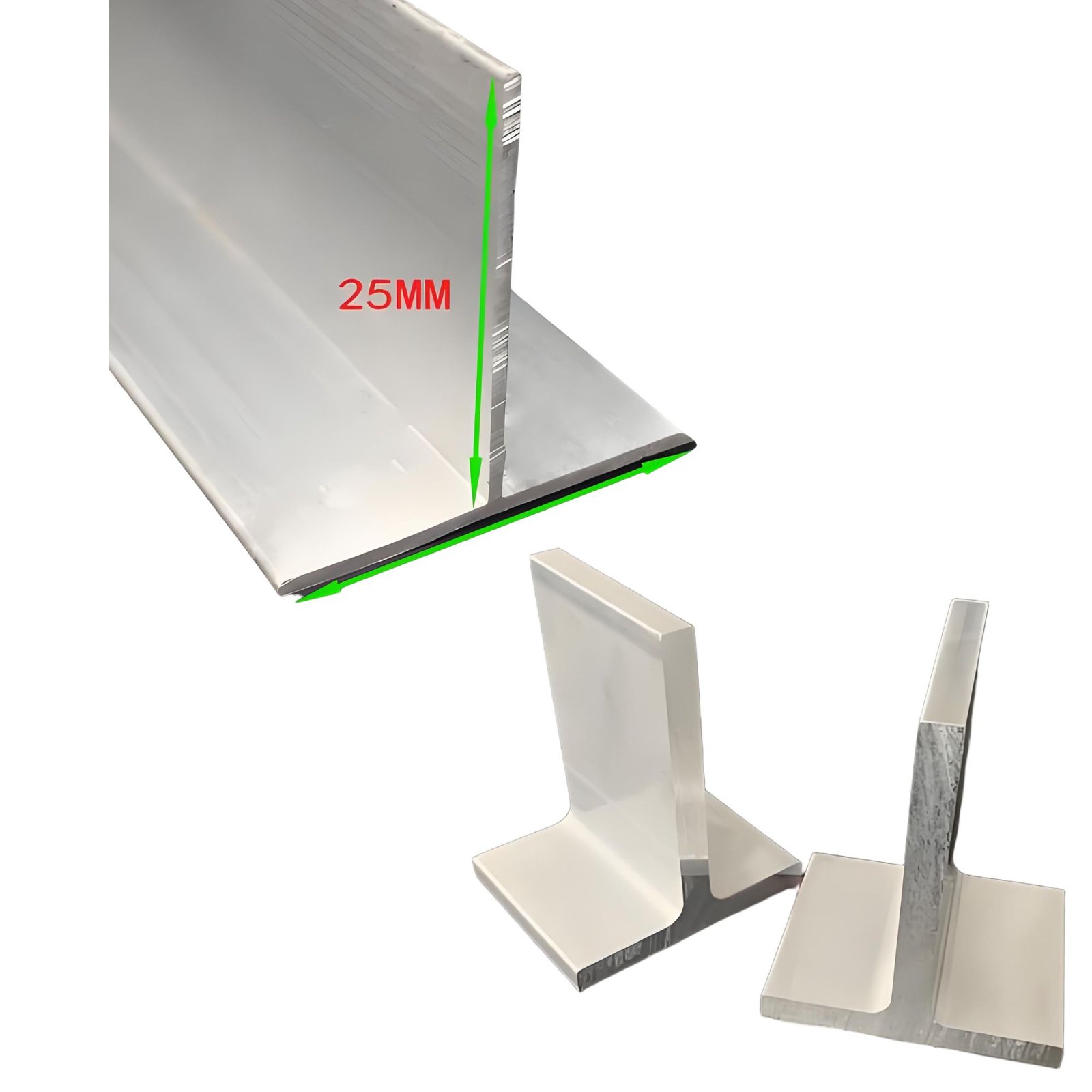
- Equal T — flange width ≈ stem height. Default for stiffeners, ceiling grids, partition frames. Symmetric loading across the flange.
- Unequal T — flange width > stem height. Use when the mounting surface needs more contact than the stem needs for stiffness — display frames, architectural reveals, signage holders.
- Sharp corners — square outside edges and stem-flange junction. Clean architectural look; modest stress concentration.
- Radiused corners — small radii at the junction and outer edges. Better stress distribution, easier extrusion, safer to handle. Architectural T profiles almost always use radiused corners.
T-profile vs T-slot (the confusion that wastes a week of RFQs).
A T-profile is a structural T-section (flange + stem) used as a stiffener, ceiling grid, reveal or partition frame. A T-slot profile (2020 / 2040 / 4040 / 4080 industrial framing) is a different product category with slots machined into the flange to accept T-nuts and bolts for modular assembly. They look vaguely similar; they serve entirely different functions. If your RFQ says “T profile” and you mean a structural T, say so explicitly.
Mechanical properties: 6061-T6 vs 6063-T5.
| Property | 6061-T6 | 6063-T5 |
|---|---|---|
| Tensile strength | ≥ 260 MPa (≥ 45,000 psi) | ≥ 160 MPa (≥ 27,000 psi) |
| Yield strength | ≥ 240 MPa (≥ 35,000 psi) | ≥ 110 MPa (≥ 21,000 psi) |
| Elongation at break | ≥ 8 % | ≥ 8 % |
| Brinell hardness | ~ 95 HB | ~ 60 HB |
| Machinability | Excellent | Good |
| Corrosion resistance | Excellent | Excellent |
| Weldability | Excellent | Good (HAZ softening) |
| Anodized finish | Good (slightly greyish) | Excellent (bright, uniform) |
| Best for | Structural T-bars, stiffeners, welded frames | Visible architectural T-profiles, ceiling grids, reveals |
6063-T5 is the default for ceiling grids and visible reveals; 6061-T6 for structural T-bars, stiffeners, welded machine frames, transport equipment.
Where I-beams and T-profiles show up in real projects
Truck bodies, trailers and railcar structures.
This is aluminum’s home turf. A truck body or trailer frame on steel I-beams weighs more than the payload it’s rated for. On aluminum 6061-T6 I-beams (extruded, custom size) the frame weight drops 40–50 %, payload goes up, fuel comes down. We supply I-beams cut to length, drilled and welded into sub-assemblies, with MTCs that match the trailer builder’s spec.
Machine frames, gantries and equipment bases.
Machine builders move to aluminum I-beams when the machine has to be repositioned often (portable automation, test rigs, exhibition displays) or when corrosion is a concern (food processing, wash-down environments, outdoor installations). For stationary heavy machinery, steel is usually still right.
Partition walls, ceiling grids and architectural reveals.
T-profile in 6063-T5 is the standard for suspended ceiling grids (the flange supports the tile, the stem connects to suspension wire), partition framing (T acts as a stiffener bonded or clipped to the panel), and architectural reveals (T as a visible trim separating two materials). Anodized for visible work; mill finish for hidden.
Stiffeners bonded to flat panels — the underrated T-profile job.
A T-profile bonded or welded to the back of a flat aluminum panel increases the panel’s moment of inertia dramatically and prevents buckling under bending. This is the trick behind many lightweight enclosures, doors and machine guards. The T-profile doesn’t carry the load alone; it converts a flexible panel into a structural one. 6061-T6 is the default; we’ll calculate the optimum stem height and flange width for your panel size and load.
Marine, docks and gangways.
Aluminum I-beams and T-profiles are the standard for marine structures — boat lifts, dock frames, gangways, pontoon framing — because they don’t need paint, they don’t rust at the waterline, and the weight savings are directly usable as buoyancy or payload. 6061-T6 for structural members, 5052 or 5086 for plate and sheet, 6063-T5 for visible trim.
Manufacturing capability and standards
Alloys and temper.
- 6061-T6 — structural I-beams, structural T-bars, welded frames, transport equipment.
- 6063-T5 — visible T-profiles, ceiling grids, reveals, partition frames.
- 6060-T5 — European preference, fine T-profiles with tighter visual standards.
- 5052 / 5086 — marine plate and secondary members.
Welding, anodizing and finishing.
- Welding — 6061-T6 welds cleanly with TIG / MIG (4043 / 5356 filler). Weld strength is in the certificate; HAZ softening accounted for in design.
- Anodizing — Class AA10 / AA15 / AA20 for visible architectural profiles.
- Powder coating — architectural-grade, ≥ 60 μm, Qualicoat or GSB certified.
- PVDF (fluorocarbon) — 2-coat / 3-coat / 4-coat for high-UV or coastal environments.
Fabrication.
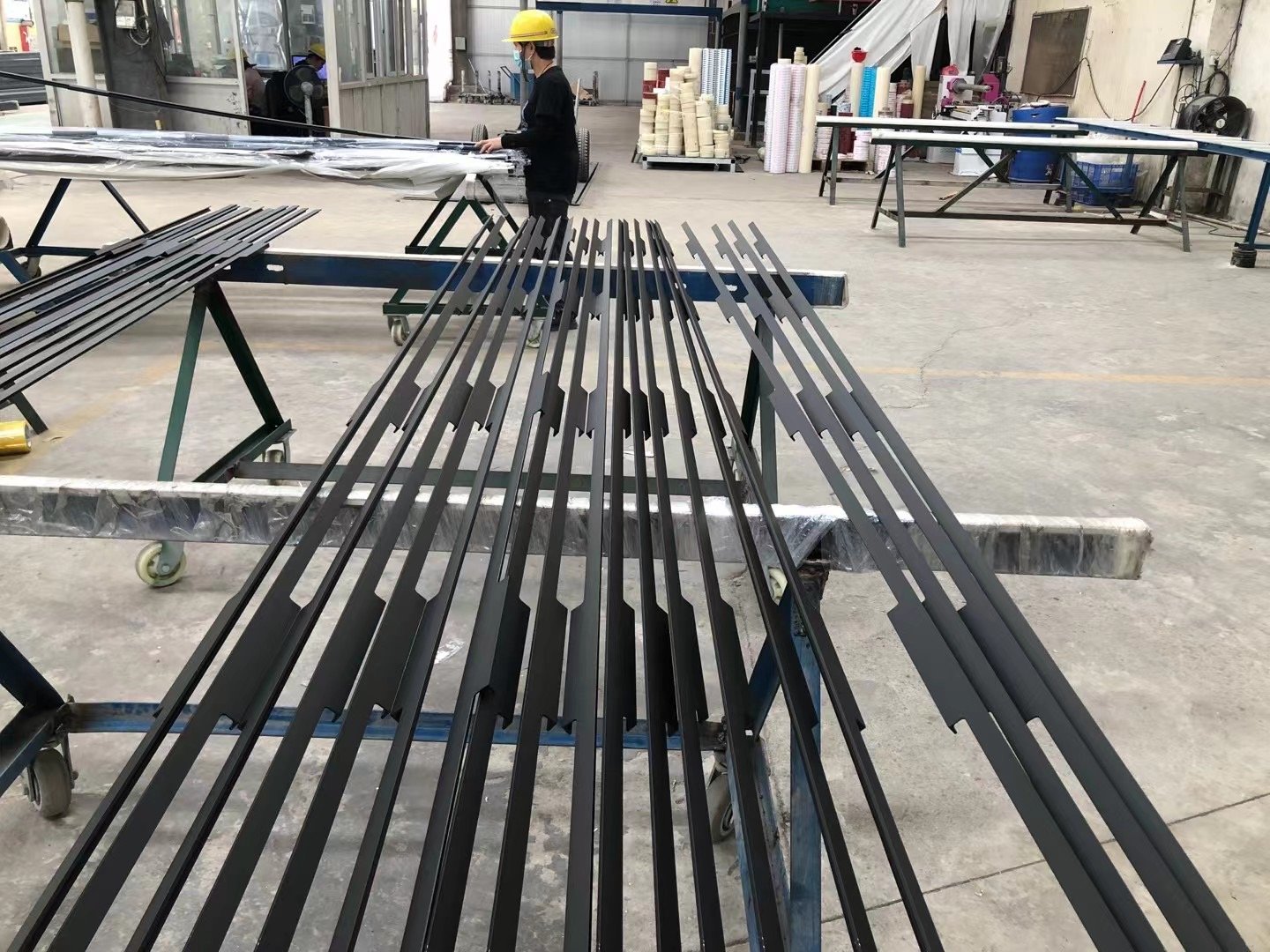
Cut-to-length, drill, mitre, weld sub-assemblies and label to your call-up list. Web and flange flatness inspected at the mill; welded sub-assemblies dimensionally checked against the assembly drawing.
How an I-beam or T-profile order moves through the mill
- You send the drawing — section size, alloy, temper, finish, fabrication list, weldments if any.
- We review for extrudability, check CCD / weight-per-meter / web thickness, and return a proposal.
- New die or reused die; locked to a single billet batch.
- Extrusion → straightening → cut-to-length → CNC drilling / mitring → weld sub-assemblies (if ordered) → finish → labeling.
- MTC (EN 10204 3.1) issued to GB/T 5237, EN 755-9 or ASTM B221 with measured mechanical properties, chemical composition and weld records.
- Packed and labeled to your call-up list. Shipped to 50+ countries with CIQ, C/O, Form A and destination-specific documents.
Frequently Asked Questions (FAQ)
Q1: Can an aluminum I-beam replace a steel I-beam in my frame?
Sometimes, depending on what the frame is for. A 6061-T6 aluminum I-beam carries about 35–40 % of the load a same-size steel beam carries, but it weighs about one-third as much. Aluminum wins for weight-sensitive structures (trailers, truck bodies, railcar components, portable equipment, marine structures) and for corrosion-exposed sites. Steel still wins for stationary, high-load applications and for very large spans where aluminum extrusion can’t reach the depth.
Q2: An aluminum beam of the same size deflects more than steel. What do I do about it?
Three options: go deeper (a 150 mm aluminum I-beam roughly doubles the moment of inertia of a 100 mm one), add internal stiffening ribs in the extrusion, or accept closer support spacing. Aluminum’s lower modulus (69 GPa vs steel’s 200 GPa) means deflection is rarely solved by switching alloys; it’s solved by changing the section geometry or the span.
Q3: Equal T or unequal T for my project?
Equal T (flange width ≈ stem height) when load or stiffening is symmetric across the flange direction — ceiling grids, partition frames, panel stiffeners. Unequal T (flange wider than stem) when the mounting surface needs more contact area than the stem needs for stiffness — display frames, architectural reveals, signage holders. If you’re not sure, equal T is the safer default and easier to source from existing dies.
Q4: Is a T-profile the same as a T-slot profile?
No. A T-profile is a structural T-section (flange + stem) used as a stiffener, ceiling grid, reveal or partition frame. A T-slot profile (2020 / 2040 / 4040 / 4080 industrial framing) is a different product category with slots machined into the flange to accept T-nuts and bolts for modular assembly. If your project wants a structural T, say so; if it wants modular framing, that’s a separate product with its own page.
Q5: How large can an aluminum I-beam be extruded, and what’s the minimum order?
Practically, up to ~300 mm depth and ~200 mm flange width on presses in the 500–5000 MT class. Weight per meter usually tops out around 15 kg/m. Minimum order for a new die is typically 500 kg to 2 metric tons. Sections already in our die library can ship from 200–500 kg.
Q6: What documents ship with the order, and which countries do you export to?
A mill test certificate (EN 10204 3.1) with measured mechanical properties, chemical composition and coating parameters, issued to GB/T 5237, EN 755-9 or ASTM B221. Weld procedure specifications (WPS) and welder qualifications if the order includes welded sub-assemblies. CIQ, C/O, Form A, CE / RoHS / REACH where the destination requires it. We currently ship to 50+ countries across six continents — facade contractors, transport OEMs, machine builders, marine fabricators and modular-building companies. ISO 9001 and ISO 14001 certified.
Schematics
Cross-sectional dimensions
Related Profiles
Complementary hardware for your structural assembly
Aluminum Extrusions for Roof Racks and Tent Frames—Made to Your Drawings, Built for the Outdoors
Custom aluminum extrusions for car roof racks, crossbars, roof rails, and tent frames. 6061-T6 & 6063-T5. Anodized, powder coated, PVDF.…
Details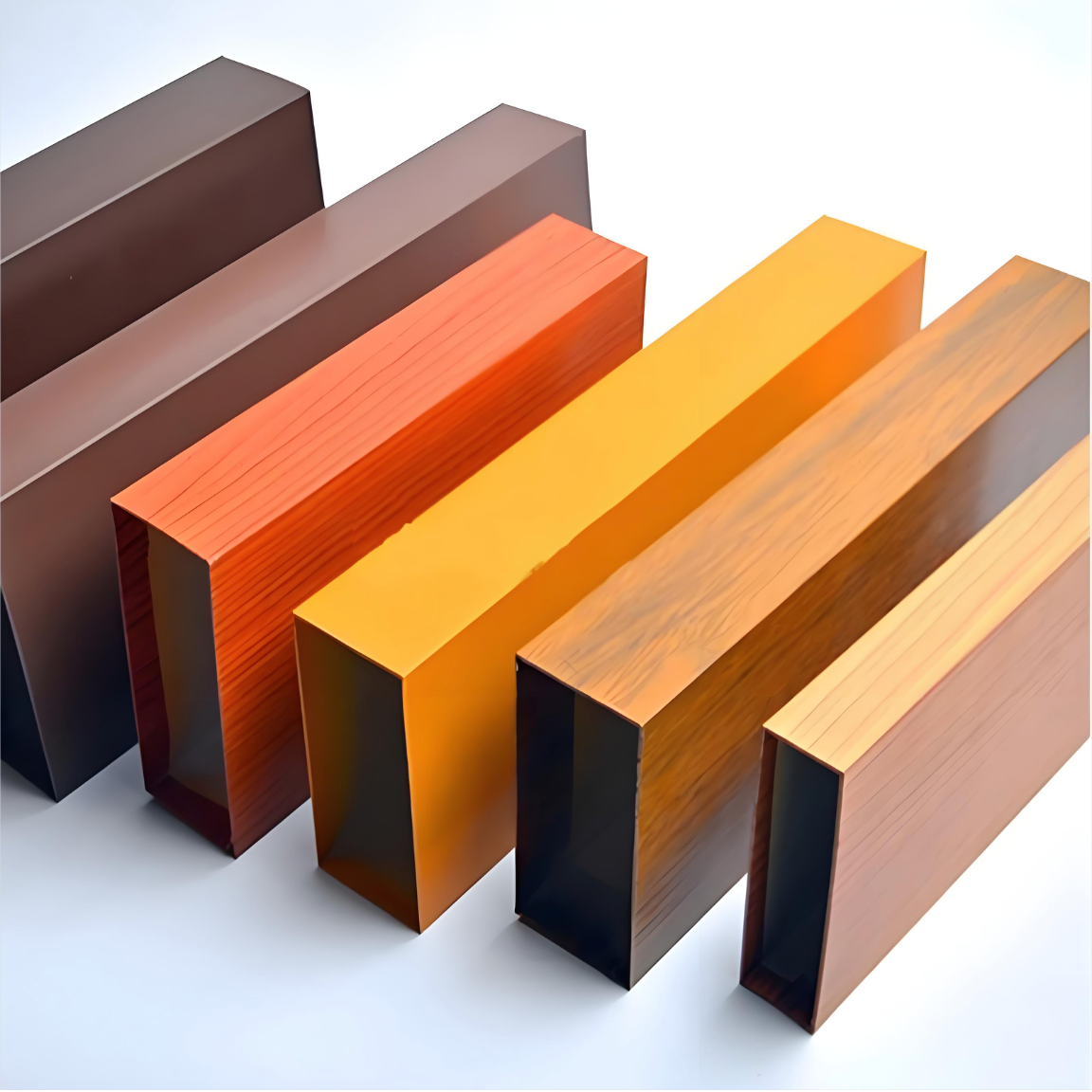
Custom Aluminum Rectangular Tubes | 6063 & 6061 Extruded Tubing
Factory-direct custom extruded aluminum rectangular tubes & flat pipes. 6063/6061 alloys, tailored wall thicknesses & interior ribs. CNC fabrication &…
Details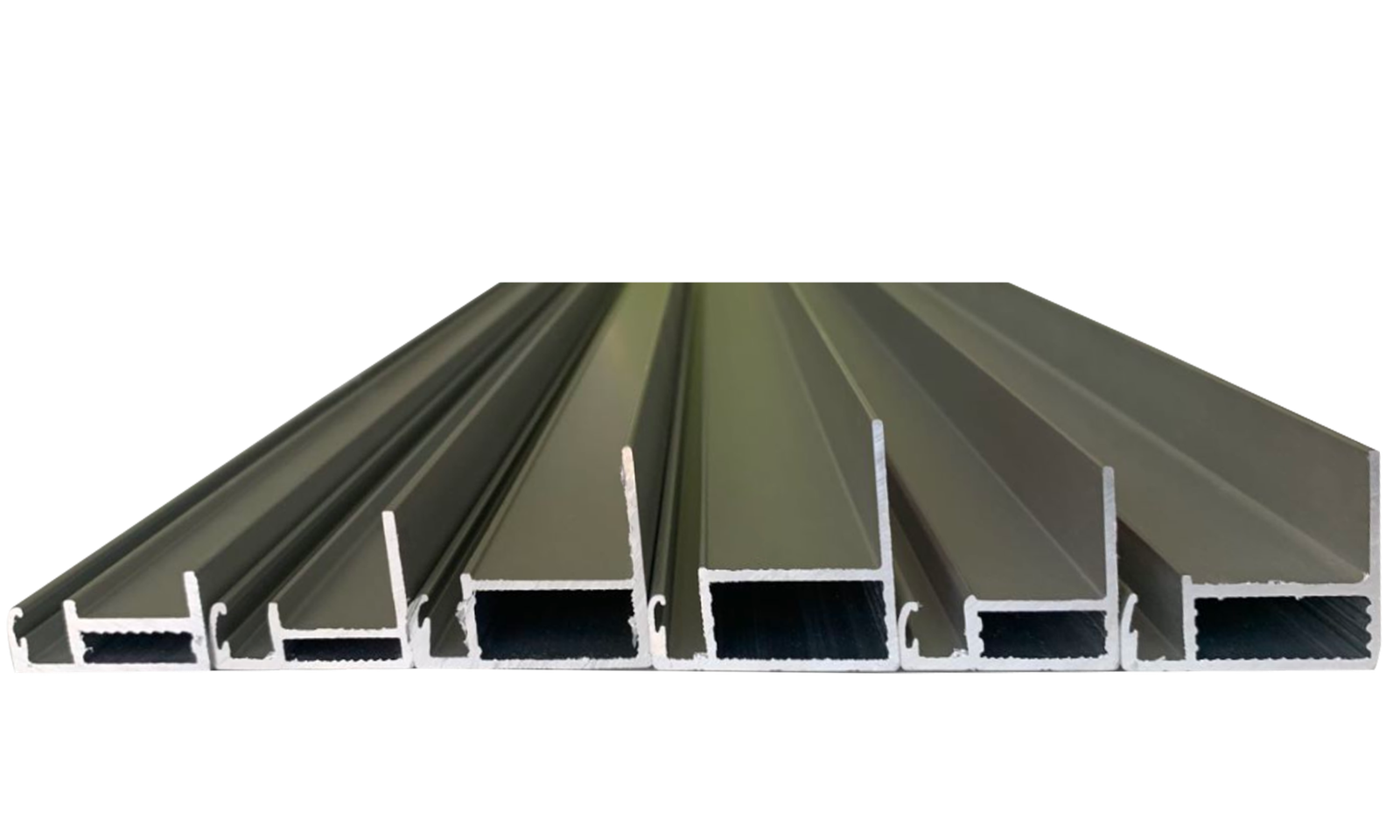
Aluminum Solar Panel Frame Extrusions | PV Module Frames
Custom aluminum solar panel frames. 6063-T5/T6, anodized AA15/AA20. Tight straightness, pre-punched holes, no twist. Stop micro-cracks & corrosion. Cut, punched,…
Details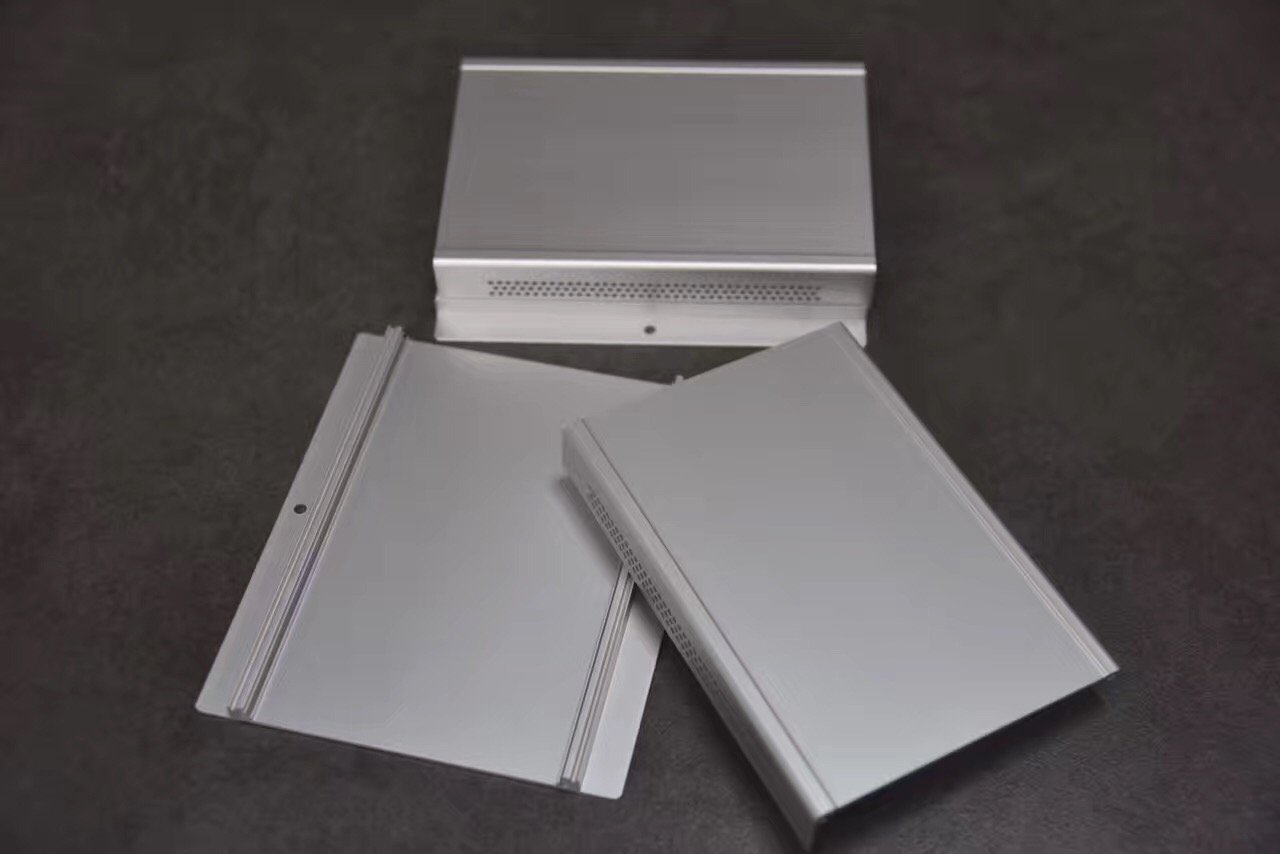
Robot & AI Automation Aluminum Parts | CNC Machined Components for Robotics
CNC machined aluminum parts for robots, AGVs, linear actuators, and AI vision systems. Joint housings, base plates, camera frames. Thin-wall,…
Details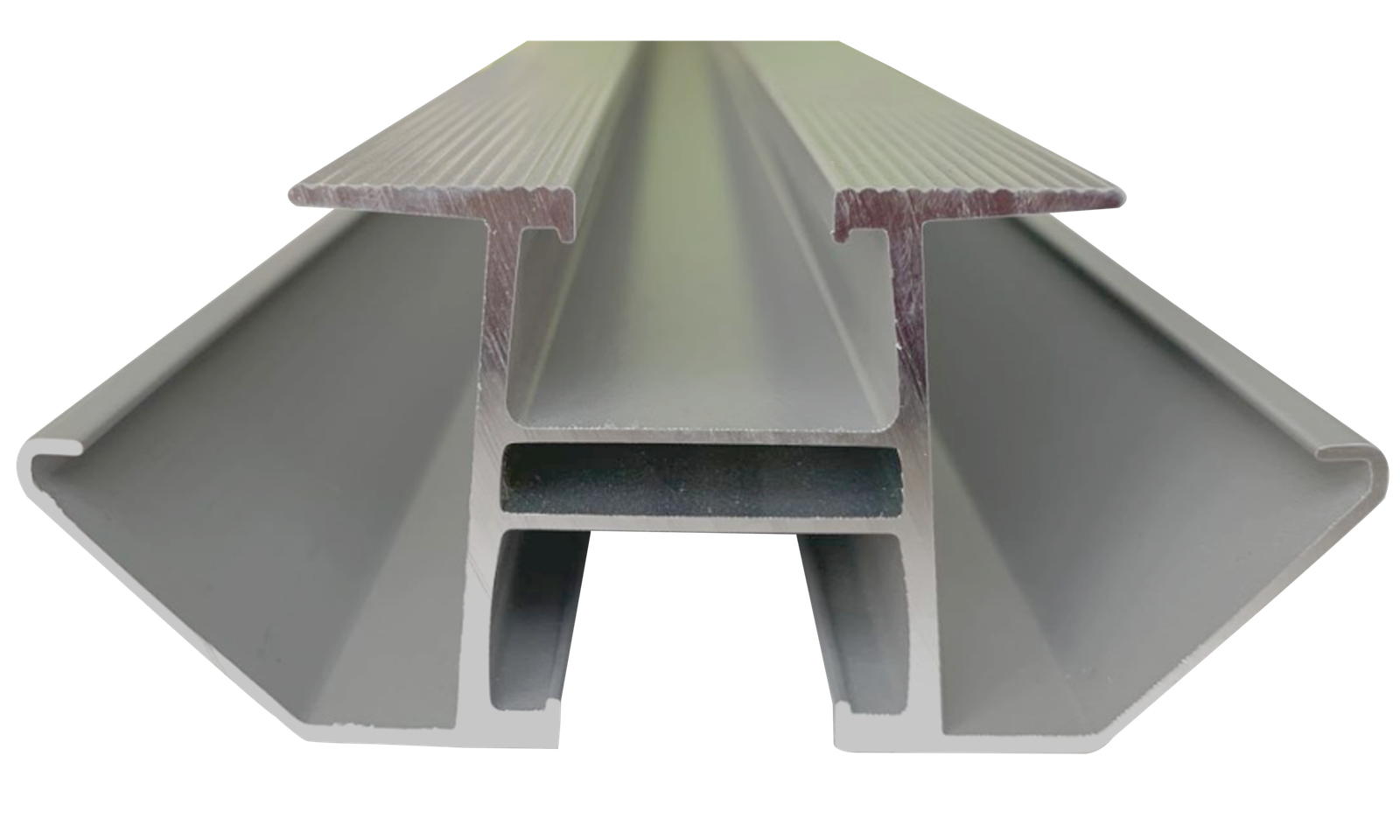
Aluminum Solar Mounting Profiles | Standard Rails & Custom Tracker Extrusions
Standard aluminum tubes and custom-extruded solar mounting profiles—rails, columns, clamps. 6005-T5 & 6063-T6, anodized or PVDF coated. Pre-cut, punched, labeled.…
Details
Custom Aluminum Glass Railing Profiles | Balcony & Stair Balustrade Profiles | Linkedalu
Custom extruded aluminum glass railing systems. Handrails, posts, glass shoes, toe plates. PVDF & powder coat. Integrated drainage. Pre-cut, drilled,…
Details