Aluminum Solar Mounting Profiles | Standard Rails & Custom Tracker Extrusions
Standard aluminum tubes and custom-extruded solar mounting profiles—rails, columns, clamps. 6005-T5 & 6063-T6, anodized or PVDF coated. Pre-cut, punched, labeled. For rooftop and ground-mount systems. Get a quote.
Technical Specifications
Certified precision data per ISO 9001:2015
Details
Certified precision data per ISO 9001:2015
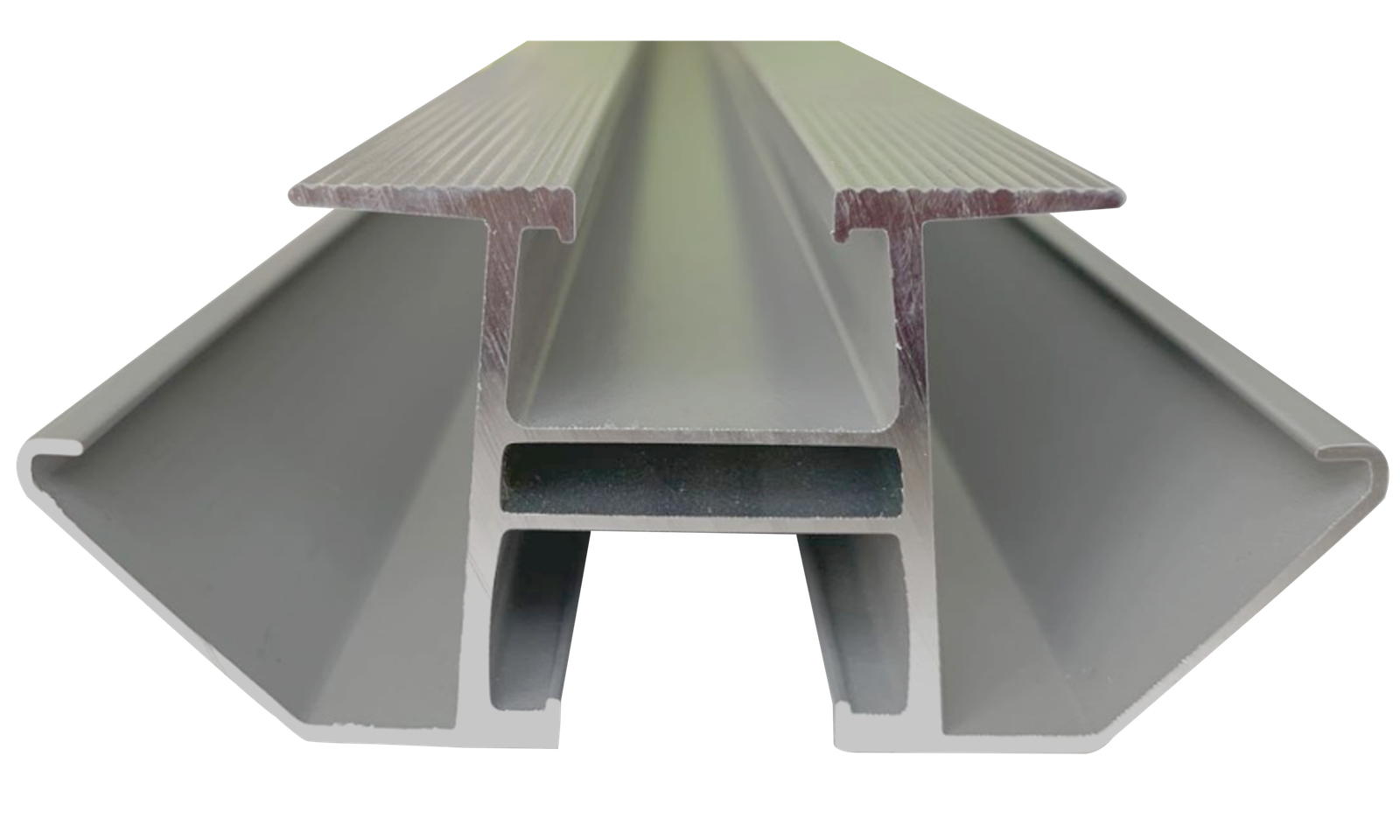
We manufacture custom aluminum solar mounting extrusions for ground-mount, rooftop, and tracking photovoltaic systems
There’s a conversation happening on a lot of solar projects right now: stick with the zinc-aluminum-magnesium steel that’s taken over the last few years, or go back to aluminum for certain sites. We’re not here to tell you steel is wrong. We’re here to make sure that when aluminum is the right call, the profiles you get are exactly what the mounting design asked for—and that they show up cut, punched, labeled, and ready to bolt together.
Some mounting systems are built entirely from standard rectangular and square aluminum tubes. If that’s yours, we can supply the tube. Other systems need a custom rail—something with a serrated top slot for T-bolts, a side channel for cable management, or an integrated drainage groove for BIPV. That’s a custom die, and we cut those too. You won’t get pushed toward one or the other. You’ll get what your design calls for.
Steel vs. Aluminum: The Honest Version
Zinc-aluminum-magnesium steel earned its reputation for a reason. The upfront material cost is lower, the yield strength is higher, and the cut-edge self-healing is a real thing. If you’re building a huge ground-mount plant on flat, dry land with cheap labor for on-site cutting and welding, steel is hard to beat.
But solar goes into a lot of places that aren’t flat, dry, and cheap-labor. Rooftops with structural load limits. Floating solar on reservoirs and fish farms. Coastal salt-spray zones. Residential installs where the customer wants a black frame that won’t rust-stain the roof tiles. In those places, aluminum earns its keep.
Here’s how the comparison plays out where it actually matters:
Weight. Aluminum is roughly one-third the density of steel. On a commercial rooftop, that difference can mean the difference between reinforcing the structure and not. Fewer steel reinforcements, faster permitting, lower total installed cost—even if the aluminum itself costs more per kilo.
Corrosion. Aluminum doesn’t rust. The thin oxide layer that forms on bare aluminum within seconds of exposure to air is self-healing. Scratch it, and it reforms. Zinc-aluminum-magnesium coatings also self-heal at cut edges—that’s the whole point of the magnesium addition—but a deep gouge through the coating into the steel substrate will eventually rust. In coastal or high-humidity environments, aluminum’s corrosion resistance doesn’t depend on a coating staying intact.
Fabrication. Aluminum is softer. It cuts faster, drills with less effort, and doesn’t fight the tool the way steel does. That matters less if you’re setting up a full fab shop on site. It matters a lot if you’re trying to install quickly with a small crew, or if you want to do all the cutting and punching in a factory and ship a bolt-together kit. We do the second one.
End-of-life value. An aluminum mounting structure that’s been sitting in a field for 25 years is still aluminum. It can be recycled indefinitely without losing properties, and the scrap value is significant—typically 70–80% of the LME aluminum price. Steel scrap is steel scrap. For projects where the owner is thinking about decommissioning costs or circular economy metrics, that matters.
Where steel still wins. Large ground-mount arrays with spans over 4 meters, very high wind or snow loads where you need every megapascal of yield strength, and projects in regions where labor is abundant and cheap. If your project looks like that, steel is probably the economic choice. We won’t pretend otherwise.
The point is this: it’s not a religion. Some projects should use steel. Some should use aluminum. If yours is in the aluminum camp, we can supply the profiles—standard tube or custom extrusion—and deliver them ready to install.
What We Supply
Standard aluminum tubes
For the structural bones of a mounting system—posts, cross beams, bracing—a standard aluminum tube or rectangular hollow section often does the job. We keep dies for common sizes. No tooling charge, no minimum order theatrics.
- Square tube: 40×40, 50×50, 60×60 mm
- Rectangular tube: 60×40, 80×40, 100×50 mm
- Wall thickness: 1.5 mm to 5.0 mm
- Alloy: 6063-T5 or 6005-T5,6005A-T6 or 6061-T6
- Finish: mill, anodized, or powder coated
If you need something a little different—say 45×45 or a wall thickness that’s not in the catalog—we can usually adjust without a full new die. Just ask.
Custom-extruded profiles
When the design calls for a rail that does more than just sit there—something with a serrated top channel that grips a T-bolt, a side slot for a grounding clip, or a hollow chamber that doubles as a cable tray—that’s a custom die. We draw it, cut the steel, and extrude a sample. Once you sign off, we run production.
Common custom profiles we make for solar:
- PV rails with integrated serrated channels and side mounting grooves
- C-channel and H-channel posts with one-piece extruded base flanges and stiffening ribs
- Clamp base profiles with teeth that match the rail serrations exactly
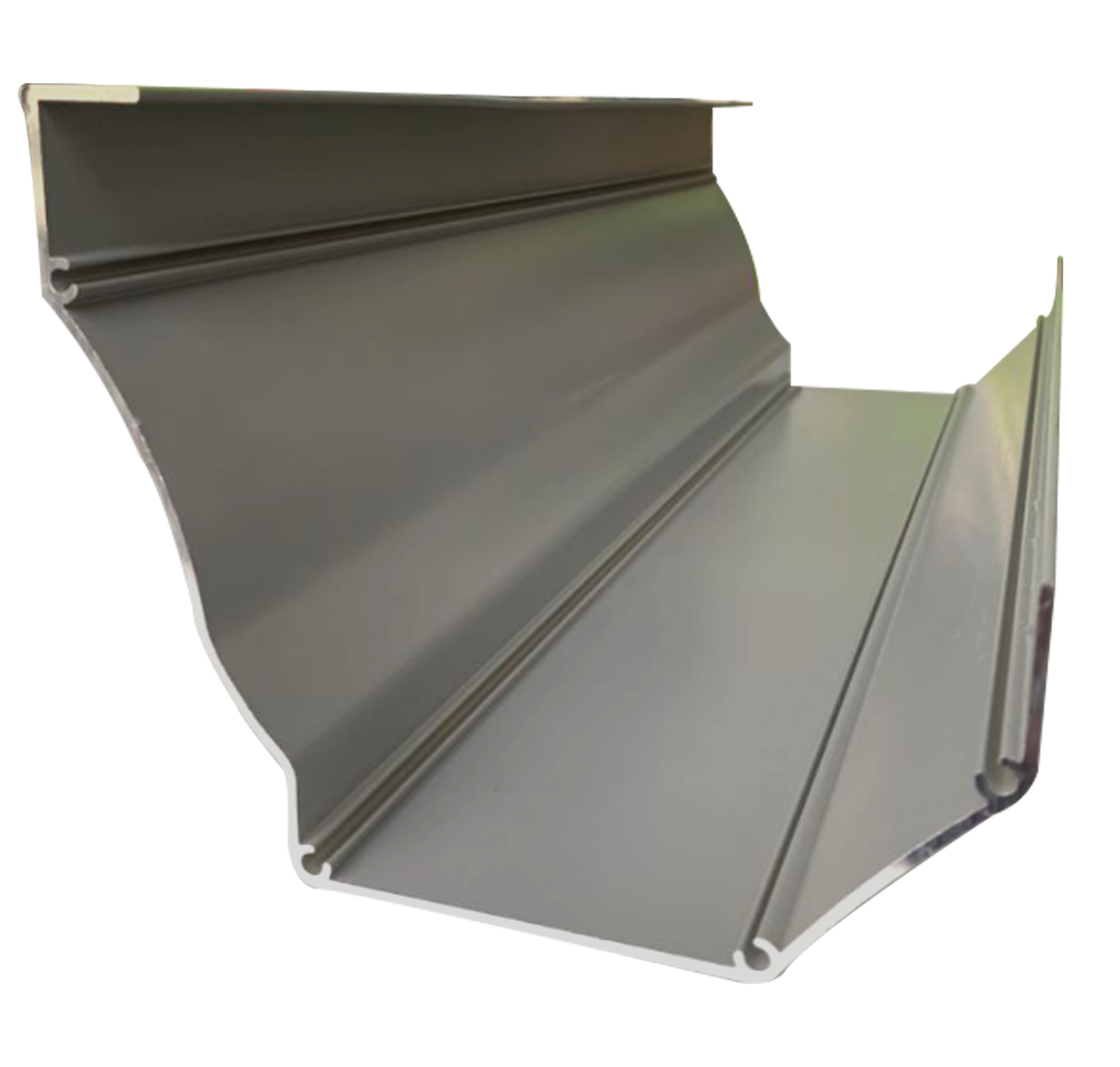
- BIPV gutters and water channels with built-in slope and drip edges
Every custom profile gets a moment-of-inertia check against the span and load data you provide. If the section looks underbuilt, we’ll tell you before the die is made—suggest a thicker web, an internal rib, or an alloy step-up. You make the call.
| Profile Application | Standard Dimensions | Recommended Alloy & Temper | Critical Engineering Metric | Linkedalu Advantage |
|---|---|---|---|---|
| Residential Rooftop Rails | 35 mm×30 mm to 40 mm×40 mm | 6063-T6 | Lightweight to minimize roof dead-load; excellent screw-slot accuracy | Precise T-slot geometry holds tight tolerances for fast clamp installation. |
| Commercial C&I Racking | 50 mm×50 mm to 68 mm×40 mm | 6005A-T6 | High bend resistance across spans up to 1,500 mm | Complex asymmetric profiles extruded cleanly with zero structural distortion. |
| Utility Solar Tracker Rails | Custom Large-Scale Sections | 6061-T6 or 6005A-T6 | Maximum yield strength to withstand high-velocity wind loads | Heavy-duty capabilities up to 5,000 MT press force for massive structural members. |
| Inter/End Clamps & Connectors | Custom small-die profiles | 6060-T6 or 6063-T5 | Superior corrosion resistance; tight tolerance snap-fits | Flawless surface finish that takes high-quality anodizing without defects. |
Surface Finishing for 25 Years Outdoors
Bare aluminum survives outdoors better than bare steel. But a solar farm is a 25-year asset, so we treat the surface accordingly.
| Exposure | Recommended Finish | Spec | Expected Life |
|---|---|---|---|
| Inland, mild climate | Anodized AA15 | 15 µm, nickel salt sealed | 25 years |
| Coastal (over 1 km inland) or high humidity | Anodized AA20 | 20 µm, high-quality sealing | 25 years |
| Coastal frontline, salt marsh, floating PV | PVDF fluorocarbon, 3-coat | ≥35 µm total | 25 years |
| General outdoor with specific color | Super-durable powder coat | 60–80 µm | 15–20 years |
Before any coating goes on, the profiles go through a conversion coating step—chrome or chrome-free passivation. This stops filiform corrosion, the kind that creeps under a coating from a scratch. It adds a few cents per kilo. It’s not the place to cut corners on a solar project.
Pre-Fabrication: The Kit Approach
If your installers are cutting, drilling, and punching on site, you’re paying them to run a makeshift machine shop—often without a roof, often in a hurry. We can shift that work into the factory.
We offer three delivery levels:
1. Raw lengths. Standard 6-meter bars or rough-cut to length. You do all the fabrication. Lowest per-kilo price, makes sense if you have a dedicated fab shop.
2. Cut and punched. Every rail, post, and beam cut to finish length (±0.1 mm). All connection holes, drainage holes, and grounding holes punched or drilled per your assembly drawing. No field cutting, no drill jigs.
3. Full kit (most popular). In addition to cutting and punching, every piece gets a label that matches its position on the installation drawing. Parts are packed by assembly zone or row. The site team opens a crate, reads the number, bolts it together. No measuring, no cutting, no scrap.
The cost of our in-house cutting and punching is almost always less than the cost of field labor, field mistakes, and field scrap. We’ve seen too many jobs where the mounting structure was the bottleneck, not the panels.
Where These Profiles End Up
| Project Type | Typical Aluminum Profiles | What We Supply |
|---|---|---|
| Commercial rooftop | Rails, L-feet, clamps | Custom rail extrusion + standard tube cross beams |
| Residential rooftop | Small rails, hooks, flashings | Custom rail, pre-cut and pre-punched, color-matched to roof |
| Floating solar / aquavoltaics | Tall posts, long rails, thick sections | PVDF coating, standard tube + custom rail combo |
| BIPV carport / canopy | Gutters, support frames, fascia | Custom water channel and structural profiles |
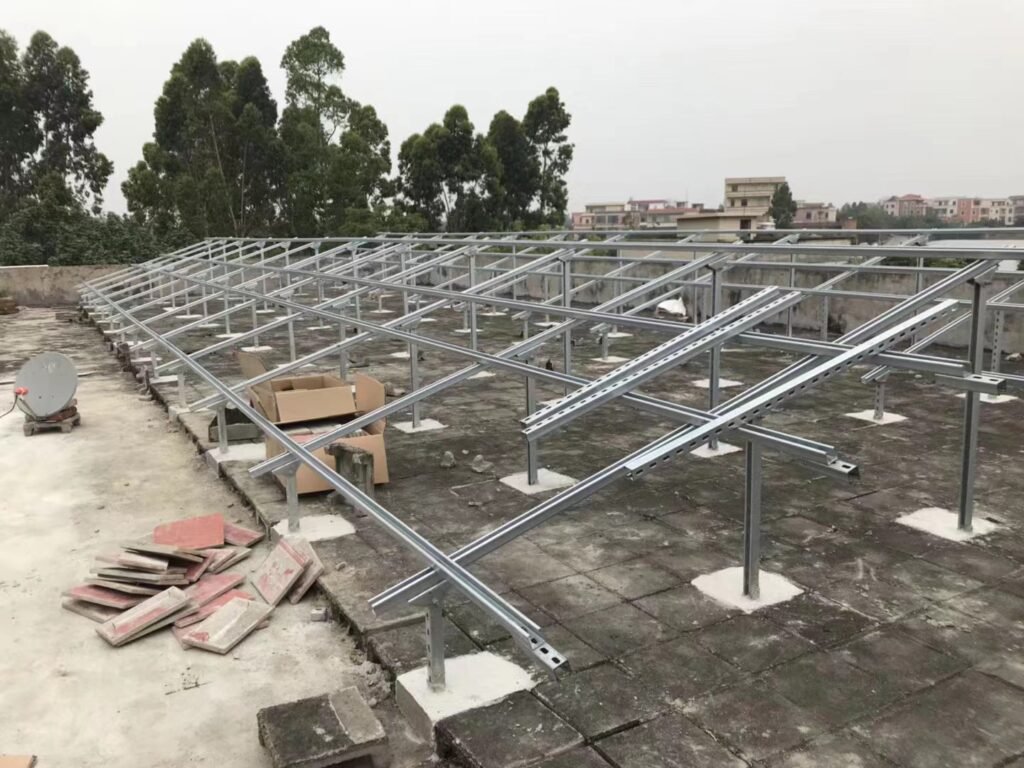
| Ground-mount (aluminum) | Posts, purlins, beams | Standard aluminum tube in volume |
FAQ
Q1: We’re currently using zinc-aluminum-magnesium steel. Why would we switch to aluminum?
Usually for one of three reasons: weight restrictions on a rooftop, corrosion concerns (coastal, floating, or high-humidity sites), or labor costs during installation. If none of those apply, stick with steel—it’s cheaper upfront and perfectly capable. If one or more apply, aluminum is worth a serious look. We’re happy to run the numbers with you.
Q2: Do you only do custom extrusions, or do you stock standard tube?
We do both. Standard aluminum square and rectangular tubes in common solar sizes are available from existing dies. If your design needs a custom rail with serrations or integrated channels, we’ll cut a new die. You don’t get pushed into a custom profile just because we have an extrusion press.
Q3: How do you make sure the aluminum rails are strong enough?
We check the section modulus and moment of inertia against your span, panel weight, and local wind/snow loads before we finalize the die. If the profile as drawn won’t meet deflection limits, we’ll suggest changes—thicker web, internal rib, or a step up to 6005-T5 or 6061-T6. We’d rather have that conversation before the die is cut than after the first batch is installed.
Q4: Can you pre-cut and pre-punch everything to our installation plan?
That’s how most of our solar customers work with us. Send the mounting layout or shop drawings. We’ll cut, punch, label, and pack by row or zone. Your crew unloads and assembles.
Q5: What’s the minimum order?
For standard tube from existing dies, quantities can be quite small—a few hundred kilos is fine. For a new custom die, we ask for 500 kg minimum per profile to cover setup. A typical commercial rooftop project usually exceeds that without difficulty.
Q6: We had an aluminum structure corrode near the bolt holes on a coastal project. What went wrong?
Galvanic corrosion between the aluminum and a dissimilar metal fastener, most likely. If you use plain steel or zinc-plated bolts in contact with aluminum in a salt environment, the aluminum acts as a sacrificial anode and pits around the hole. The fix is isolation: nylon washers or bushings between the bolt and the aluminum, combined with stainless steel (316) or Dacromet-coated fasteners. We can groove the profile at the bolt slot to accept a nylon isolation strip—something we design into the die when we know it’s a coastal job.
Schematics
Cross-sectional dimensions
Related Profiles
Complementary hardware for your structural assembly
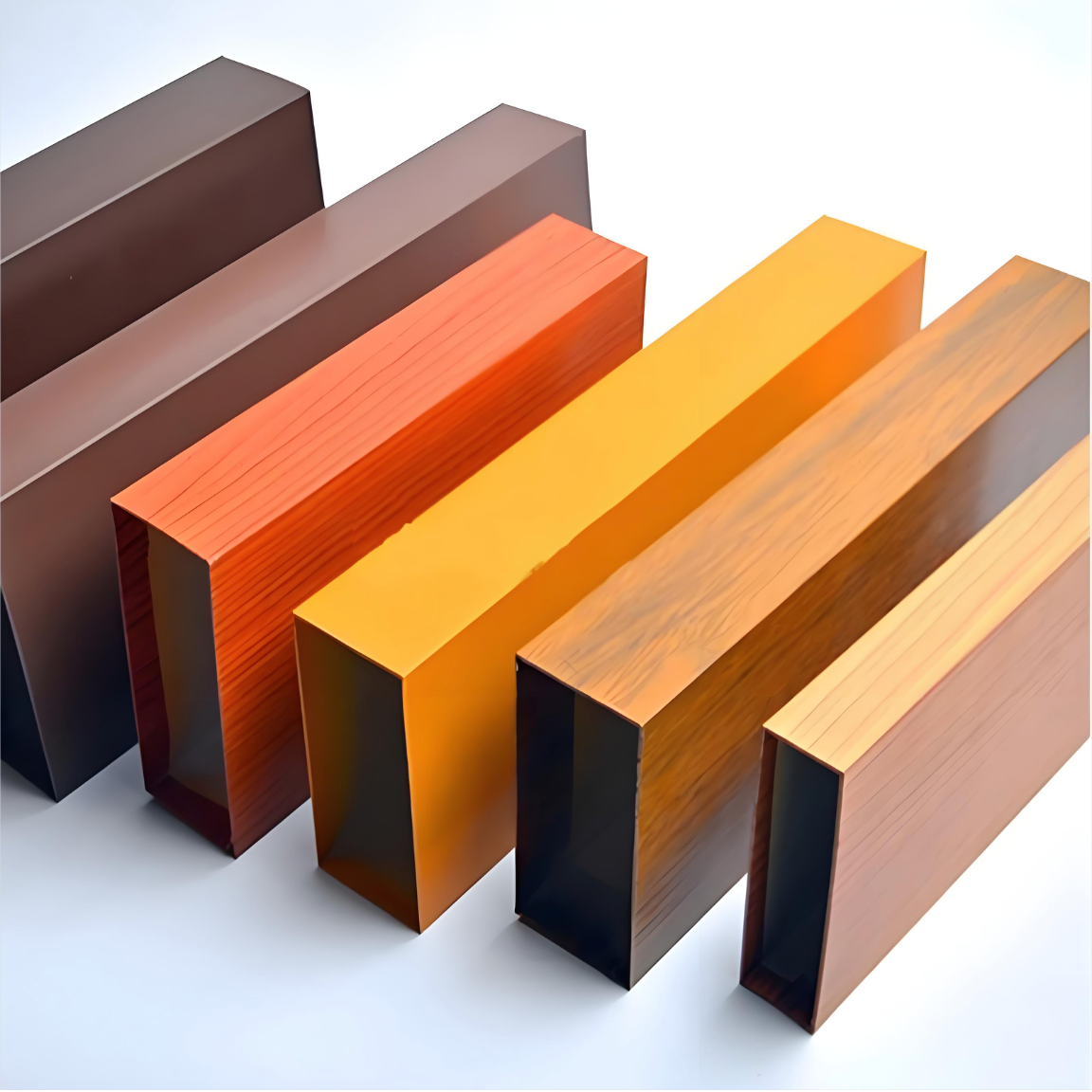
Custom Aluminum Rectangular Tubes | 6063 & 6061 Extruded Tubing
Factory-direct custom extruded aluminum rectangular tubes & flat pipes. 6063/6061 alloys, tailored wall thicknesses & interior ribs. CNC fabrication &…
Details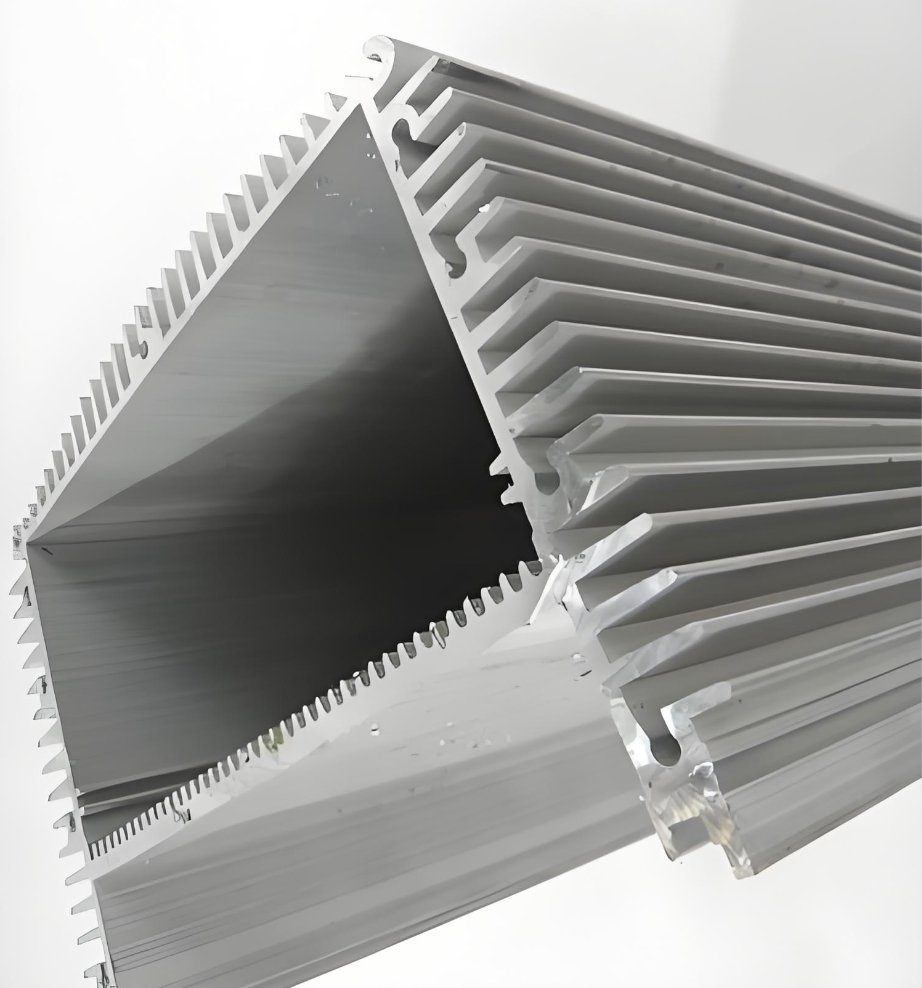
LED Light Aluminum Extrusion Profiles | Housing, Channels & Rails
Custom aluminum profiles for LED tube lights, linear fixtures, strip channels, and track rails. 6063-T5, black or silver anodized. Pre-cut,…
Details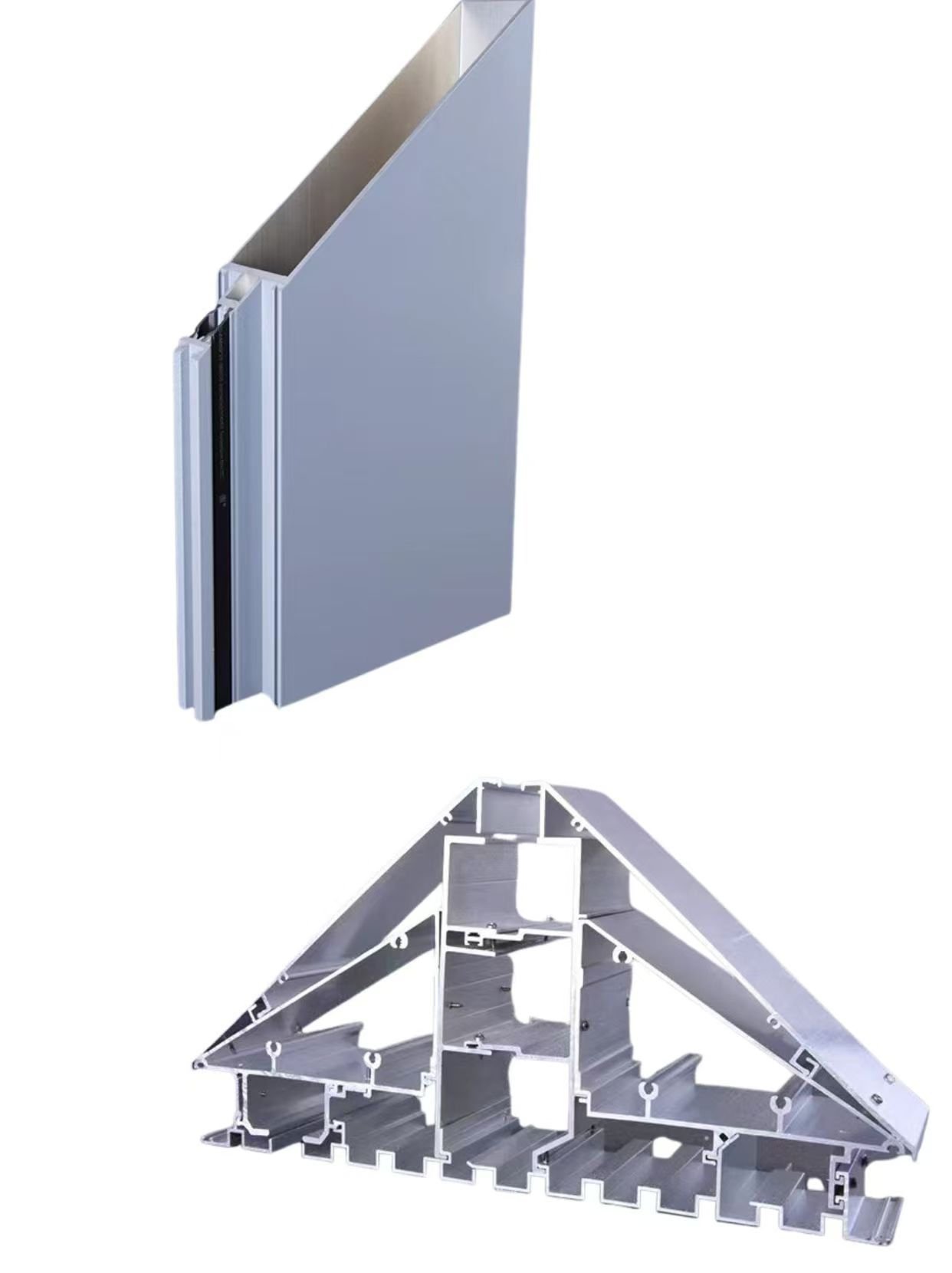
Architectural Aluminum Curtain Wall Profiles: Engineered Custom Framing Solutions
custom curtain wall aluminum profiles, architectural aluminum structural framing, 6063-T6 curtain wall extrusions, PVDF coated aluminum mullions, thermal break curtain…
Details