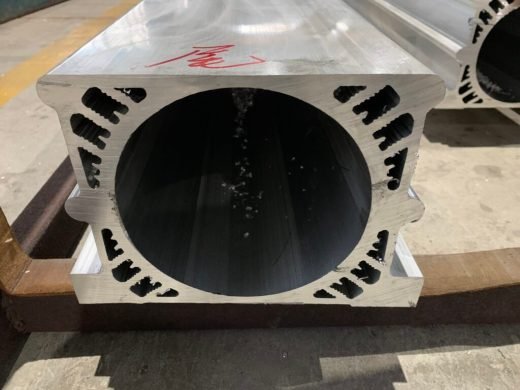
LED lightings

Custom LED Light Aluminum Extrusion Profiles | Housings, Linear Lights, Channels 

Custom aluminum LED profiles extruded and machined to your drawing. Same-batch anodizing, thread-milled end holes, snap-fit grooves tested with your cover. No stripped threads. No color drift. Send a drawing.

Technical Specifications

Certified precision data per ISO 9001:2015

Alloy & Temper
6063-T6
Hardness
≥11.5HW
Standard Length
3 meters
Surface finish
anodizing
MOQ
500kgs
Package
brown paper

Details

Certified precision data per ISO 9001:2015

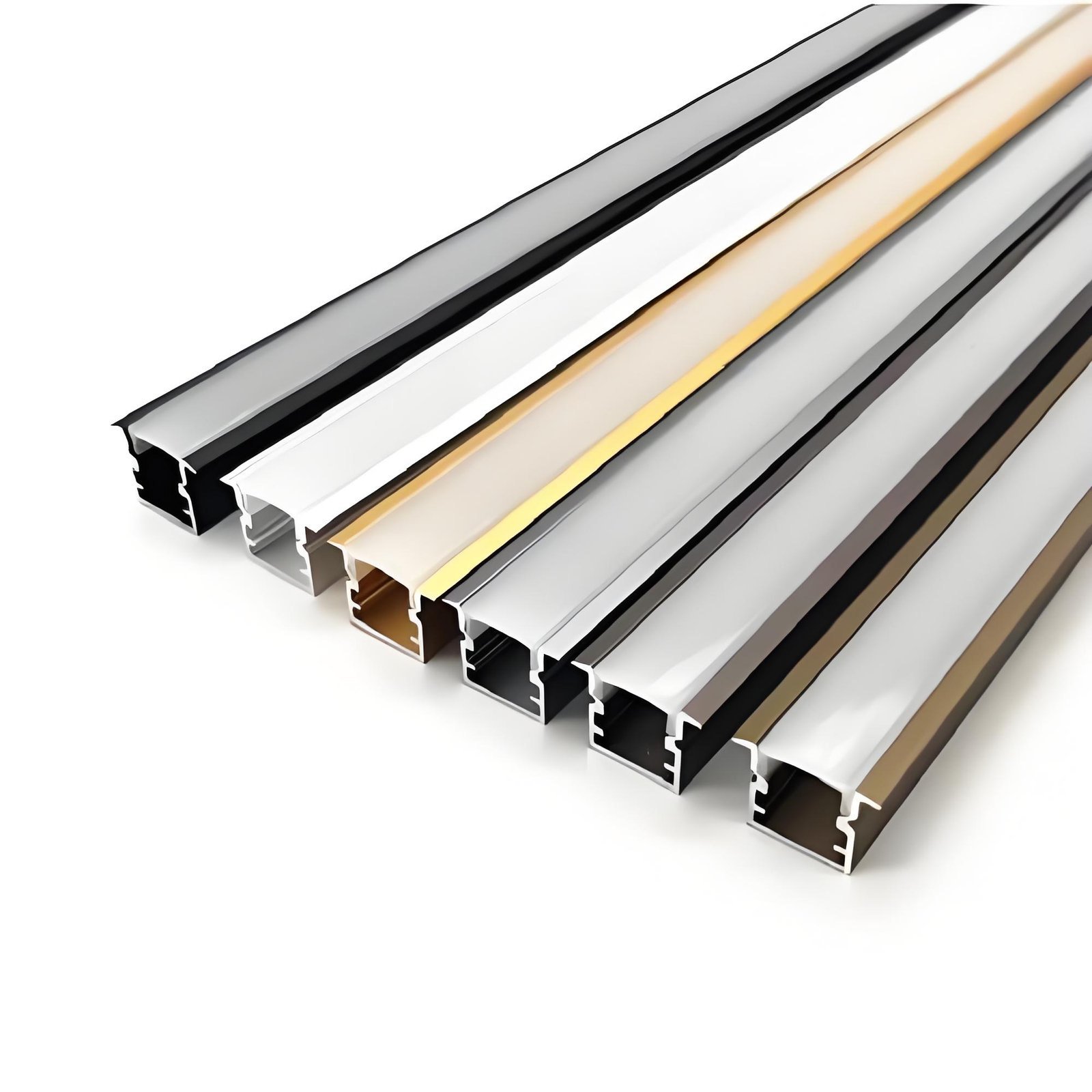
We extrude, machine, and finish custom aluminum profiles specifically engineered for the LED lighting industry:

  • Linear Light Housings (Pendant, recessed, surface-mount)
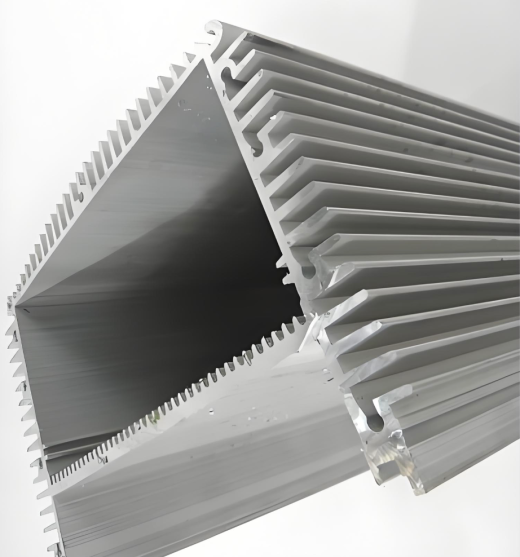
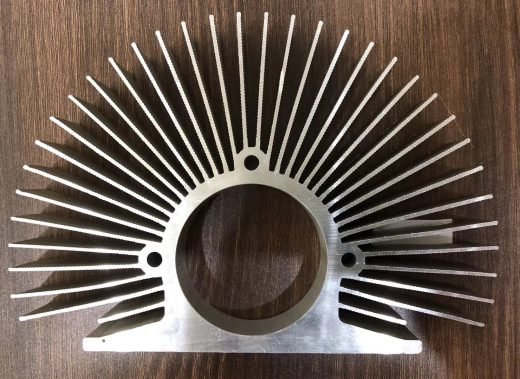
  • T5 & T8 Tube Shells & Heat Sinks
  • Architectural Strip Light Channels
  • Commercial Track Rails & Wall Washer Bodies

Send us your cross-section CAD drawing or a physical sample. We cut the die, extrude the profile, cut the bars to your exact fixture lengths, CNC drill and tap the mounting holes, anodize or powder coat the entire batch, and ship ready-to-assemble components to your factory.

The profile you receive is the exact profile you designed—not a “close enough” stock section. Your groove dimensions. Your wall thicknesses. Your screw boss locations. We never push standard off-the-shelf dies when your fixture requires custom engineering.

Our Quality Philosophy: The problems with an LED aluminum housing don’t show up when the extrusion leaves the press. They show up when an end-cap screw strips on the assembly line, a diffuser pops loose in transit, or a reorder doesn’t match the color of the first batch. We identify and eliminate those failure points before the material leaves our factory floor.

5 Critical Details We Control (Where Most Suppliers Fail)

Anodizing Color Between Batches

This is the complaint that comes back weeks or months after the order ships. A lighting company orders a batch of black anodized housings. Everything looks fine. Six months later they reorder the same profile, same spec, same part number. The new batch arrives, they assemble the fixtures, they ship to a retail store. The facilities team mounts the new lights on the same ceiling as the old ones. Under the same downlighters, the new housings look slightly warmer. Slightly greyer. Not wrong enough to measure with an instrument. Wrong enough to notice.

The culprit is almost never the anodizing line on the day of production. It’s that the two batches were run weeks or months apart, on different shifts, with slight differences in dye concentration, tank temperature, current density, or even billet chemistry from different aluminum heats. Any one of those variables shifting by a few percent changes the final tone of black.

What we do about it: every profile in your order—regardless of how many different cross-sections or lengths—gets extruded from the same billet heat and anodized in the same tank run. For most LED housing orders, which tend to be measured in hundreds or low thousands of meters, the whole batch fits in one production cycle. No shade variation across the order.

For reorders, we keep a physical master sample and the Lab values from the first production batch. When you reorder, we pull that sample, run a short trial piece, and match it before we commit the full batch. If you’re switching from another supplier, send us a sample of what you’re currently using. We’ll match it.

Silver anodizing is more forgiving than black, but the same discipline applies. Single batch. Master sample. No surprises.

Stripped Threads in the End Caps

An LED housing has blind holes drilled and tapped into each end. The end cap screws into those holes. If the thread strips during assembly, the housing is scrap. The PCB is already mounted, the wiring is already run, and the last mechanical step kills the whole unit.

Most of the time, stripped threads come from one of two things. Either the tap was worn and cut an undersized or rough thread, or the blind hole wasn’t deep enough and the screw bottomed out before the head seated. In both cases, the failure happens at the very end of assembly, when the value of the part is highest.

We don’t tap these holes with a conventional tap. We thread-mill them. A thread mill cuts the thread profile by moving in a helical path, and it produces a more consistent thread than a tap—smoother surface, tighter tolerance, no torn crests. We hold 6H class on every hole. The blind hole depth is set to your screw length plus a minimum of 2 mm clearance at the bottom, so the screw engages fully before the tip reaches the end of the hole.

If your fixture design has a removable end cap—for servicing a driver, for example—we can install stainless steel wire thread inserts at the factory. The screw threads into hardened steel, not aluminum. You can open and close that end cap for the life of the fixture without wearing out the thread.

PC Cover Fit That Changes From Batch to Batch

The groove that holds the polycarbonate or acrylic diffuser is the most critical dimension on an LED housing. Too narrow, and the cover bows or won’t seat. Too wide, and it rattles, leaks light, or falls out during shipping. And if the groove dimension drifts across a production run, the assembly worker has to adjust their technique for every housing—which kills productivity and consistency.

We hold the groove opening to ±0.15 mm on width and depth. That’s the dimensional control. But the real check is physical. Before we finalize the die for a new profile, we ask you to send us a short sample of the PC cover you’re using. We extrude a trial section and actually snap the cover into it. If the fit isn’t right—too stiff, too loose, doesn’t click—we adjust the groove in the die. We don’t sign off on the die until your cover fits the way you want it to.

During production, we check the groove width on a sample from every 50 bars extruded. If the dimension starts to drift—which can happen as the die bearing wears—we catch it early and pull the die for maintenance.

Housings That Aren’t Straight

A 1.5-meter linear light mounted on a wall or suspended from a ceiling. If the housing has even a slight bow, the light line isn’t straight. The human eye picks up a 2 mm deviation over that length instantly. It makes the whole installation look cheap.

Aluminum profiles come off the extrusion press with internal stress from the deformation process. If that stress isn’t relieved, the profile looks straight when it’s cut but gradually bows over time as the stress relaxes. Or it bows immediately after cutting, when material is removed from one side of the cross-section.

Every profile goes through a tension stretcher after extrusion. This pulls the material past its yield point—typically 1% to 3% elongation—which equalizes the internal stress. The result is a bar that stays straight. We hold 0.5 mm per meter or better.

Before packing, every bar gets rolled on a flat inspection table. If a bar shows more than the allowed deviation, it’s either re-straightened or scrapped. For very long housings—2.5 meters and up—we check the section rigidity at the die design stage and recommend wall thickness adjustments if the profile will be too flexible at that length.

The Hidden Cost of Cutting Your Own Bars

Buying 6-meter raw bars and cutting them in-house looks cheaper on the per-meter price. The extrusion supplier’s price per kilo is lower because you’re doing the labor. But add it up honestly: the kerf loss from every saw cut, the offcuts that are too short to use, the bars scrapped because the saw wasn’t square or the operator misread the cut list, the labor hours spent feeding a saw instead of assembling fixtures, the drill bits, the tapping fluid, the floor space.

A lighting factory burning through 10 tons of aluminum a month, with a typical 5% sawing scrap rate, is throwing away 500 kilos of finished, anodized aluminum every month. That’s not scrap value. That’s material they paid full price for, plus the anodizing cost, plus the labor to cut it.

We supply profiles cut to your exact fixture lengths. ±0.1 mm. No kerf loss. No offcuts. No miscuts. The price per meter is higher than raw bar because the cutting and machining are included. The total cost per finished fixture housing is almost always lower than doing it yourself when you count everything that goes into the “cheaper” raw bar approach.

What We Make

Fixture TypeProfile ExamplesAlloy & Finish Options
Linear pendant/surface lightsRectangular or square channel with PC cover groove and mounting slots6063-T5, silver or black anodized
T5/T8 integrated tubesRound or oval housing with internal screw bosses and snap-fit cover6063-T5, silver or black anodized
Wall washersAngled housing with directional LED mounting face6063-T5, powder coated or anodized
Strip light channelsU-channel or V-channel, shallow depth, for tape light installation6063-T5, silver or black anodized
Track railsRectangular rail with internal slot for conductive strips6063-T5, silver or black anodized
Vapor-tight fixturesDeep housing with gasket groove and latch edge6063-T5 or 6061-T6, powder coated

Every profile extruded to customer drawings. No stock shapes. No “close enough.”

Machining and Finishing

What You GetHow We Do It
Cut to fixture lengthPrecision saw, ±0.1 mm, ends square and burr-free
End-cap screw holesCNC thread-milled, 6H class, blind depth matched to your screw
Mounting bracket holesCNC-drilled, position ±0.15 mm
PC cover grooveHeld to ±0.15 mm, physically verified with your cover sample
Surface finishSilver or black anodized in single batch; powder coat or PVDF available
Protective filmPE film applied in-line, stays on through machining and packing
PackagingBy fixture type and length, labeled, or kitted one-fixture-per-pack

Frequently Asked Questions (FAQ)

Q1: We order the same black anodized housing every quarter. Sometimes the shade drifts. Can you lock the color?
A: Yes. First production run, we save a master sample and record the Lab values. Every reorder is matched to that sample. We run a short trial piece before committing the full batch. If you’re switching suppliers, send a sample of what you’re using now and we’ll match it.

Q2: The end cap screws on our current housings strip about once every hundred units. How do you avoid that?
A: We use thread milling, not conventional tapping. A thread mill produces a cleaner, more consistent thread. We hold 6H class. Blind hole depth is set to your screw length plus 2 mm clearance so the screw never bottoms out. If your fixture has a removable end cap for driver access, we can install stainless steel wire inserts—the threads last the life of the fixture.

Q3: Our PC diffuser supplier changed their extrusion slightly. Now the covers fit differently. Can you adjust?
A: Send us a sample of the new cover. We’ll measure it, adjust the groove dimensions in the die if needed, run a trial, and confirm the fit with you before we ship production. This is a normal part of LED manufacturing.

Q4: We need 3-meter continuous housings for a project. Can you hold straightness over that length?
A: We hold 0.5 mm per meter. At 3 meters, that’s 1.5 mm maximum deviation. For housings this long, the cross-section needs enough inherent stiffness—we’ll check the section during die design and suggest wall thickness adjustments if needed. Transport for extra-long profiles needs planning. We’ll coordinate with your freight forwarder.

Q5: Do you only sell raw 6-meter bars, or can you supply pre-cut and machined housings?
A: Most customers order pre-cut and machined. You send the drawing with cut lengths, hole positions, and thread specs. We ship housings ready for your assembly line—cut, drilled, tapped, labeled. Raw bars are available if you prefer to do your own machining.

Q6: What’s the minimum order?
A: New die: 500 kg. Existing die: 200 kg works for a trial order. For LED housings weighing between 0.3 and 1.5 kg per meter, 500 kg gives you a reasonable production batch—usually several hundred to over a thousand meters.

Schematics

Cross-sectional dimensions

zoom_in

Related Profiles

Complementary hardware for your structural assembly

Custom Aluminum Glass Railing Profiles | Balcony & Stair Balustrade Profiles | Linkedalu

Custom extruded aluminum glass railing systems. Handrails, posts, glass shoes, toe plates. PVDF & powder coat. Integrated drainage. Pre-cut, drilled,…

Details

Custom T-Slot & V-Slot Aluminum Extrusions | Industrial Frame Profiles

T-slot and V-slot aluminum profiles, extruded to your frame drawings. Slot tolerance ±0.15 mm, straightness 0.5 mm/m. Cut, drilled, tapped,…

Details

Custom Powder Coated Aluminum Window & Door Frame Profiles

From Blueprint to Finished Frame: Your Trusted Partner in Aluminum Solutions With over 20 years of expertise in aluminum extrusion,…

Details

Inquiry Submission