Louver Profiles Built From Your Drawings
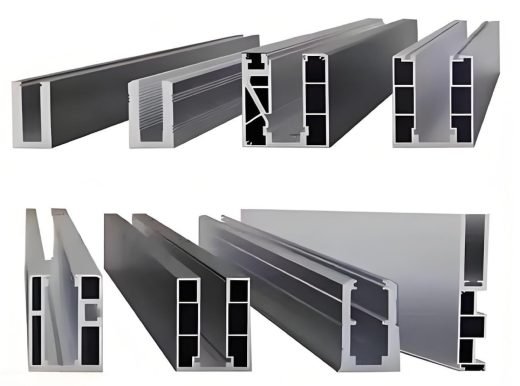
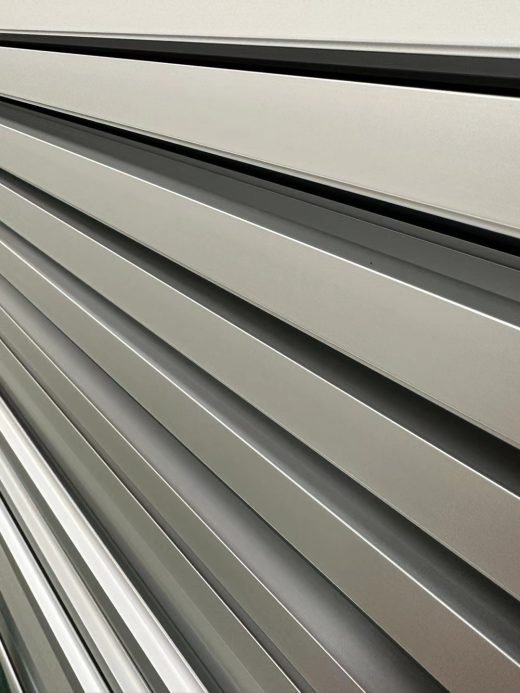
At Linkedalu Metal Group Co., Ltd we manufacture custom aluminum louver profiles engineered specifically for architectural sunshade systems, commercial facade ventilation and heavy-duty industrial screening. We do not force a design into the limitations of a standard catalog. Every blade, frame and mullion is custom-extruded from your architectural drawings: your project sets the cross-section, the structural requirement and the finish specification, and our Foshan-based facility builds the precision die to match. From concept blueprint to coordinated on-site delivery, one supplier carries the whole system.
Alloy Selection for Louver Blades
For most architectural louver projects, 6063-T5 is the right starting point. It extrudes cleanly, anodizes evenly and provides adequate strength for typical blade spans. We step up to T6 or recommend 6061 only when span, wind load calculation or local building code specifically requires the higher strength. Choosing alloy against the actual blade span and fixing condition keeps weight and cost proportionate to the load the blade really carries.
Blade Geometries
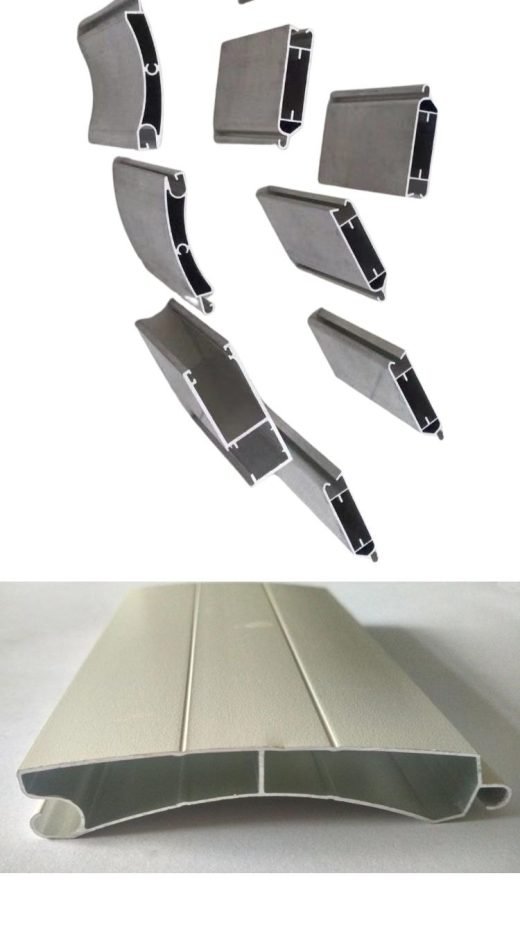
- Z-blade — a fixed sightline-controlled profile for standard facade screening, giving good light control in a simple section.
- Airfoil blade — a streamlined section that moves air cleanly, used where appearance and air path both matter.
- C-blade — a shaped channel section suited to sunshade arrays where blade depth and stiffness are driven by span.
Each geometry is defined by the die to your drawing, not selected from a fixed range, so blade depth, nose radius and fixing flange are set by your solar and structural criteria.
Complete System Extrusion
A louver array is a system, so we extrude and supply the surrounding components as one matched package:
| System component | Function | Key specification |
|---|
| Blades | Primary shading and ventilation element | Custom cross-section to your design |
| Mullions | Intermediate vertical supports | Required when blade span exceeds the structural limit |
| Drive linkage channels | Housing for motorised adjustment mechanisms | ±0.15 mm slot tolerance for smooth operation |
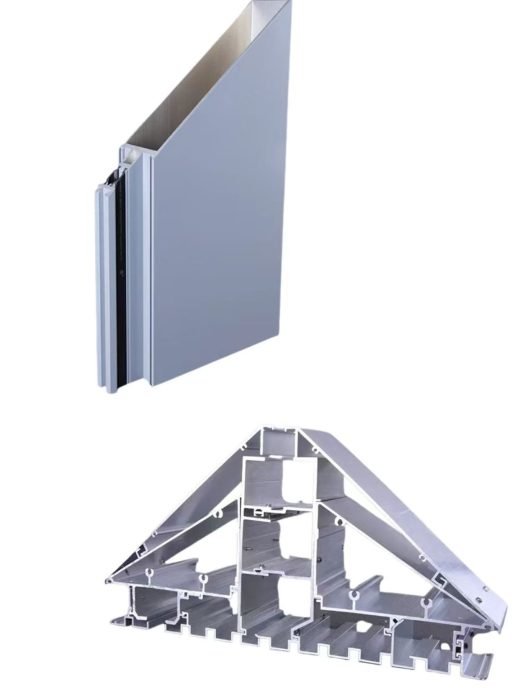
| Pressure plates and cover caps | Blade retention and aesthetic finishing | Snap-fit or screw-fixed, profile-matched to frame |
| Sill drainage profiles | Water management at the base of the louver | Integrated drainage slots and sloped design |
Surface Finishes and Environmental Suitability
Polyester powder coating applies a durable organic resin layer that fully encapsulates the aluminum. It offers the widest color range, full RAL palette, with good UV and corrosion resistance at a competitive cost — the workhorse finish for most commercial facade louvers. Anodizing is used where a metallic appearance and abrasion resistance are wanted, and PVDF is specified for severe UV and coastal exposure at higher build thickness. The finish is matched to the site exposure rather than applied uniformly.
Drive Systems and Operable Louvers
For operable louver systems, the drive linkage channel is the component that decides whether the array moves smoothly for the life of the building. If you have a specific drive system in mind, share the manufacturer's specifications during die design and we integrate the required slot geometry directly into the blade cross-section, holding the slot to a tolerance that keeps the linkage running without binding.
Quality Documentation and Packing
Profiles are extruded, straightened, cut to length, CNC machined and finished as one sequence, then labeled to your installer's call-up list and packed so each blade can be traced to its bundle, coating run and mill test certificate. Material is documented to GB/T 5237, EN 755-9 or ASTM B221 from the same press run, with measured mechanical properties and coating parameters recorded.
From Drawing to Die to Packing
Working from your architectural drawings, our team confirms the blade section, then cuts a new die or reuses an existing one for the run. The order is locked to a single billet batch, so the blades that arrive at the end of the project have the same mechanical properties and the same color as the first delivery. Extrusion is followed by straightening, cut-to-length and CNC machining, then the finish, then labeling and sequence packing to your installer's call-up list. Mill test certificates travel with the shipment, and each bundle label ties back to the billet batch and coating run. If a site query arises about a particular blade, the material history is retrievable rather than reconstructed from memory.

 Architectural Aluminum
starFeatured