
Aluminum Sunroom, Screenroom & Veranda Problems and Solutions: Structural, Thermal, Leaks, Finishing
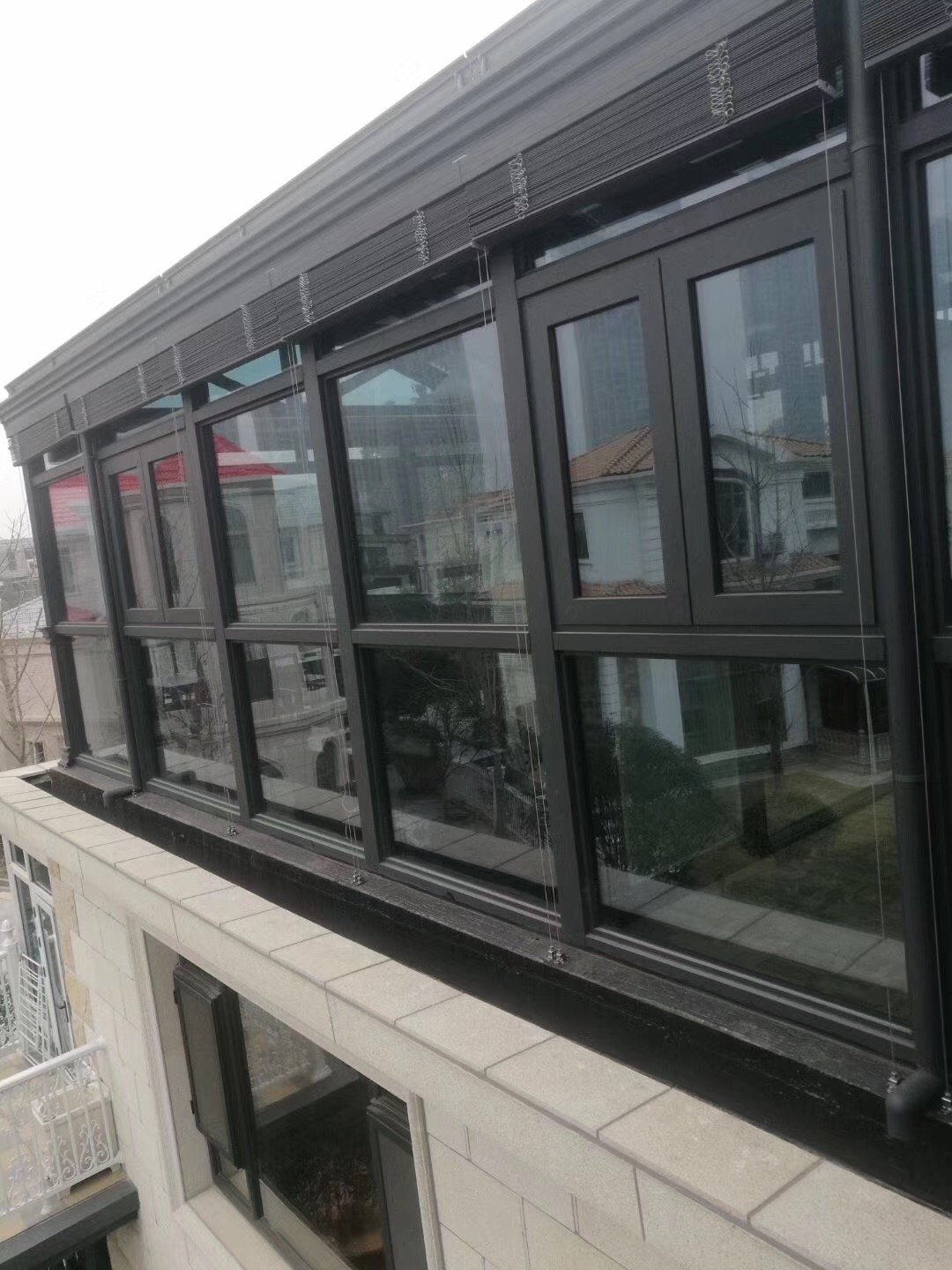
Sagging beams, water on the floor and fogged frames trace back to design-stage decisions: alloy, wall thickness, thermal breaks, drainage paths and finish specification. The five common failures and how to engineer them out.
The Five Most Common Sunroom Problems, Fixed at the Design Stage
Sagging beams, water on the floor, fogged frames and cracked glass are not maintenance mysteries. In almost every case the root cause can be traced back to a decision made before the first extrusion die was cut: an alloy choice, a wall thickness, a thermal break, a drainage path or a finish specification. This guide walks through the five problems that account for most sunroom, screenroom and veranda failures, and what to change at the drawing stage to prevent them.
Problem 1: Beams and Rafters That Deflect Under Load
The visible symptom is a roof line that sags or a door that stops closing square. The cause is that the profile's section modulus is too low for the span and the load. Many kit sunrooms use the same 6063-T5 thin-wall sections intended for window frames. That is perfectly adequate for a two-meter vertical mullion, and inadequate for a four-meter roof rafter carrying snow.
Alloy and temper levers
- Spans under about 2.5 m with light loads: 6063-T5 is usually adequate if the section is deep enough.
- Spans over about 2.5 m, or any roof with a real snow load: move to 6063-T6 for roughly 30 percent more yield strength in the same profile.
- Spans over about 4 m: use 6061-T6, which nearly doubles the yield strength of 6063-T5 and welds acceptably, or step to 6005A-T6.
- Check deflection to a stated limit, such as L/180 for roof members, rather than checking stress alone. Glazed roofs fail visually long before they fail structurally.
The other lever is geometry: it is frequently cheaper to deepen the rafter section than to move up an alloy family, because a deeper profile raises section modulus far faster than an alloy change raises strength.
Problem 2: Thermal Bridging and Condensation
Fogged glass, dripping frames and cold interior surfaces inside a sunroom almost always trace to a continuous metal path through the frame. Aluminum conducts heat roughly a thousand times better than the polyamide materials used for thermal breaks, so an unbroken profile carries interior warmth straight out to the cold exterior skin.
- Specify polyamide thermal break profiles (typically PA66 with glass fiber reinforcement) for any conditioned sunroom.
- Insist that the thermal break is mechanically locked properly: knurled or otherwise deburred aluminum surfaces that grip the polyamide, not a push-fit strip.
- Check that the break is continuous and not interrupted by fixing screws through the thermal barrier.
- For glazing, specify warm-edge spacers and a sealed unit with a proper desiccant, since fogging between panes is a seal failure rather than a frame problem.
Problem 3: Water Where It Should Not Be
Leaks at the sill, staining on the ceiling and water standing in the bottom rail are drainage failures. Water always gets in at some point; the design question is where it goes next.
- Integrate drainage into the extrusion itself: sloped internal channels, weepholes and baffled outlets that discharge to the exterior face.
- Provide pressure equalization so that wind-driven water is not pushed inward by a pressure differential.
- Detail sill pans and thresholds so that any water reaching them drains out, not into the floor build-up.
- Specify the correct gasket system: EPDM or silicone with welded corners rather than mitered and glued corner joints in exposed positions.
- For sloped glazing, use continuous baffled weathering and never rely on sealant as the primary water barrier.
Problem 4: Finish Failures in Real Environments
Chalking, color shift, filiform corrosion and white bloom are finish problems that look like material problems. Anodizing and powder coating both perform excellently when specified for the actual environment, and both fail quickly when underspecified.
- Anodizing: architectural anodic film is normally 10-25 µm. Around 15-20 µm is typical for exterior work, and 20-25 µm is used in aggressive coastal or industrial atmospheres.
- Powder coating: architectural polyester powders are normally applied at 40-120 µm, with roughly 60-80 µm the common band for exterior building products.
- Coastal sites: move to a higher-performance powder system and specify stainless fasteners to avoid galvanic staining of the aluminum.
- Prevent dissimilar metal contact with isolating washers or coatings at every steel-to-aluminum interface.
- Remember that cut ends, drilled holes and site-cut profiles are unprotected unless touched up; specify a touch-up procedure.
Problem 5: Glass, Screens and Hardware That Were Never Sized Together
Cracked glass, sagging screens and hardware that loosens after a season usually means the glazing, screen and frame were specified independently. Glass panels sized for an indoor condition distort and crack in an exposed sunroom that sees direct summer sun and winter wind. Screen spline that is too small pulls out of the channel.
- Size glazing for the actual wind and thermal loads of the installation, not for an interior partition.
- Check that the glazing bite and gasket are deep enough to allow thermal movement.
- Match screen spline diameter to the extrusion's spline channel, and confirm the channel depth in the die drawing rather than on site.
- Use hardware rated for exterior use and match fastener material to the frame finish.
The Point
We pre-check beam deflection, knurl every thermal break profile, integrate drainage into the extrusion and match the finish to the site's actual environment. Send us your sunroom drawings and we will go through them with you, section by section, for strength, thermal performance, water management and finish durability.
Customer reviews
No reviews yet — be the first to review Aluminum Sunroom, Screenroom & Veranda Problems and Solutions: Structural, Thermal, Leaks, Finishing.
Write a review
Reviews are read by our team before they appear here, usually within one working day. We publish what customers write; we only remove spam and abuse.
Keep reading
 Knowledge
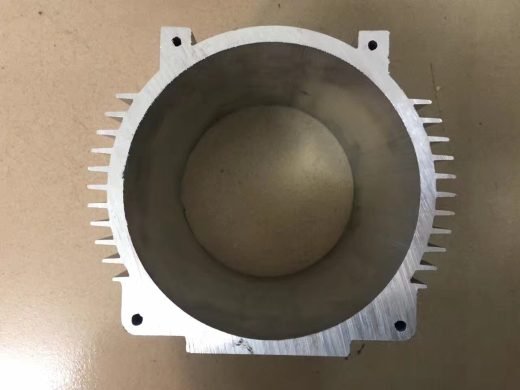
Extruded vs. Die-Cast Motor Housings: An Engineer's Guide to Choosing
Extrusion gives dense, weldable metal and tall fins; die casting gives complex bosses and near-net shape. A practical comparison of thermal…
Read article arrow_forward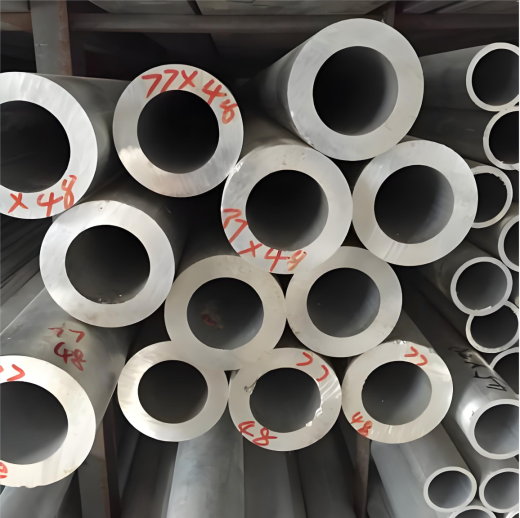 Knowledge
7075, 7050, and 7005: When 6061 Isn't Strong Enough
The 7xxx family is the strongest extrudable aluminum, reaching roughly 572 MPa in 7075-T6. What 7050 and 7005 add, why 7xxx extrusion runs…
Read article arrow_forward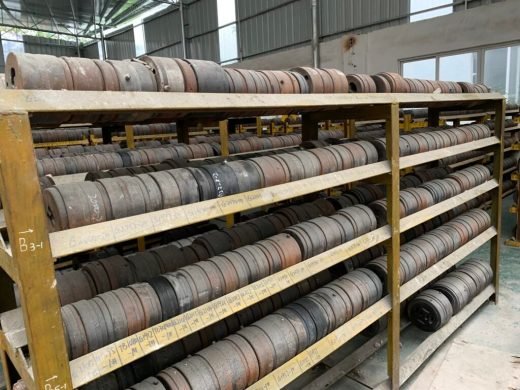 Knowledge
How Extrusion Dies Shape Aluminum Profile Quality: Steel, Tolerances, and Surface Defects Explained
Wall thickness drift, die lines and streaking are signatures left by the extrusion die, not the alloy. How H13 die steel, nitriding…
Read article arrow_forward