Custom Aluminum Curtain Wall Profiles for High-Rise Projects
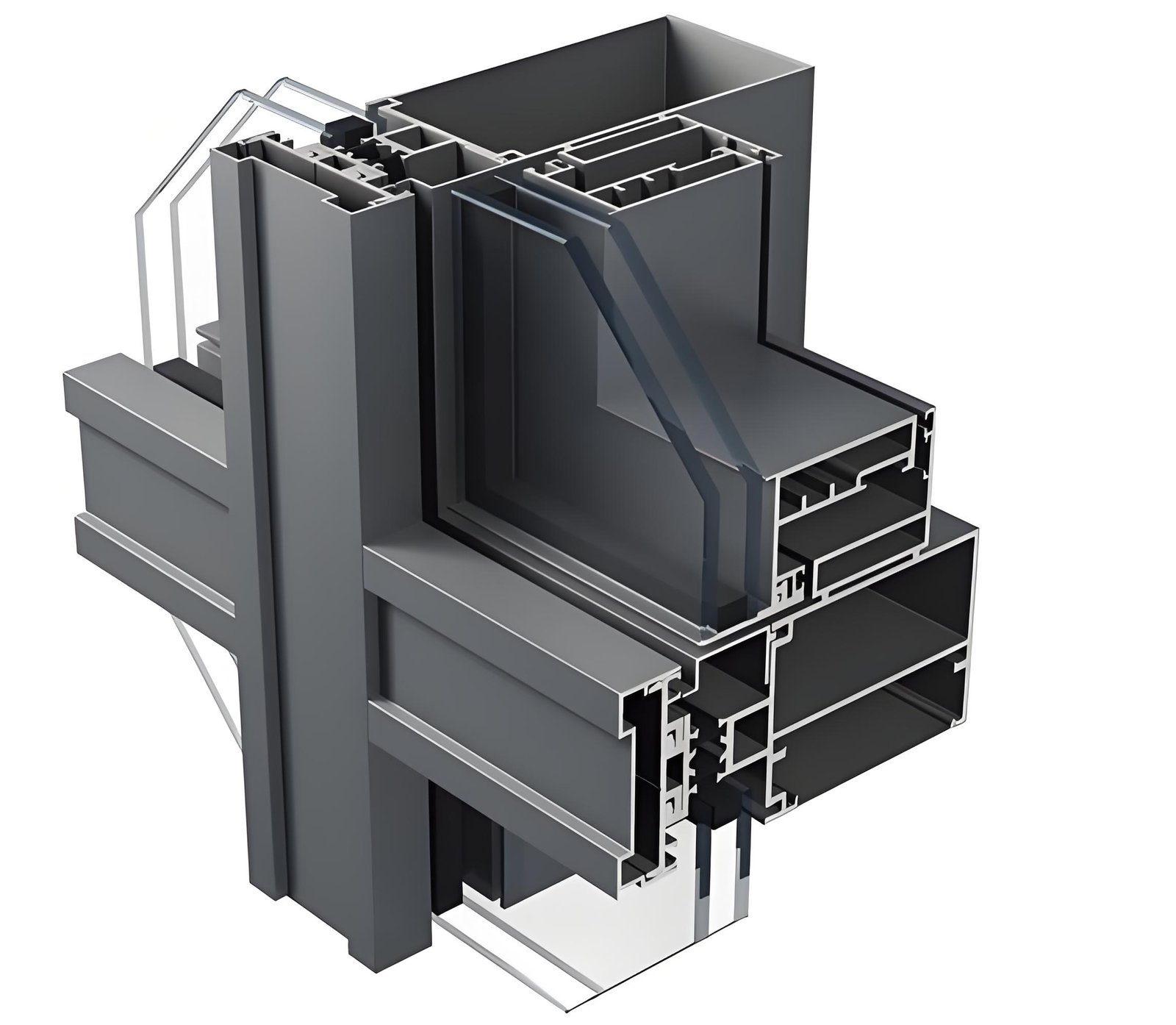
Custom aluminum curtain wall profiles for high-rise projects in Chile, the Middle East and Southeast Asia. GB/T 5237, EN 755-9 and ASTM B221 certified from one mill. Seismic, typhoon and high-temperature facade engineering with mill test certificates on every shipment.
Technical Specifications
Certified precision data per ISO 9001:2015
Details
Certified precision data per ISO 9001:2015
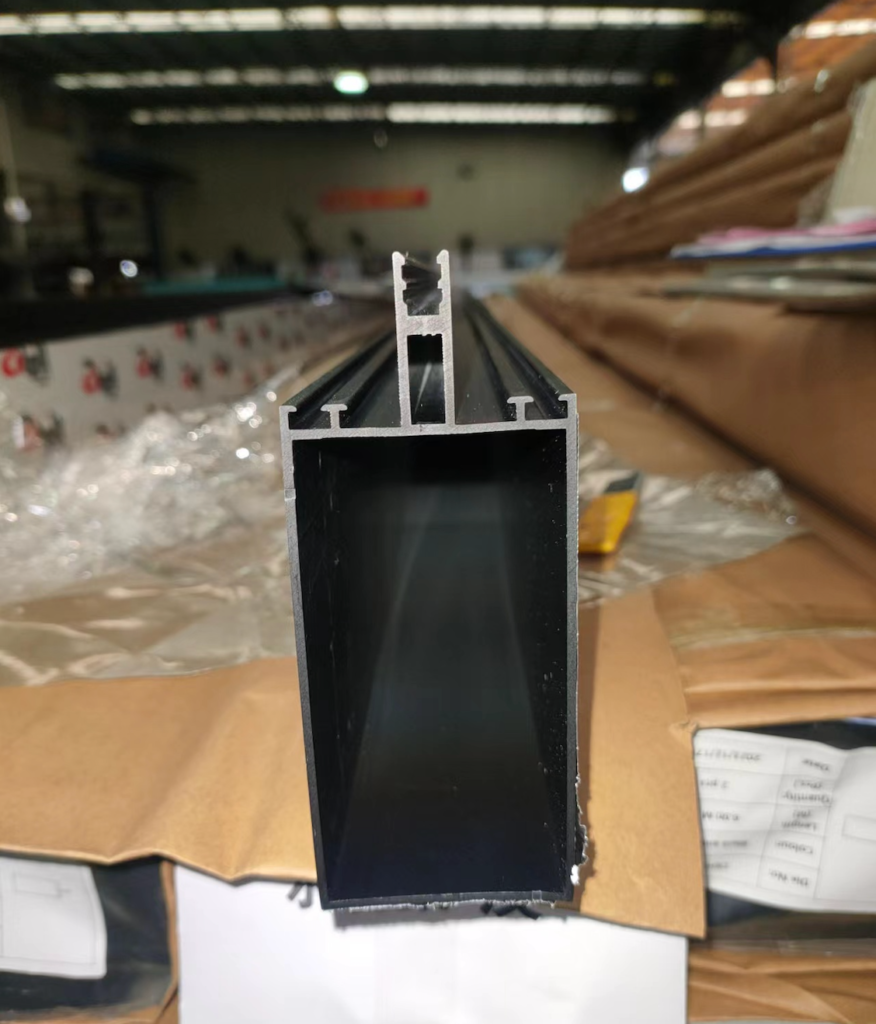
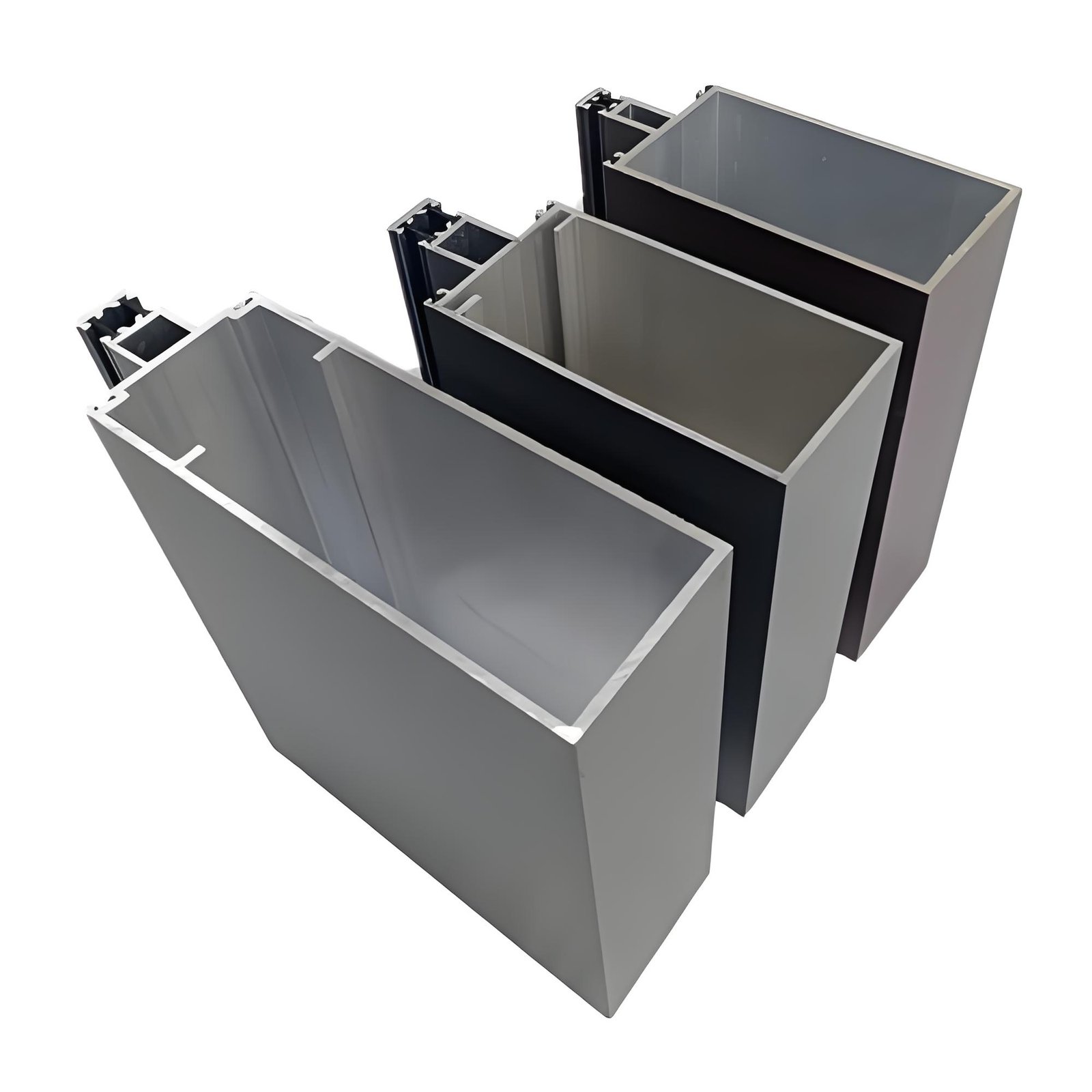
Linkedalu Metal Group Co., Ltd extrudes custom curtain wall framing — mullions, transoms, pressure plates, cover caps — for high-rise projects across Chile, the Middle East and Southeast Asia. We run one set of dies, one billet batch, one coating line, and issue mill test certificates against GB/T 5237, EN 755-9 and ASTM B221 from the same material. So the engineer approving your shop drawings gets exactly the alloy, temper and coating they called out, no matter which standard the project is written to.
One mill, three standards: GB, EN and ASTM from the same press run
Different markets name the same alloy differently, and that naming gap causes half the RFQ confusion in this industry. 6063 in GB is EN AW-6063 in Europe and 6063 in ASTM. The temper designations mostly line up. The mechanical minimums do not, and that is where a supplier either earns your trust or hides behind the ambiguity. We quote to the standard your project is written to, and we state the minimums on the certificate in plain numbers, not “typical” values.
Alloy equivalence across GB, EN and ASTM:
| China GB/T 5237 | Europe EN 755-9 | Americas ASTM B221 | Typical use |
|---|---|---|---|
| 6063-T5 | EN AW-6063-T5 | 6063-T5 | Standard curtain wall, trim |
| 6063-T6 | EN AW-6063-T6 | 6063-T6 | High-rise main mullions (wind-load zones) |
| 6061-T6 | EN AW-6061-T6 | 6061-T6 | Structural members, welded assemblies |
| 6060-T5 | EN AW-6060-T5 | — | European-market preference, fine sections |
Mechanical properties (standard minimums, not “typical” values):
| Alloy / Temper | Tensile Rm | Yield Rp0.2 | Elongation A50 |
|---|---|---|---|
| 6063-T5 | ≥ 160 MPa | ≥ 110 MPa | ≥ 8 % |
| 6063-T6 | ≥ 205 MPa | ≥ 180 MPa | ≥ 8 % |
| 6061-T6 | ≥ 260 MPa | ≥ 240 MPa | ≥ 8 % |
| 6060-T5 | ≥ 160 MPa | ≥ 120 MPa | ≥ 8 % |
These are the common minimum thresholds in GB/T 5237.1 and EN 755-2. Final figures are stated on the mill test certificate shipped with each order.
Engineering for the region, not just the product
Chile — seismic inter-story drift and Pacific coastal corrosion
Chile sits on the Pacific Ring of Fire. A Santiago high-rise is designed to NCh 433 seismic code, and the curtain wall has to follow the frame through inter-story drift without tearing glass or leaking. That means the aluminum mullion connection has to move — in a controlled way — not just be strong. We machine slotted connections and oversized bolt holes to the drift values on your structural drawings, and we keep the profile’s moment of inertia where it belongs: in the vertical member. Coastal Chile (Valparaíso, Antofagasta) adds marine salt to the equation, so we default to marine-grade anodizing or PVDF rather than standard powder where the spec allows.
Middle East — thermal movement, sand and salt on 200 m+ facades
The problem in the Gulf is not wind — it is heat. A facade surface in Dubai swings from 70–80 °C in summer sun to interior air conditioning at 24 °C. Aluminum expands at 23.1 × 10⁻⁶ /°C, so a 6 m mullion moves roughly 5–6 mm across a typical summer day. Cut corners on the expansion joint and the panel pops, the gasket shears, or the frame buckles. We design the joint gap and the thermal break to the project’s ΔT, and we use PA66+GF25 thermal break strip where the local code (or the client’s energy model) demands it. Sand and salt-spray are the second enemy: Gulf coastal air is a C4–C5 corrosion environment under ISO 9223, which pushes the spec toward PVDF or high-class anodizing over ordinary powder.
Southeast Asia — typhoon wind loads and monsoon humidity
Southeast Asia is a typhoon zone. Manila, Ho Chi Minh City and coastal Indonesia write wind loads to EN 1991-1-4 (or local equivalents), and the governing load case is often the storm, not the everyday. We size the mullion to the wind pressure and deflection limit in your spec — commonly span/180 or span/200 for the mullion, tighter where the glass edge is sensitive — and we upgrade from 6063-T5 to 6063-T6 (or 6061-T6) where the numbers say the lighter section won’t pass. Monsoon humidity is the finishing problem: we spec anti-condensation drainage and weep channels in the transoms and pressure plates as standard.
High-rise engineering numbers we design to
Wind load and deflection limits
- Design wind pressure: per project (coastal typhoon zones can reach the 2.5–3.0 kPa range, subject to wind-tunnel testing or structural calculation).
- Mullion deflection limit: span/180 or span/200, per project spec — tighter where the glass edge is sensitive.
- Transom deflection limit: commonly span/250, governed by glass load.
Thermal movement — the math behind expansion joints
- Coefficient of linear expansion, aluminum: α = 23.1 × 10⁻⁶ /°C
- Movement: ΔL = α × L × ΔT
- Example: L = 6.0 m, ΔT = 45 °C → ΔL = 23.1×10⁻⁶ × 6000 × 45 ≈ 6.2 mm
- Conclusion: connections and sealant joints must reserve movement at this scale, or the facade cracks in summer and opens gaps in winter.
Fabrication and tolerances
- Length: standard 6.0 m / 6.5 m; longer mill lengths reviewed per project.
- Cut: fixed-length sawing, length tolerance ±0.5 mm (precision class per GB/T 5237.1).
- Hole positions: CNC drilling + tapping, position tolerance ±0.2 mm.
- Drainage slots, connector pin holes, miters: programmed from your shop drawings.
How a high-rise order moves through the mill
- You send the shop drawings — cross-sections, fabrication list, surface finish, and target standard (GB / EN / ASTM).
- Our engineers check the section’s moment of inertia against your wind load and deflection limits, and suggest a wall-thickness or alloy change where it helps. This step is free, and it is where we most often save clients money.
- We cut a new die or reuse an existing one, and lock in a single billet batch.
- Extrusion → straightening → fixed-length sawing → CNC drilling / tapping / slotting → surface finish (anodizing / powder / PVDF, matched to the region’s climate) → labeling.
- Every batch ships with a Mill Test Certificate (MTC / EN 10204 3.1) stating measured mechanical properties, chemical composition and coating parameters, issued to your project’s standard.
Frequently Asked Questions
Q1: Your GB/T 5237 6063-T6 — is it the same as EN AW-6063-T6 in Europe?
Same alloy family, same temper, but the certificates are written to different minimums. We extrude and age to the tighter of the two when your project straddles standards, and the MTC states the measured tensile, yield and elongation values outright, so your structural engineer can check them against either GB/T 5237.1 or EN 755-2 without a phone call.
Q2: How do you handle thermal expansion on a 200 m+ facade in the Middle East?
You don’t stop aluminum expanding — you design the joint so the movement has somewhere to go. We work from your ΔT (facade surface vs. interior), apply the 23.1 × 10⁻⁶ /°C expansion coefficient to each mullion length, and machine the slotted connections and gap dimensions to that number. On a 6 m member with a 45 °C swing that’s about 6 mm of movement. Miss it and you get buckled frames or sheared gaskets; we build it into the drawing.
Q3: Can you engineer the mullion for a typhoon wind load in Southeast Asia?
Yes. We take the wind pressure and deflection limit from your spec (typically EN 1991-1-4 or local equivalent) and size the section to it. Where 6063-T5 won’t pass the deflection check we step up to 6063-T6 or 6061-T6 — same die, higher yield — and we run the numbers before cutting metal so you’re not guessing on the drawing board.
Q4: How do you handle seismic drift for a curtain wall in Chile?
The wall has to follow the building through inter-story drift without transferring that force into the glass. We machine slotted connections and oversized holes to the drift values on your structural drawings (Chile designs to NCh 433), and we keep the section’s moment of inertia concentrated in the vertical mullion. The goal is a frame that moves with the structure, not against it.
Q5: What documents ship with an order for a project in Chile, the Gulf or Southeast Asia?
A mill test certificate (EN 10204 3.1) with measured mechanical properties, chemical composition and coating parameters, issued to GB/T 5237, EN 755-9 or ASTM B221 as your project requires. We also ship packing lists tied to your bundle labels, so every cut length is traceable back to the billet batch and the coating run.
Q6: Can you match the profile geometry of an existing European or American facade system?
Often, yes. Send the cross-section drawing or a sample. We check it against our die library and against the system’s tolerance envelope; if a custom die is needed we quote it as a one-time tooling cost. We’ll tell you straight whether it’s a match or an approximation before you commit.
Schematics
Cross-sectional dimensions
Related Profiles
Complementary hardware for your structural assembly
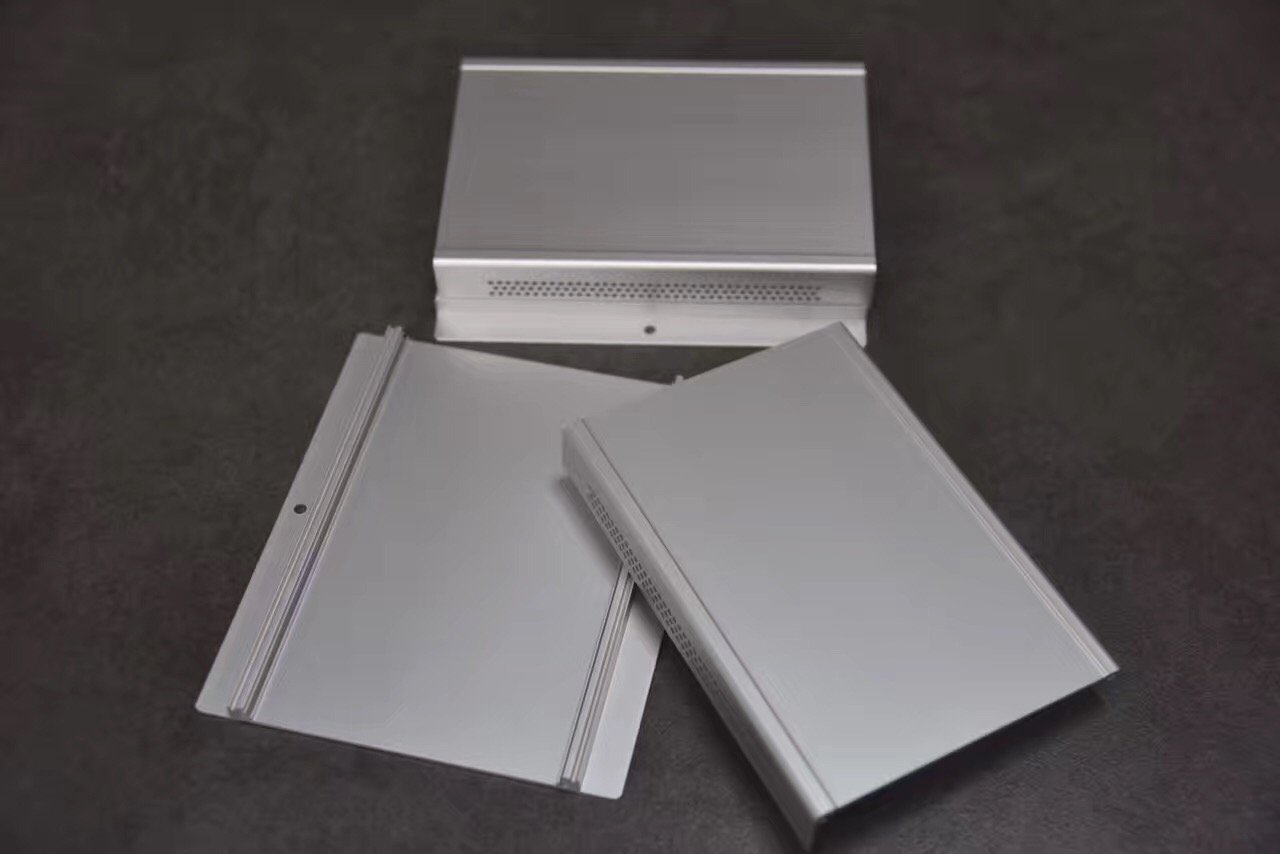
Robot & AI Automation Aluminum Parts | CNC Machined Components for Robotics
CNC machined aluminum parts for robots, AGVs, linear actuators, and AI vision systems. Joint housings, base plates, camera frames. Thin-wall,…
Details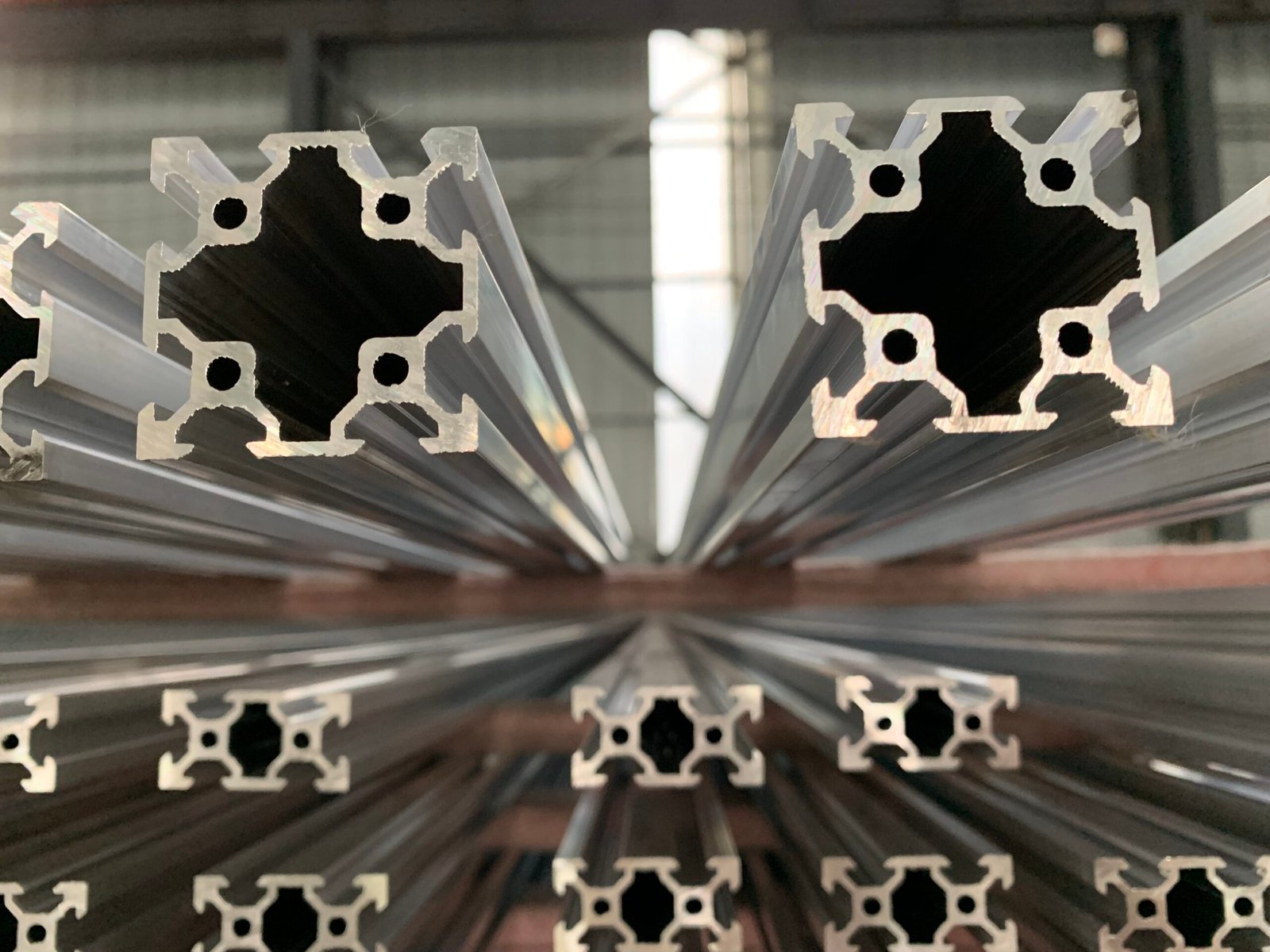
2020, 2040, 4040, 4080 Aluminum Extrusion Profiles | Frame Sizing & Load Guide
Don't guess the wrong size. 2020, 2040, 4040, and 4080 aluminum profiles explained with real span and load guidance. Cut,…
Details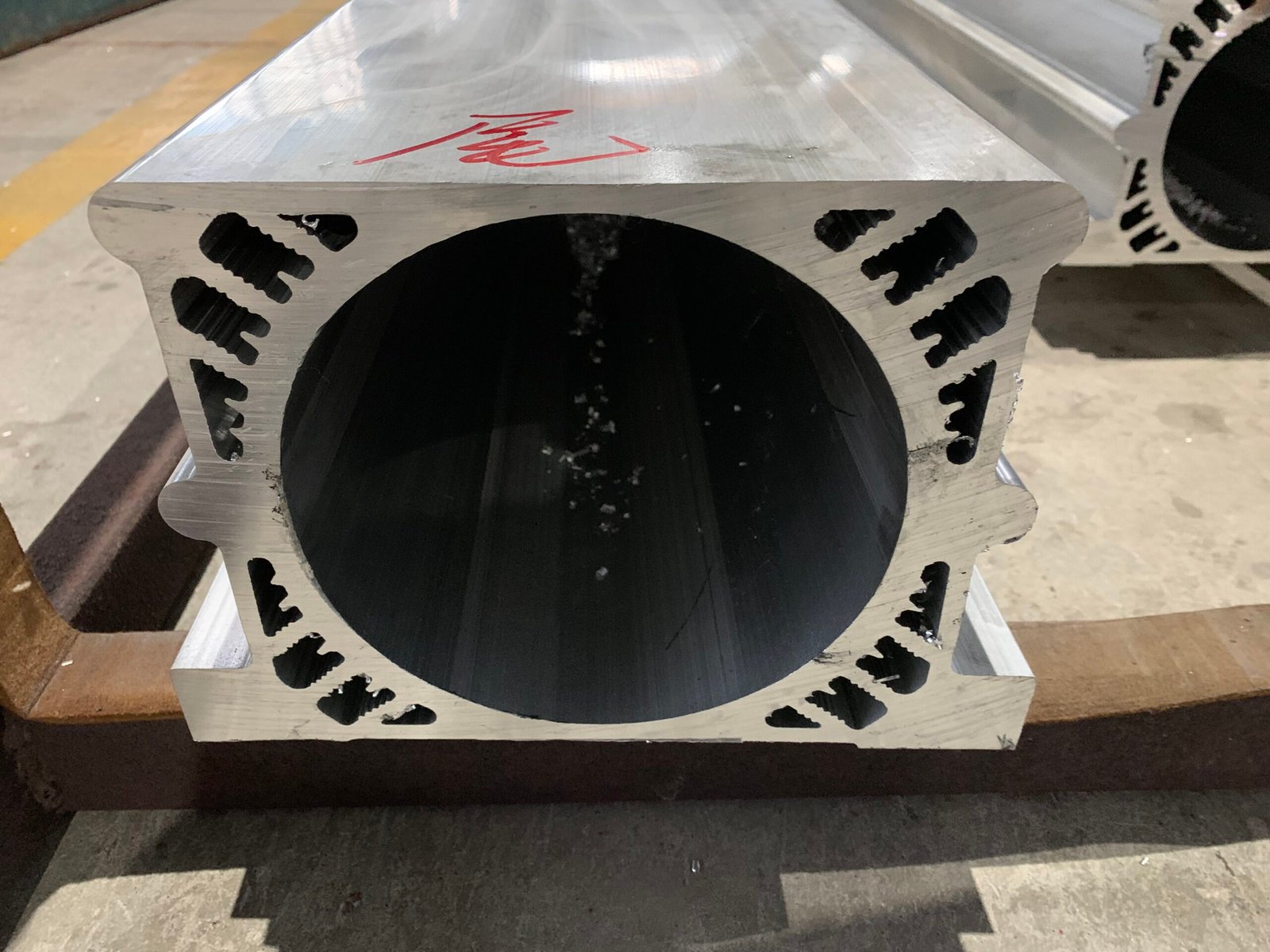
Custom EV Motor Cooling Enclosures | Extruded Aluminum Servo, Stepper & EV Motor Shells
Custom extruded aluminum motor housings with integral cooling fins. Tight bore roundness ≤0.05 mm. Black anodized, hard anodized. Cut, bored,…
Details