2020, 2040, 4040, 4080 Aluminum Extrusion Profiles | Frame Sizing & Load Guide
Don’t guess the wrong size. 2020, 2040, 4040, and 4080 aluminum profiles explained with real span and load guidance. Cut, drilled, tapped, and labeled to your BOM. No more wobbly frames.
Technical Specifications
Certified precision data per ISO 9001:2015
Details
Certified precision data per ISO 9001:2015
2020, 2040, 4040, or 4080: Which Profile Size Does Your Frame Actually Need?
If you have ever built a machine frame that wobbled because the profile was under-specified—or struggled to maneuver a safety guard because the frame was unnecessarily heavy—you already know that profile selection matters.
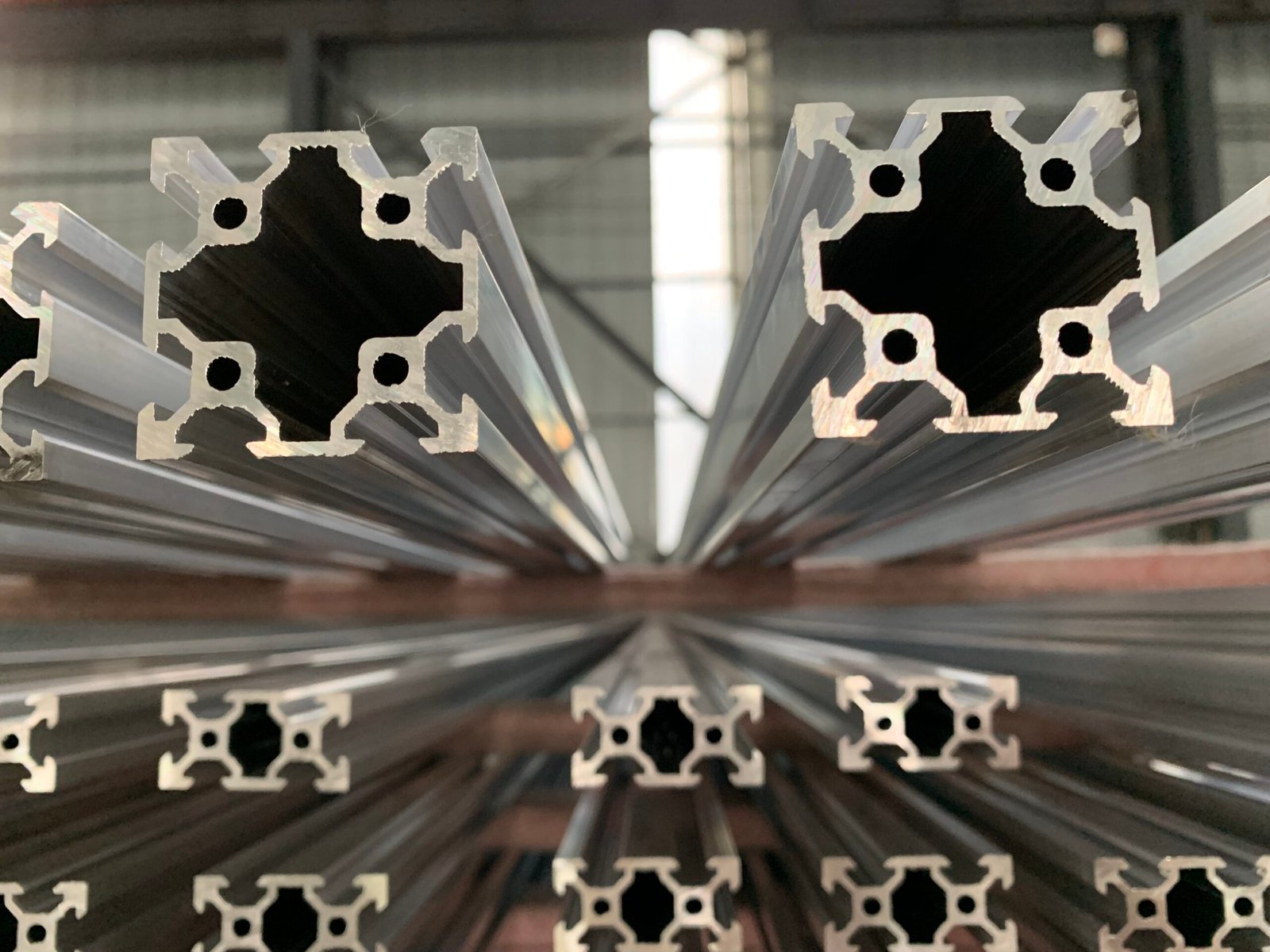
We extrude and machine four core industrial aluminum profile sizes that cover the vast majority of automation frames, workstations, enclosures, and machine guards: 2020, 2040, 4040, and 4080. The numbers represent cross-sectional dimensions in millimeters (a 2020 is 20×20 mm; a 4080 is 40×80 mm).
While the sizing is straightforward, selecting the right profile for a specific span and load—and avoiding costly sizing mistakes—is where design choices matter.
Costly Sizing Errors (And How to Avoid Them)
Using 2020 Where 4040 Was Needed
A 2020 profile has a cross-section of 20 by 20 millimeters. It’s light, it’s cheap per meter, and for short spans under light loads it’s perfectly adequate. The problem starts when someone looks at a 2020 and thinks “this looks fine” for a 1.2-meter machine base carrying a vision system and a linear actuator.
It’s not fine. The moment of inertia on a 2020 is small. At a 1.2-meter span, even the profile’s own weight produces measurable sag. Add a 30-kilogram actuator moving back and forth, and the frame is in constant micro-motion. The camera loses its reference position. Measurements drift. The machine never hits its accuracy spec.
This isn’t a material defect. The profile is doing what physics says a 20-by-20 aluminum bar does at that span. The fix is using a larger cross-section—2040 or 4040, depending on the load—from the start.
Rough span guide, assuming moderate loads under 50 kg:
- Up to 0.5 meters: 2020 is fine
- 0.5 to 1.2 meters: 2040 minimum
- Over 1.2 meters, or anything with moving parts: 4040
If your load is heavier, the span limits shorten. If you’re not sure, send us the frame dimensions and what it’s carrying. We’ll check the numbers before we cut anything.
Mixing 20-Series and 40-Series Without Thinking About Connectors
A frame design calls for 4040 legs, 2040 cross beams, and 2020 stiffening braces. Three different profiles, all in the same assembly. The designer picked each piece for a reason—the legs need the stiffness, the cross beams need the height, the braces just need to tie things together.
The headache shows up during assembly. 20-series profiles use 5 mm T-slot nuts. 40-series profiles use 8 mm nuts. They’re not interchangeable. The connectors that join a 4040 post to a 2040 beam need to accommodate two different slot widths and two different face dimensions. If those transition connectors weren’t specified ahead of time, the assembly crew is stuck.
There are brackets that handle mixed-series connections, and they work fine. The point is that they need to be planned for. If your BOM includes both 20-series and 40-series profiles, we’ll flag the mixed connections during review and make sure the right hardware is in the crate. We can also pack the connectors by assembly joint—each bag labeled with which two profiles it joins.
Using 4080 for Everything “Just to Be Safe”
4080 is a heavy profile. The 80 mm dimension gives it excellent bending stiffness in that direction. It’s the right choice for a main beam spanning 2.5 meters under real load, or a robot mounting base that can’t flex.
It’s the wrong choice for a perimeter guard that only needs to hold mesh panels. Or a cable tray support. Or a light-duty workbench that holds a monitor and a keyboard. In those applications, 4080 adds weight, cost, and installation effort with zero benefit. The material cost is higher. The shipping weight is higher. The installers need two people for panels that could have been handled by one.
For guarding, enclosures, and light-duty frames, 2020 or 2040 is usually adequate. For workbenches and machine bases with moderate loads, 4040 is the workhorse. Save 4080 for where the span or the load actually demands it.
The Four Sizes in Detail
2020: Light-Duty, Short Spans
Dimensions: 20 × 20 mm
Slot: 5 mm (20-series)
Weight: roughly 0.5–0.6 kg per meter, depending on wall thickness
2020 is the smallest profile in common industrial use. It’s right for compact frames where the spans are short and the loads are light. Think benchtop equipment, not factory-floor machinery.
Where it works:
- 3D printer frames and small laser engraver bodies
- Electronics test fixtures and bench-top enclosures
- Light-duty dust covers and splash guards
- Cable management trays and sensor mounting rails
Where it doesn’t:
- Any span over half a meter that bears weight
- Frames that carry moving actuators or rotating parts
- Guarding that people might lean against
One customer runs a line of desktop CNC routers built on 2020 frames. The work area is 300 by 300 millimeters. The frame is compact and stiff enough because the spans are short. They’ve built hundreds of units on 2020 and haven’t had a rigidity complaint. That’s the sweet spot—short, light, contained.
2040: The Same Width, Twice the Height
Dimensions: 20 × 40 mm
Slot: 5 mm (20-series)
Weight: roughly 0.9–1.2 kg per meter
2040 shares the 20 mm width with 2020, which means it uses the same T-nuts and connectors. The 40 mm height gives it much better resistance to bending in the vertical direction. For a horizontal beam supporting weight, the height dimension does the heavy lifting—literally.
Where it works:
- Conveyor support beams and bracket arms
- Mid-size inspection machine bases
- Workbench sub-frames
- Equipment mounting rails inside larger frames
A conveyor manufacturer we work with uses 2040 for all their support legs and cross members. The spans are under a meter, the loads are boxes of parts moving at moderate speed, and 2040 hits the right balance of stiffness and weight. They’ve standardized on it across their product line.
4040: The Workhorse
Dimensions: 40 × 40 mm
Slot: 8 mm (40-series)
Weight: roughly 1.3–1.8 kg per meter
If industrial aluminum extrusion had a default setting, 4040 would be it. The 40 mm square cross-section gives good stiffness in both directions. The 8 mm slot takes larger T-nuts with higher clamping force than 5 mm hardware. For spans between 1 and 2 meters under typical automation loads, 4040 hits the performance-to-cost sweet spot.
Where it works:
- Automation machine frames and robot cell bases
- Industrial inspection and test equipment structures
- Heavy-duty workbenches and assembly stations
- Safety guarding posts (up to about 1.5 meters between posts)
Where to step up:
- Main beams spanning more than 2 meters under load—consider 4080
- Purely cosmetic or cable-management parts—2040 is plenty
Most of the machine frames we ship are 4040-dominant, with select members in 4080 where the span or load requires it. That’s the efficient way to design: 4040 for the structure, 4080 only where needed.
4080: Heavy Loads, Long Spans
Dimensions: 40 × 80 mm
Slot: 8 mm (40-series)
Weight: roughly 2.5–3.5 kg per meter
4080 is the heavy-lifter. The 80 mm dimension gives it bending stiffness that 4040 can’t match. On a 2-meter span with a real load, the difference between 4040 and 4080 is the difference between “you can feel it flex” and “it feels solid.”
Where it works:
- Main beams on large machine frames spanning 2–3 meters
- Robot mounting bases where rigidity directly affects positioning accuracy
- AGV chassis rails and structural members
- Multi-level shelving support columns
Where it’s overkill:
- Enclosure frames, guarding panels, light-duty brackets—use 4040 or 2040
4080 is expensive and heavy. Use it where the engineering says it’s needed, not as a comfort blanket. If your drawing shows 4080 in places where the load doesn’t justify it, we’ll mention it during review. You make the call.
Machining to Your BOM
We don’t ship 6-meter raw bars unless you specifically ask for them. Most customers send a bill of materials or an assembly drawing. We handle the rest:
- Precision cut to length: ±0.1 mm, ends square and burr-free
- CNC drilling: through holes, stepped holes, access holes—all programmed from your drawing
- Tapping: end-face tapping for hidden corner connectors, side tapping for brackets, M3 through M12
- Part labeling: every bar gets a label matching its callout on your drawing
- Packing by assembly zone: profiles for each sub-assembly packed together, so the crew opens one crate and builds that section
The goal is simple: no saws, no drill presses, no hand taps on site. The profiles arrive, the crew reads the labels, and the frame goes together.
Surface Finish
| Finish | Typical Use | Notes |
|---|---|---|
| Silver anodized | Most machine frames, workstations | Clean metallic look, cost-effective, standard for industrial equipment |
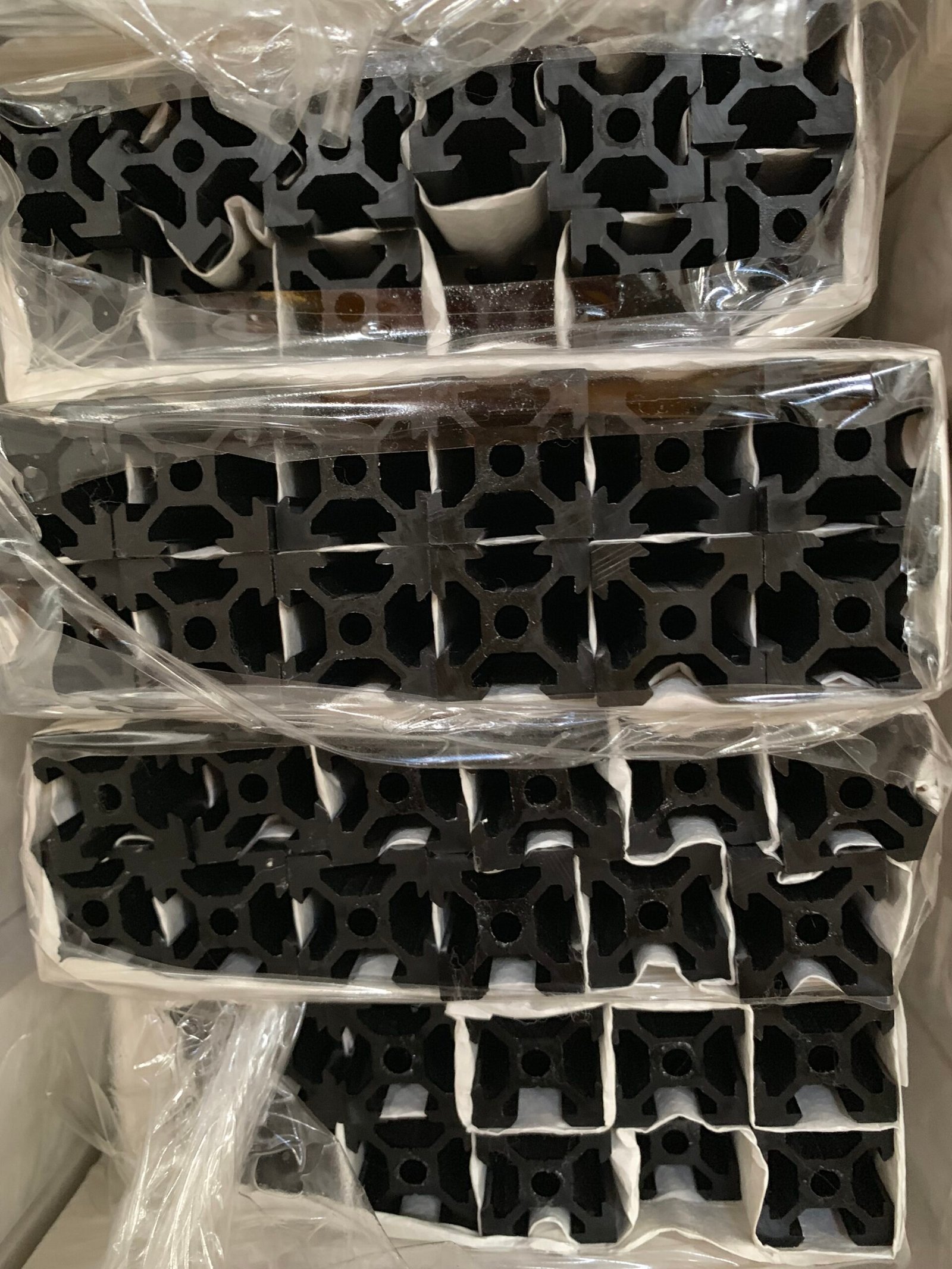
| Black anodized | Optical inspection frames, high-end equipment | Matte black, reduces reflections, shows less dirt |
| Mill finish | Internal structure, hidden supports | Lowest cost, no coating, not for visible surfaces |
All profiles in an order are anodized in one batch. No shade variation between the legs and the cross beams.
Frequently Asked Questions
Q1: We are designing a 1.5-meter spanning machine base carrying a 200 kg load. Should we use 4040 or 4080?
At a 1.5 m span with a 200 kg central load, 4040 will experience noticeable deflection. We recommend specifying 4080 for the main load-bearing horizontal beams, while keeping upright legs and secondary cross-members in 4040 to optimize weight and cost.
Q2: Are these standard profiles suitable for cleanroom environments?
Yes. Our clear anodized profiles feature a smooth, non-shedding sealed oxide layer that tolerates standard cleanroom isopropyl wiping protocols without oxidation or particle shedding.
Q3: What alloy and temper are used for these structural extrusions?
Our standard structural profiles are extruded from 6063-T5 (or 6061-T6 upon request for maximum yield strength). Material Test Reports (MTRs) detailing chemical composition and mechanical properties are provided with every batch.
Schematics
Cross-sectional dimensions
Related Profiles
Complementary hardware for your structural assembly
LED Light Aluminum Extrusion Profiles | Housing, Channels & Rails
Custom aluminum profiles for LED tube lights, linear fixtures, strip channels, and track rails. 6063-T5, black or silver anodized. Pre-cut,…
Details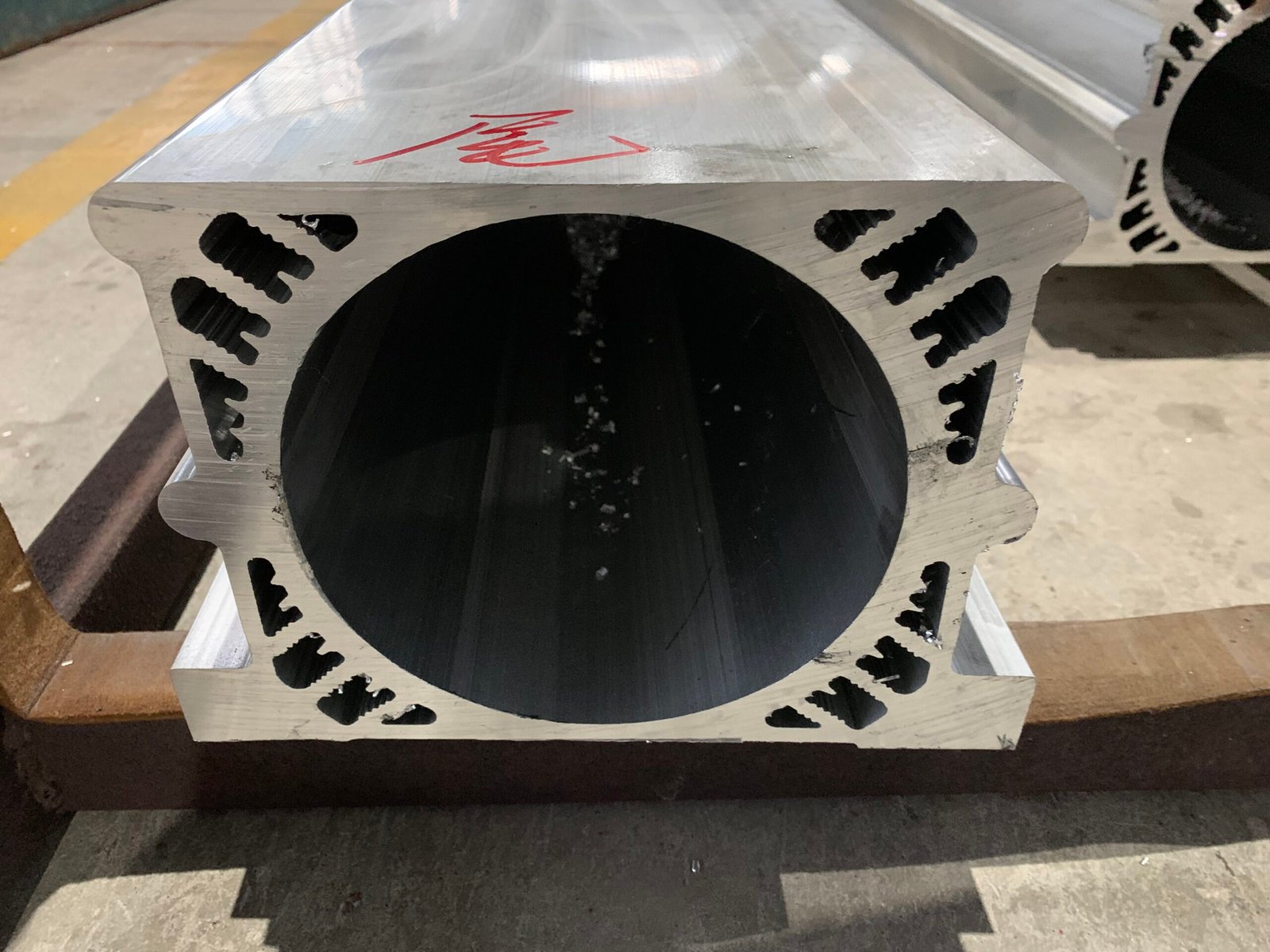
Custom EV Motor Cooling Enclosures | Extruded Aluminum Servo, Stepper & EV Motor Shells
Custom extruded aluminum motor housings with integral cooling fins. Tight bore roundness ≤0.05 mm. Black anodized, hard anodized. Cut, bored,…
Details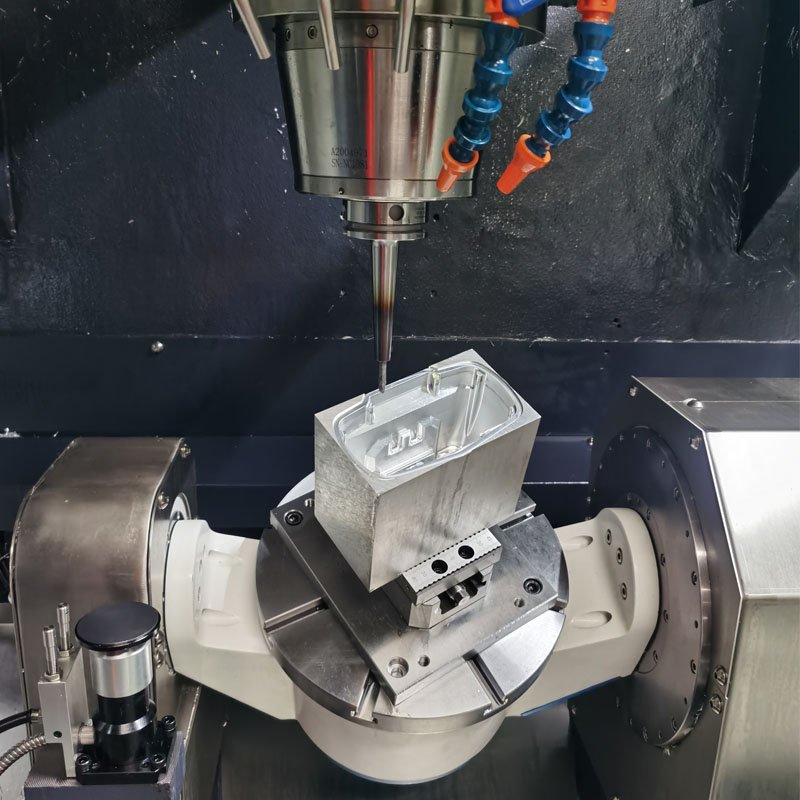
Aluminum Profile CNC Deep Processing Services: From Extrusions to Ready-to-Assemble Components
aluminum profile CNC deep processing, precision aluminum cutting and drilling, custom industrial aluminum components, aluminum extrusion post-processing factory, Linkedalu Metal…
Details