
6063 vs. 6061 Aluminum: The Ultimate Guide to Properties, Performance, and Material Selection
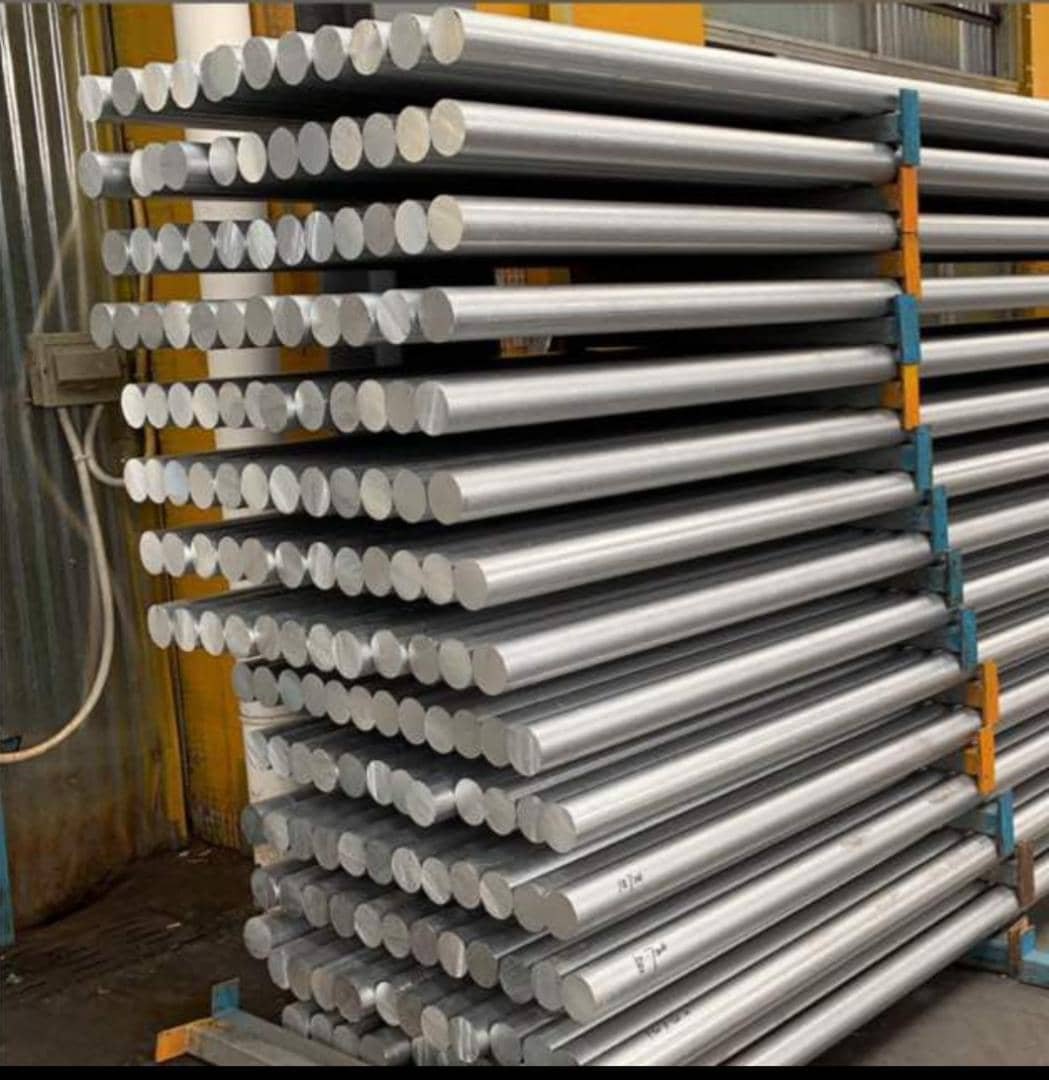
6063 extrudes fast and anodizes bright; 6061-T6 carries roughly 80 percent more tensile strength. A side-by-side look at chemistry, temper designations, extrusion speed, welding and cost to decide which alloy your section needs.
The Quick Take
Choose 6063 when the job is intricate cross-sections, thin walls and a flawless cosmetic surface: window and door frames, trim, louver blades, and heat sinks with dense fins. Choose 6061 when the profile carries real load and strength dominates: industrial framing, heavy-duty brackets, automotive components, machine bases and structural platforms. Both are magnesium-silicon 6000-series alloys, and the difference between them is entirely a matter of how much alloying element the mill is willing to add.
Chemistry: Why Two Sibling Alloys Behave So Differently
The ratio of alloying elements sets the boundaries of what the metal can do. The table below reflects the standard registered ranges for each alloy.
| Element | 6063 | 6061 | Practical effect |
|---|---|---|---|
| Silicon (Si) | 0.20-0.60% | 0.40-0.80% | Silicon binds magnesium into Mg2Si precipitates, the source of strength after ageing |
| Magnesium (Mg) | 0.45-0.90% | 0.80-1.20% | 6061 carries nearly twice the magnesium, driving yield strength and hardness up |
| Iron (Fe) | 0.35% max | 0.70% max | 6063 caps iron tightly to keep the extruded surface smooth and streak-free |
| Copper (Cu) | 0.10% max | 0.15-0.40% | Copper strengthens 6061 but slightly reduces corrosion resistance and anodized brightness |
| Aluminum (Al) | Balance | Balance | Both are aluminum-dominant; performance differences come from the traces above |
Mechanical Properties in the Tempers You Will Actually Buy
T5 means the profile is cooled from the press and then artificially aged, with no separate solution treatment. T6 means it is solution heat treated and then artificially aged, which costs more and yields more. T66 is a tighter European temper specified with higher guaranteed minimums than ordinary T6 for the same alloy.
| Property | 6063-T5 | 6063-T6 | 6061-T6 |
|---|---|---|---|
| Tensile strength (min) | 160 MPa | 205 MPa | 290 MPa |
| Yield strength (min) | 110 MPa | 180 MPa | 240 MPa |
| Elongation (min) | 8% | 8% | 8-10% |
| Typical use | Architectural frames, trim, heat sinks | Loaded frames, railings, structural trim | Machine framing, brackets, vehicle structures |
The headline is simple: 6061-T6 offers roughly 80 percent more tensile strength than 6063-T5, and about 40 percent more than 6063-T6. That is why structural engineers reach for it, and why extruders sometimes wince when they do.
Extrudability and Design Freedom
6063 flows, 6061 resists
6063 has excellent hot fluidity. It extrudes into complex, multi-cavity and thin-walled hollow sections at high speed, which is why essentially every architectural window, door and curtain wall system in the world is built on it. 6061 deforms with much more resistance, so the press runs slower, hollow dies are more prone to welding-chamber problems, and thin webs on complex shapes crack more easily.
Surface finish and anodizing response
Because 6063 limits iron and is essentially copper-free, its anodic film stays clear, bright and uniform. 6061, with more iron and copper, tends to anodize to a slightly duller gray and is far less forgiving of small chemistry variations in the billet. If the component will be visible and anodized, that difference usually decides the material question on its own.
Weldability
Both alloys weld reliably with TIG or MIG processes. The difference is what happens afterwards: the heat-affected zone of 6061-T6 loses a large part of its strength and often needs post-weld heat treatment to recover it, while 6063 welds cleanly and is routinely used for low-stress decorative framing without any post-weld treatment.
Corrosion, Machining and Cost
6063's near-zero copper content gives it excellent corrosion resistance in normal exterior service. 6061 loses a little of that margin because of its copper addition, but remains entirely suitable for exterior structural work with an appropriate finish. Where 6061 wins clearly is machining: its higher hardness produces cleaner chips, better surface finish off the cutter, and tighter achievable tolerances on secondary operations.
Cost works against 6061 in two ways. Its billet typically carries a premium of roughly 10 to 15 percent over 6063, and because it extrudes more slowly it also costs more per meter to produce and is harder on dies. For high volumes of complex profiles, that gap is real money.
Which Alloy for Which Job
| Application | Sensible default |
|---|---|
| Window and door frames, architectural trim | 6063-T5 |
| Visible anodized louvers and facades | 6063-T5 or 6063-T6 |
| LED and power electronics heat sinks | 6063-T5 with dense fin geometry |
| Solar mounting rails and structural railings | 6005A-T5, or 6063-T6 for lighter loads |
| Truck bodies, trailer frames, welded structures | 6061-T6 or 6005A-T6 |
| Industrial machine framing and brackets | 6061-T6 |
Practical Selection Rules
- Start with 6063-T5 and step up only when a deflection or stress calculation says you must.
- If the section is complex and thin-walled, prefer a stronger temper of an easy-extruding alloy over a switch to 6061.
- If the part is welded and structural, check the as-welded properties, not the parent-metal properties.
- If the visible finish is anodized and color-critical, keep iron and copper low across the whole order, not just the first billet.
- If the profile is mostly machined afterwards, weight 6061's better machinability against its billet and extrusion cost.
Frequently Asked Questions
Is 6061 stronger than 6063 in every temper?
Yes. Even 6061-T4 condition exceeds 6063-T6 in yield strength, and 6061-T6 is stronger than any commercially common 6063 temper. The trade is always extrudability, surface quality and cost.
Can I mix 6063 and 6061 in one assembly?
You can, and it is common. Keep dissimilar-metal contact in mind where moisture is present, and be aware that the two alloys respond differently to anodizing, so color matching between them is imperfect.
Does 6061 need a different die?
Usually yes in practice: bearing lengths, extrusion speed and quenching are all adjusted, and many plants keep separate tooling philosophy for 6061 work rather than pushing 6063 dies harder.
Customer reviews
No reviews yet — be the first to review 6063 vs. 6061 Aluminum: The Ultimate Guide to Properties, Performance, and Material Selection.
Write a review
Reviews are read by our team before they appear here, usually within one working day. We publish what customers write; we only remove spam and abuse.
Keep reading
 Knowledge
Aluminum Profile Surface Finishes: Anodizing, Powder Coating, PVDF
Anodizing, powder coating, PVDF, electrophoresis, wood grain and mechanical finishes are specified by different standards, applied at…
Read article arrow_forward Knowledge
Extruded vs. Die-Cast Motor Housings: An Engineer's Guide to Choosing
Extrusion gives dense, weldable metal and tall fins; die casting gives complex bosses and near-net shape. A practical comparison of thermal…
Read article arrow_forward Knowledge
7075, 7050, and 7005: When 6061 Isn't Strong Enough
The 7xxx family is the strongest extrudable aluminum, reaching roughly 572 MPa in 7075-T6. What 7050 and 7005 add, why 7xxx extrusion runs…
Read article arrow_forward